💰 How To Save A Lot Of Money Fast
📚 The Financial Literacy Library
The best investment you can ever make is in your own financial education. These 5 cornerstone books are what millionaires, financial advisors, and wealth-builders universally recommend for completely rewiring how you think about earning, saving, and investing money.
🧠 The Psychology of Money
Doing well with money isn't necessarily about what you know—it's about how you behave. Morgan Housel masterfully breaks down the emotional and psychological biases that secretly dictate our financial decisions, offering a true paradigm shift in how to view wealth.
🏠 Rich Dad Poor Dad
The #1 personal finance book of all time for a reason. This foundational read shatters the myth that you need to earn a high income to be rich, teaching you the critical difference between working for money and making your money work for you via assets.
📈 Atomic Habits
While not strictly a finance book, building wealth is absolutely dependent on the daily habits you cultivate. James Clear provides the definitive framework for breaking bad spending habits and effortlessly automating the good ones that lead to long-term success.
📊 The Simple Path to Wealth
The ultimate antidote to complex, intimidating financial advice. JL Collins provides an incredibly accessible, low-stress roadmap to financial independence through index fund investing, perfectly explaining why simplicity beats Wall Street complexity every time.
💳 I Will Teach You to Be Rich
A tactical, no-BS, 6-week program that actually works. Ramit Sethi teaches you how to crush debt, automate your savings, and negotiate your salary—all while guilt-free spending on the things you truly love. A must-read for modern money management.
Do you ever feel like your money just disappears, leaving you wondering where it all went?
I used to be there, staring at my bank account with more questions than answers.
This guide shares the exact strategies I used to turn that around, helping me save thousands quickly and build a healthier financial future.

Quick Overview
This guide will equip you with actionable steps to significantly boost your savings in a short timeframe. You’ll gain control over your finances and build a solid foundation for future wealth.
- Time needed: 1-2 hours for initial setup, ongoing daily/weekly commitment
- Difficulty: Beginner to Intermediate
- What you’ll need: Bank statements, a pen and paper or a budgeting app, commitment
Step-by-Step Instructions
Step 1: Know Where Every Penny Goes
You can’t change what you don’t measure. Your first mission is to understand your current spending habits.
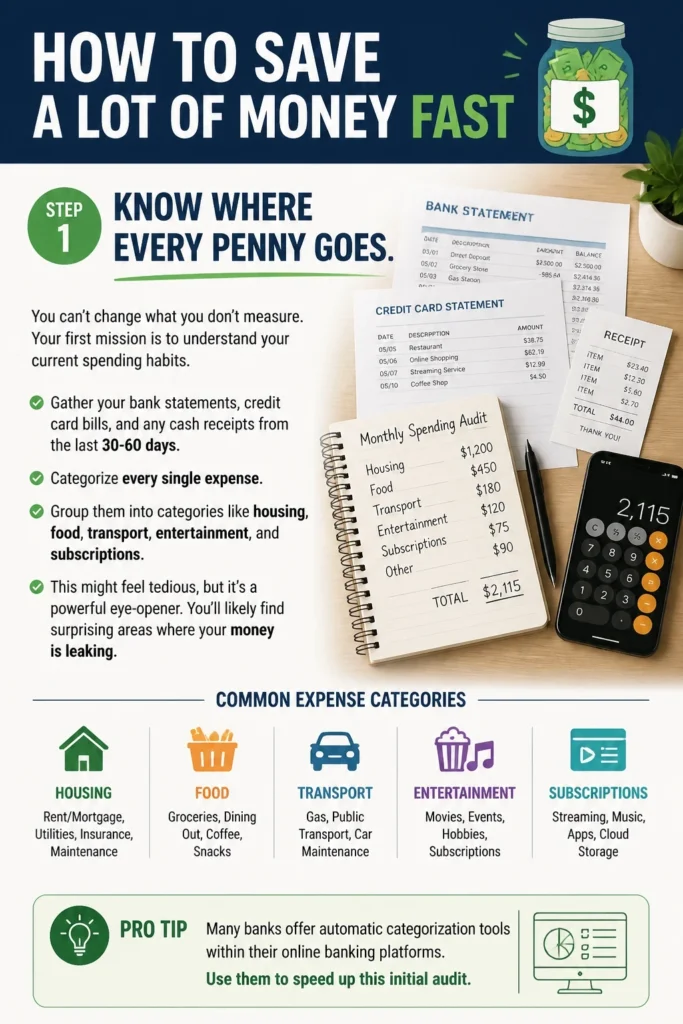
Gather your bank statements, credit card bills, and any cash receipts from the last 30-60 days.
Categorize every single expense. Group them into categories like housing, food, transport, entertainment, and subscriptions.
This might feel tedious, but it’s a powerful eye-opener. You’ll likely find surprising areas where your money is leaking.
Pro Tip: Many banks offer automatic categorization tools within their online banking platforms. Use them to speed up this initial audit.
Step 2: Create a Lean, Mean Budget
Now that you know your spending, it’s time to create a budget that prioritizes saving. This isn’t about deprivation; it’s about intentional spending.
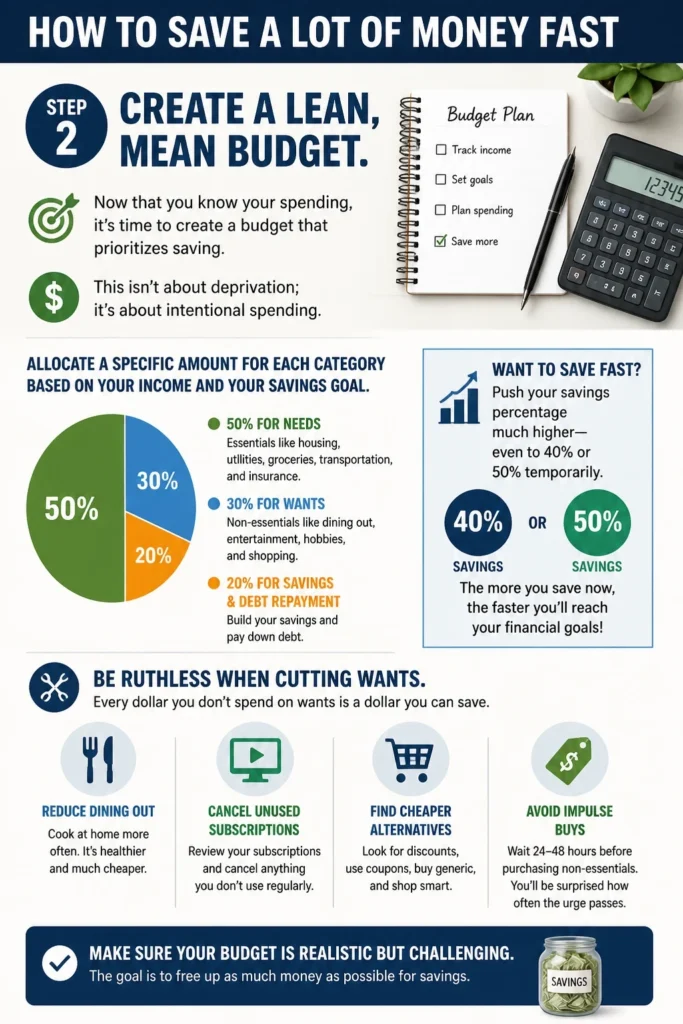
Allocate a specific amount for each category based on your income and your savings goal.
Consider methods like the 50/30/20 rule: 50% for needs, 30% for wants, 20% for savings and debt repayment.
However, if you want to save fast, you might push that savings percentage much higher, even to 40% or 50% temporarily.
Be ruthless when cutting wants. Can you reduce dining out, cancel unused subscriptions, or find cheaper alternatives?
Make sure your budget is realistic but challenging. The goal is to free up as much money as possible for savings.
Step 3: Automate Your Savings
The easiest way to save is to make it automatic. Treat your savings like a non-negotiable bill.
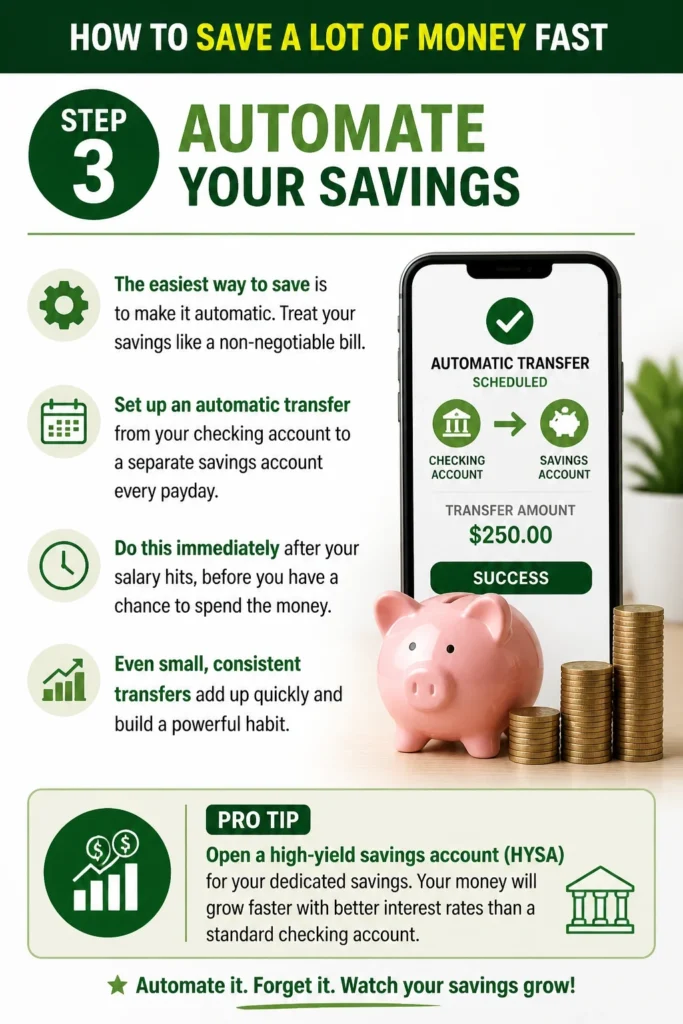
Set up an automatic transfer from your checking account to a separate savings account every payday.
Do this immediately after your salary hits, before you have a chance to spend the money.
Even small, consistent transfers add up quickly and build a powerful habit.
Pro Tip: Open a high-yield savings account (HYSA) for your dedicated savings. Your money will grow faster with better interest rates than a standard checking account.
Step 4: Attack High-Interest Debt
High-interest debt, like credit card balances, is a significant drain on your finances. It makes saving incredibly difficult.
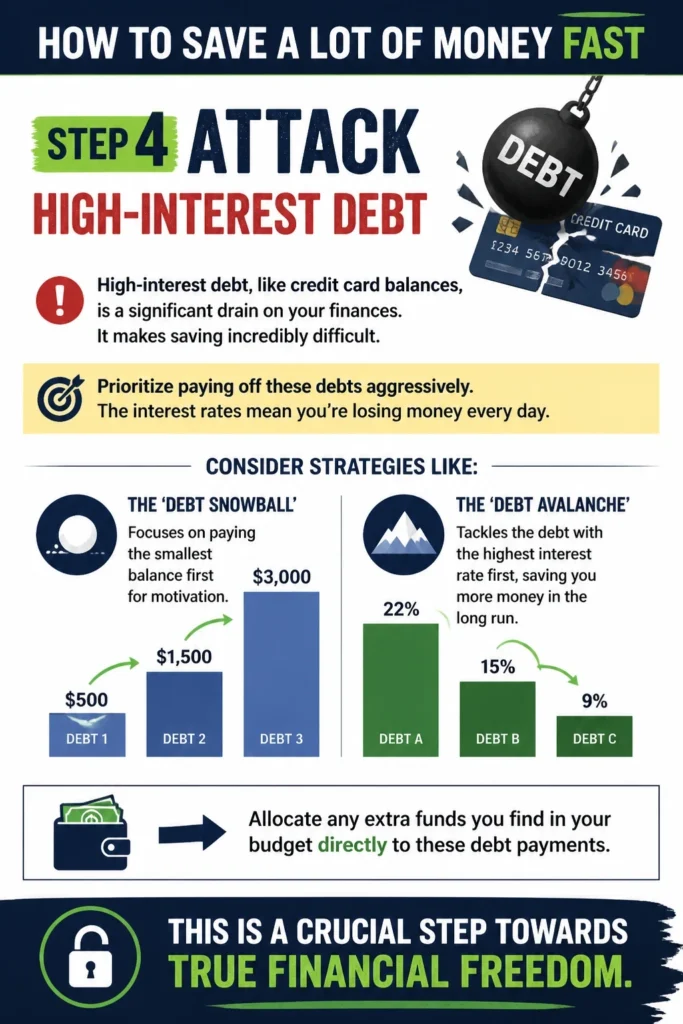
Prioritize paying off these debts aggressively. The interest rates mean you’re losing money every day.
Consider strategies like the ‘debt snowball’ or ‘debt avalanche’. The snowball focuses on paying the smallest balance first for motivation.
The avalanche tackles the debt with the highest interest rate first, saving you more money in the long run.
Allocate any extra funds you find in your budget directly to these debt payments. This is a crucial step towards true financial freedom.
Step 5: Boost Your Income, Even Temporarily
While cutting expenses is vital, increasing your income can accelerate your savings dramatically. Think beyond your primary job.
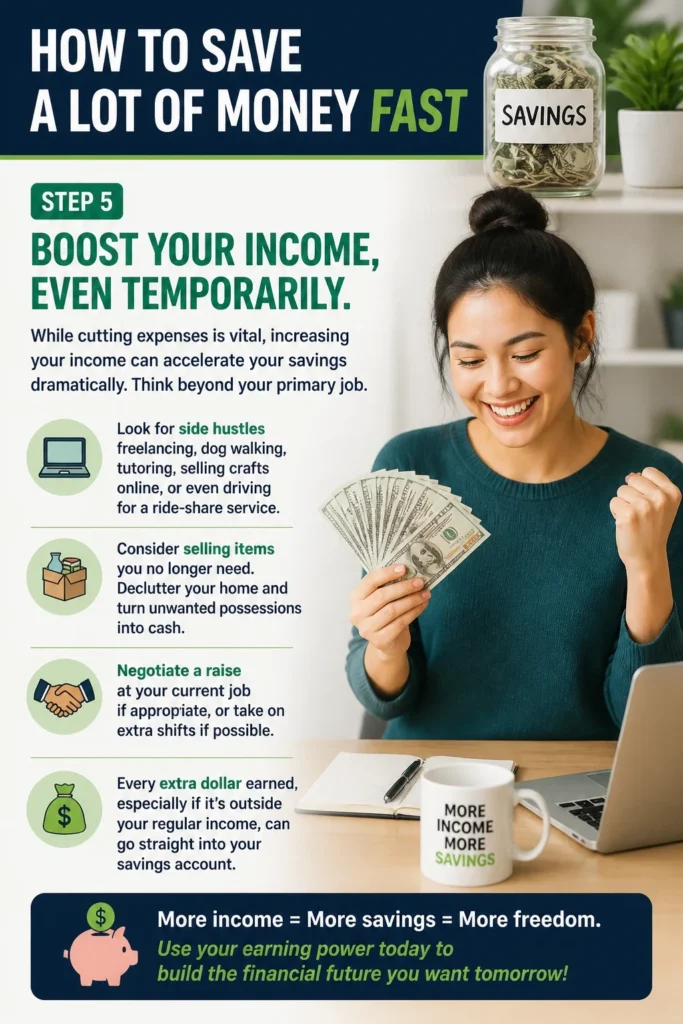
Look for side hustles: freelancing, dog walking, tutoring, selling crafts online, or even driving for a ride-share service.
Consider selling items you no longer need. Declutter your home and turn unwanted possessions into cash.
Negotiate a raise at your current job if appropriate, or take on extra shifts if possible.
Every extra dollar earned, especially if it’s outside your regular income, can go straight into your savings account.
Step 6: Cut Unnecessary Expenses Ruthlessly
Go through your budget again with a fine-tooth comb. Challenge every single “want” and even some “needs.”
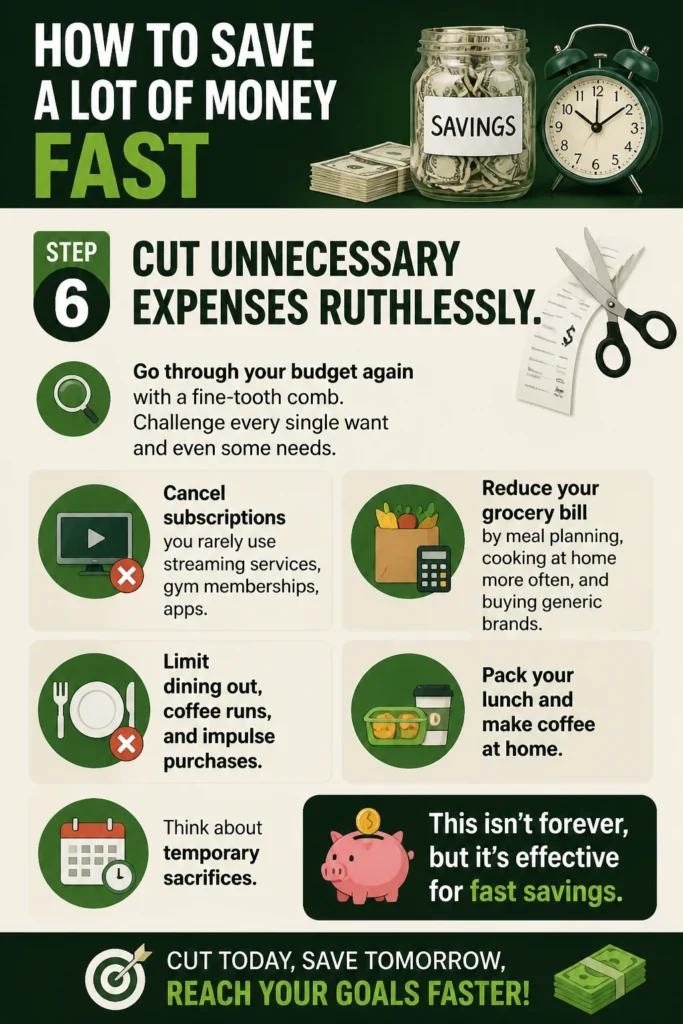
Cancel subscriptions you rarely use: streaming services, gym memberships, apps.
Reduce your grocery bill by meal planning, cooking at home more often, and buying generic brands.
Limit dining out, coffee runs, and impulse purchases. Pack your lunch and make coffee at home.
Think about temporary sacrifices. This isn’t forever, but it’s effective for fast savings.
Step 7: Embrace Frugality and Smart Spending
Frugality isn’t about being cheap; it’s about being resourceful and getting the most value for your money.
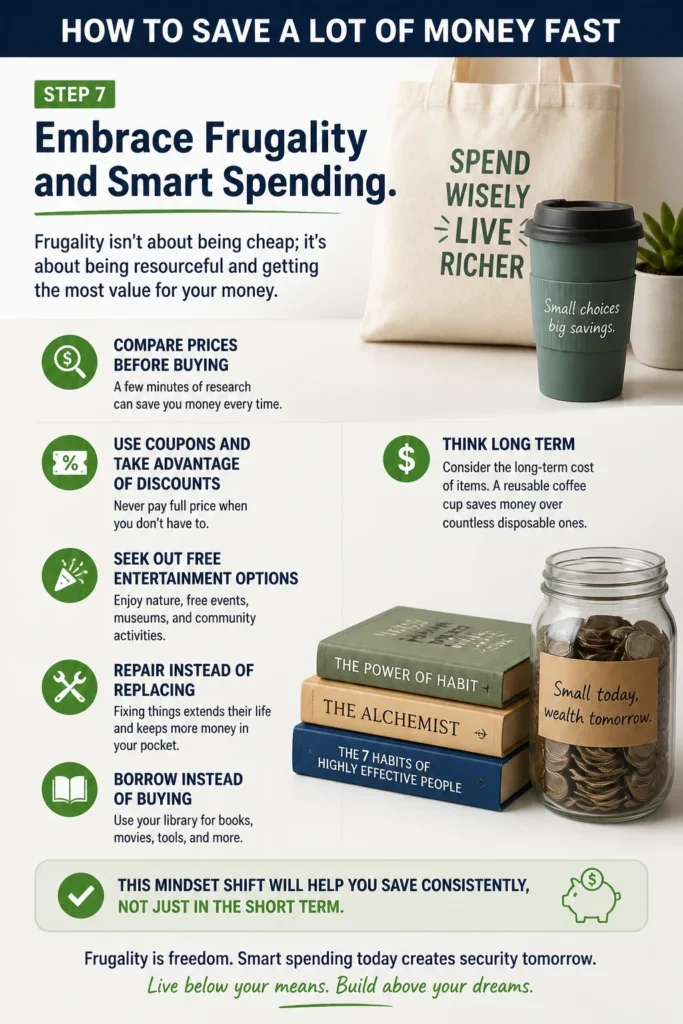
Adopt habits like comparing prices before buying, using coupons, and seeking out free entertainment options.
Repair items instead of replacing them. Borrow books from the library instead of buying them.
Think about the long-term cost of items. A reusable coffee cup saves money over countless disposable ones.
This mindset shift will help you save consistently, not just in the short term.
Step 8: Track Your Progress Relentlessly
Seeing your savings grow is incredibly motivating. Don’t set it and forget it.
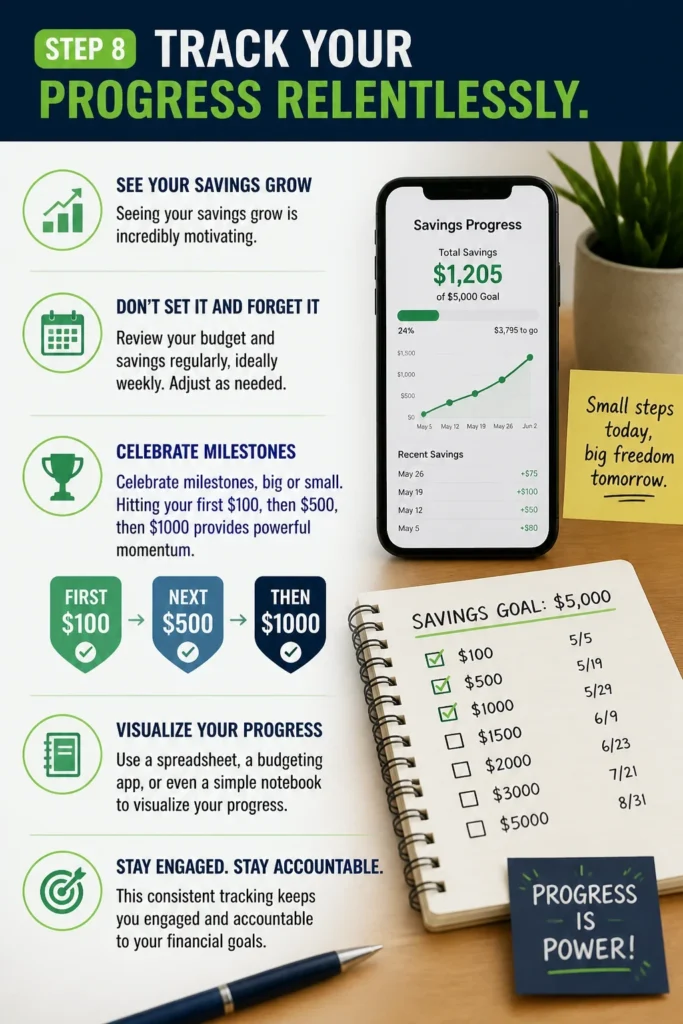
Review your budget and savings regularly, ideally weekly. Adjust as needed.
Celebrate milestones, big or small. Hitting your first $100, then $500, then $1000 provides powerful momentum.
Use a spreadsheet, a budgeting app, or even a simple notebook to visualize your progress.
This consistent tracking keeps you engaged and accountable to your financial goals.
Common Mistakes to Avoid
Trying to Do Too Much at Once
It’s easy to get excited and try to cut every single expense and start three side hustles simultaneously. This often leads to burnout.
Instead, pick a few key areas to tackle first. Master those changes, then gradually add more.
Sustainable changes are more effective than drastic, short-lived ones.
Neglecting High-Interest Debt
Some people focus solely on building savings while ignoring credit card debt. The interest on that debt often outweighs any interest earned on savings.
Always prioritize paying down high-interest debt. It’s like a guaranteed return on your money.
Once that debt is gone, you’ll have more money free to save and invest.
Not Tracking Your Spending
Creating a budget is only half the battle. If you don’t track your actual spending against that budget, it’s just a wish list.
Consistent tracking helps you identify where you’re overspending and allows you to make real-time adjustments.
Without tracking, you’re flying blind, and your savings efforts will likely falter.
Giving Up After a Slip-Up
Everyone makes mistakes. You might overspend in one category or miss a savings transfer.
Don’t let one slip-up derail your entire plan. Forgive yourself, adjust, and get back on track immediately.
Consistency over perfection is the key to long-term financial success.
Troubleshooting
Feeling Overwhelmed or Deprived
Saving money fast can feel restrictive at times. If you’re feeling overwhelmed, take a step back.
Re-evaluate your budget. Are you being too strict? Allow yourself a small, guilt-free “fun money” allocation.
Remember your “why.” What are you saving for? Keeping that goal in mind provides motivation.
Unexpected Expenses Derail Your Plan
Life happens, and unexpected costs can pop up. A car repair, a medical bill, or a home emergency.
Don’t panic. Use a small portion of your emergency fund if you have one, or adjust your budget for the current month.
Once the immediate crisis passes, get back to your original savings plan as quickly as possible.
Difficulty Sticking to the Budget
If you constantly find yourself overspending in certain categories, your budget might not be realistic.
Analyze where you’re struggling. Is it groceries? Entertainment? Adjust the budget amounts slightly for those categories.
Consider using the “envelope system” for cash-based spending to physically limit your spending in troublesome areas.
Key Takeaways
- Understand Your Cash Flow: Knowing where your money goes is the first step to controlling it.
- Budget with Purpose: Create a lean budget that prioritizes your savings goals aggressively.
- Automate Everything: Make saving effortless by setting up automatic transfers.
- Eliminate Costly Debt: High-interest debt erodes your potential savings; tackle it head-on.
- Seek Income Boosts: Supplement your income with side hustles or temporary work to accelerate savings.
- Stay Accountable: Regularly track your progress to stay motivated and make necessary adjustments.
Frequently Asked Questions
How much should I aim to save per month?
The ideal amount depends on your income, expenses, and goals. For fast savings, aim for 20% or more of your net income. Some people aggressively save 50% or more for a period to reach goals quickly.
Is it okay to use my savings for an emergency?
Absolutely. That’s precisely what an emergency fund is for. Life happens, and having a safety net prevents you from going into debt when unexpected costs arise. Just replenish it when you can.
What’s the difference between saving and investing?
Saving is typically for short-term goals or emergencies, keeping your money accessible and low-risk. Investing is for long-term growth, accepting higher risk for potentially higher returns, usually for goals like retirement.
How long will it take to see significant results?
You can see results almost immediately by implementing these steps. Significant results, like reaching a specific savings goal, depend on your income, expenses, and how aggressively you apply these strategies. Consistency is key.
Your Journey to Financial Empowerment Starts Now
Saving a lot of money fast is entirely within your reach. It requires discipline and consistency, but the rewards are immense.
By taking control of your finances, you open up opportunities for freedom, peace of mind, and a brighter future.
Start today. Pick one or two steps from this guide and put them into action. Your future self will thank you.
Consider exploring topics like investing basics or advanced budgeting techniques once you’ve built a solid savings foundation.
The best time to start was yesterday; the next best time is right now.