🏗️ 11 Cheapest Way To Build A House
📚 The Financial Literacy Library
The best investment you can ever make is in your own financial education. These 5 cornerstone books are what millionaires, financial advisors, and wealth-builders universally recommend for completely rewiring how you think about earning, saving, and investing money.
🧠 The Psychology of Money
Doing well with money isn't necessarily about what you know—it's about how you behave. Morgan Housel masterfully breaks down the emotional and psychological biases that secretly dictate our financial decisions, offering a true paradigm shift in how to view wealth.
🏠 Rich Dad Poor Dad
The #1 personal finance book of all time for a reason. This foundational read shatters the myth that you need to earn a high income to be rich, teaching you the critical difference between working for money and making your money work for you via assets.
📈 Atomic Habits
While not strictly a finance book, building wealth is absolutely dependent on the daily habits you cultivate. James Clear provides the definitive framework for breaking bad spending habits and effortlessly automating the good ones that lead to long-term success.
📊 The Simple Path to Wealth
The ultimate antidote to complex, intimidating financial advice. JL Collins provides an incredibly accessible, low-stress roadmap to financial independence through index fund investing, perfectly explaining why simplicity beats Wall Street complexity every time.
💳 I Will Teach You to Be Rich
A tactical, no-BS, 6-week program that actually works. Ramit Sethi teaches you how to crush debt, automate your savings, and negotiate your salary—all while guilt-free spending on the things you truly love. A must-read for modern money management.
So, you’re dreaming of your own pad, a place to kick off your shoes and call your very own, but your bank account is giving you the side-eye? We get it. Building a house from scratch sounds like a luxury reserved for the ultra-rich or those with a serious DIY addiction. But what if we told you there are genuinely clever, wallet-friendly ways to make that dream a reality? Yes, really!
Forget the McMansions and bespoke architects for a sec. We’re diving into the nitty-gritty of getting a roof over your head without selling a kidney. Get ready to ditch the notion that cheap equals flimsy, because these ideas are all about smart choices and serious savings.
1. Go Small with a Tiny House
Ditch the excess, embrace the minimal.
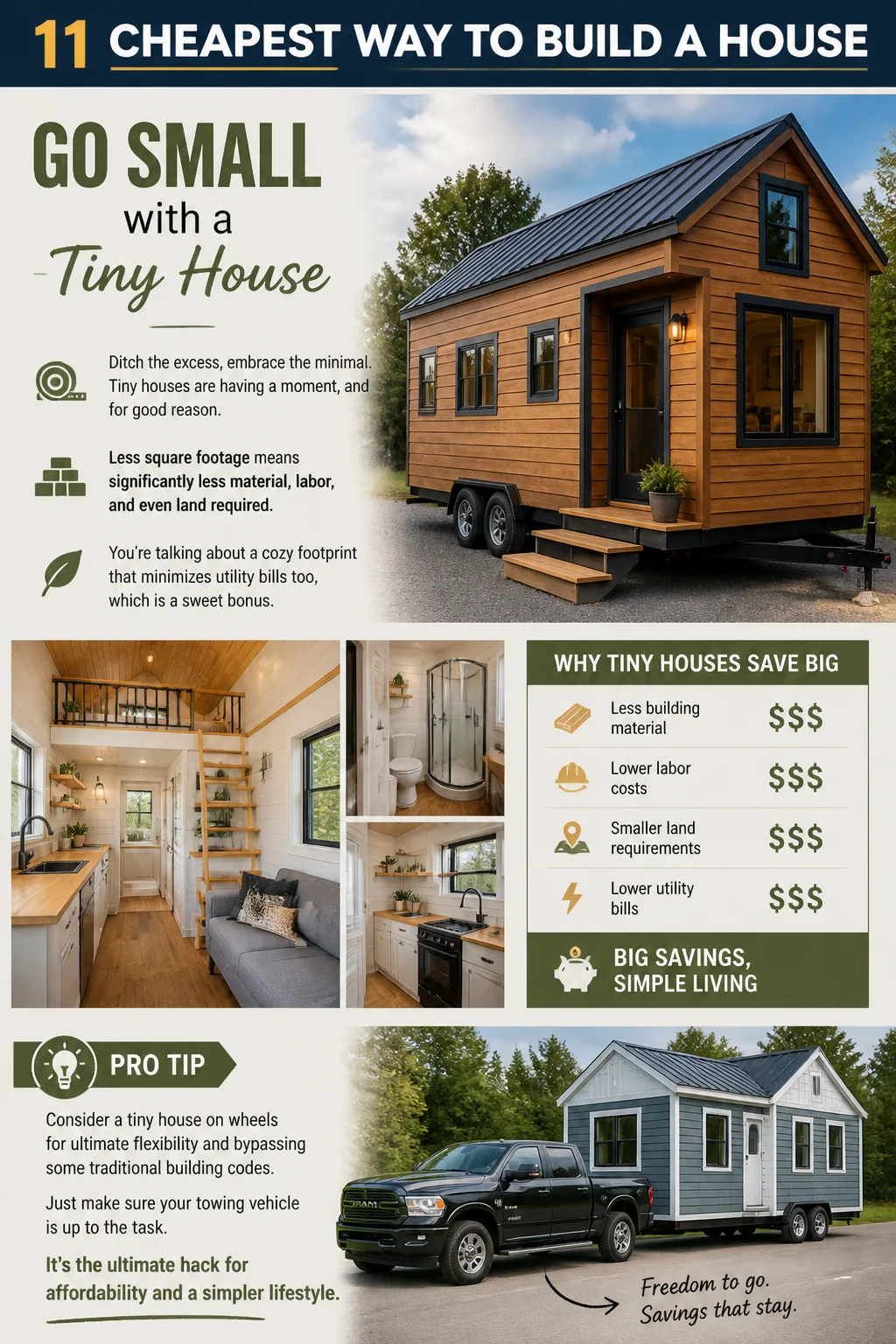
Tiny houses are having a moment, and for good reason. Less square footage means significantly less material, labor, and even land required. You’re talking about a cozy footprint that minimizes utility bills too, which is a sweet bonus.
Pro tip: Consider a tiny house on wheels for ultimate flexibility and bypassing some traditional building codes. Just make sure your towing vehicle is up to the task.
It’s the ultimate hack for affordability and a simpler lifestyle.
2. Embrace a Shipping Container Home
Industrial chic meets budget bliss.
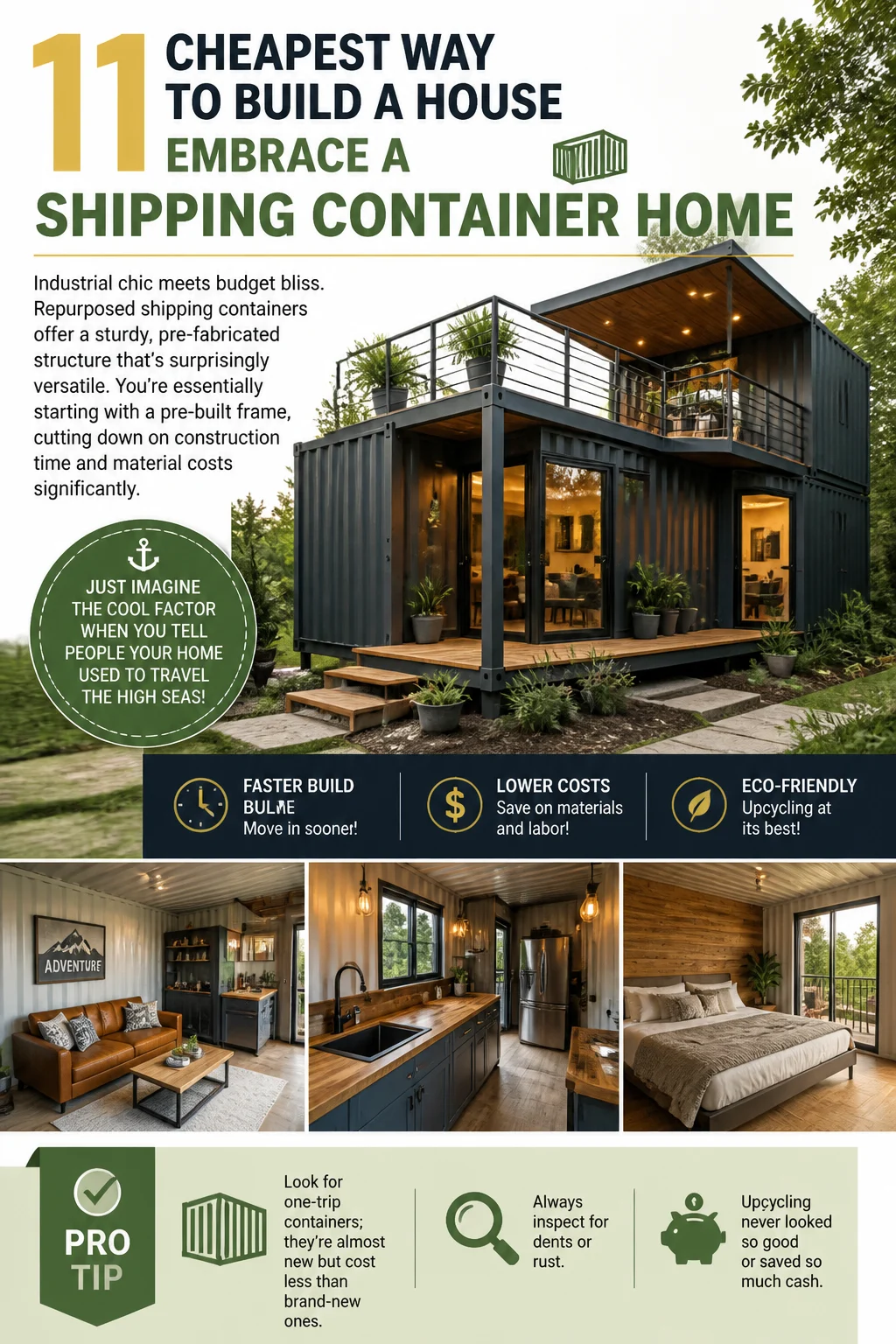
Repurposed shipping containers offer a sturdy, pre-fabricated structure that’s surprisingly versatile. You’re essentially starting with a pre-built frame, cutting down on construction time and material costs significantly. Just imagine the cool factor when you tell people your home used to travel the high seas!
Pro tip: Look for “one-trip” containers; they’re almost new but cost less than brand-new ones. Always inspect for dents or rust.
Upcycling never looked so good or saved so much cash.
3. Build a Barndominium
Country charm, city smarts, and serious savings.
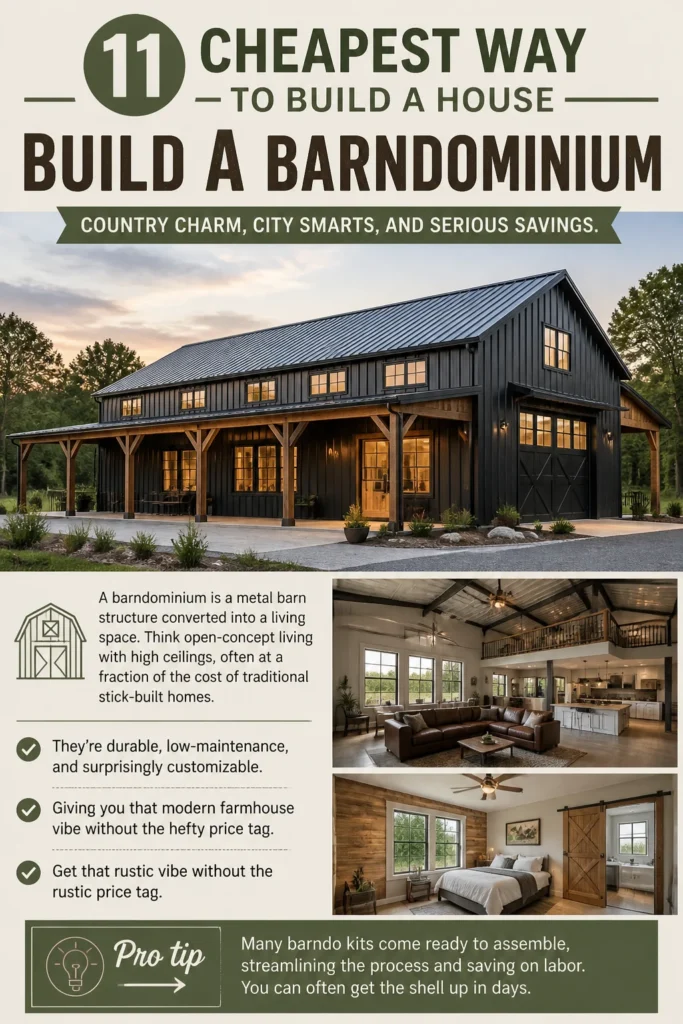
A barndominium is a metal barn structure converted into a living space. Think open-concept living with high ceilings, often at a fraction of the cost of traditional stick-built homes. They’re durable, low-maintenance, and surprisingly customizable, giving you that modern farmhouse vibe without the hefty price tag.
Pro tip: Many barndo kits come ready to assemble, streamlining the process and saving on labor. You can often get the shell up in days.
Get that rustic vibe without the rustic price tag.
4. Opt for a Manufactured or Modular Home
Factory precision, on-site savings.
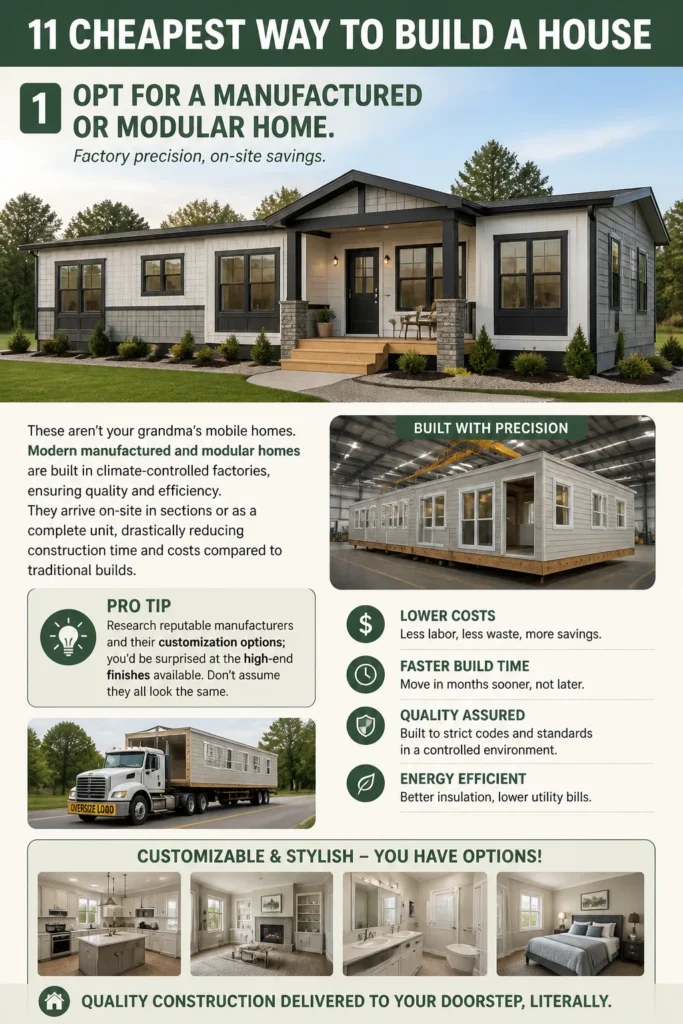
These aren’t your grandma’s mobile homes. Modern manufactured and modular homes are built in climate-controlled factories, ensuring quality and efficiency. They arrive on-site in sections or as a complete unit, drastically reducing construction time and costs compared to traditional builds.
Pro tip: Research reputable manufacturers and their customization options; you’d be surprised at the high-end finishes available. Don’t assume they all look the same.
Quality construction delivered to your doorstep, literally.
5. Consider a Pre-Fab or Kit Home
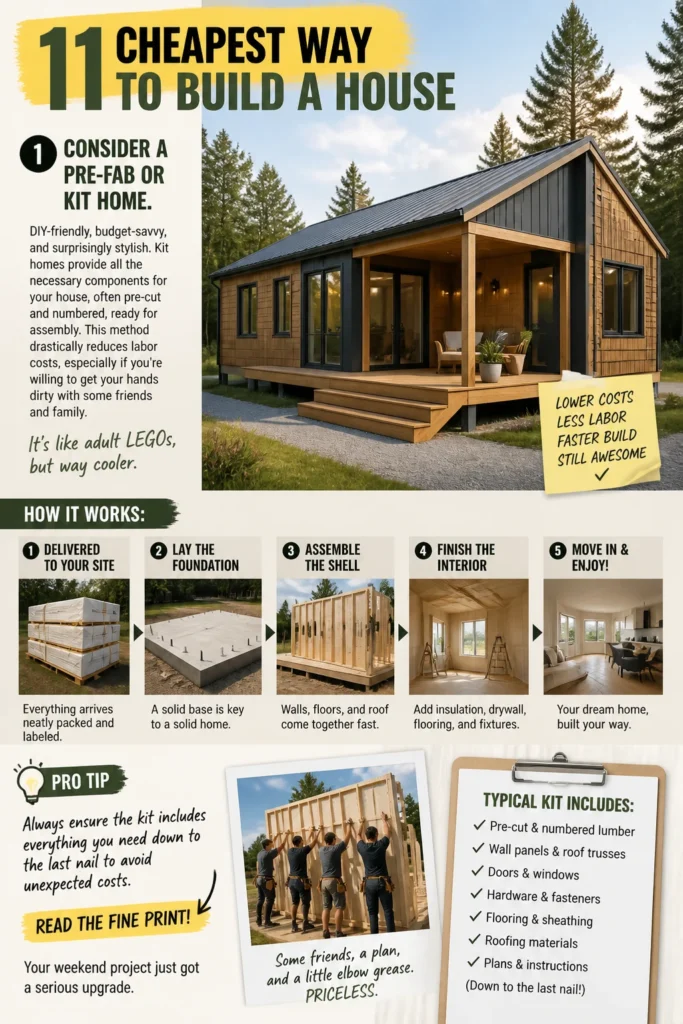
DIY-friendly, budget-savvy, and surprisingly stylish.
Kit homes provide all the necessary components for your house, often pre-cut and numbered, ready for assembly. This method drastically reduces labor costs, especially if you’re willing to get your hands dirty with some friends and family. It’s like adult LEGOs, but way cooler.
Pro tip: Always ensure the kit includes everything you need down to the last nail to avoid unexpected costs. Read the fine print!
Your weekend project just got a serious upgrade.
6. Go with an Earthbag Home
Eco-friendly, incredibly strong, and dirt cheap.
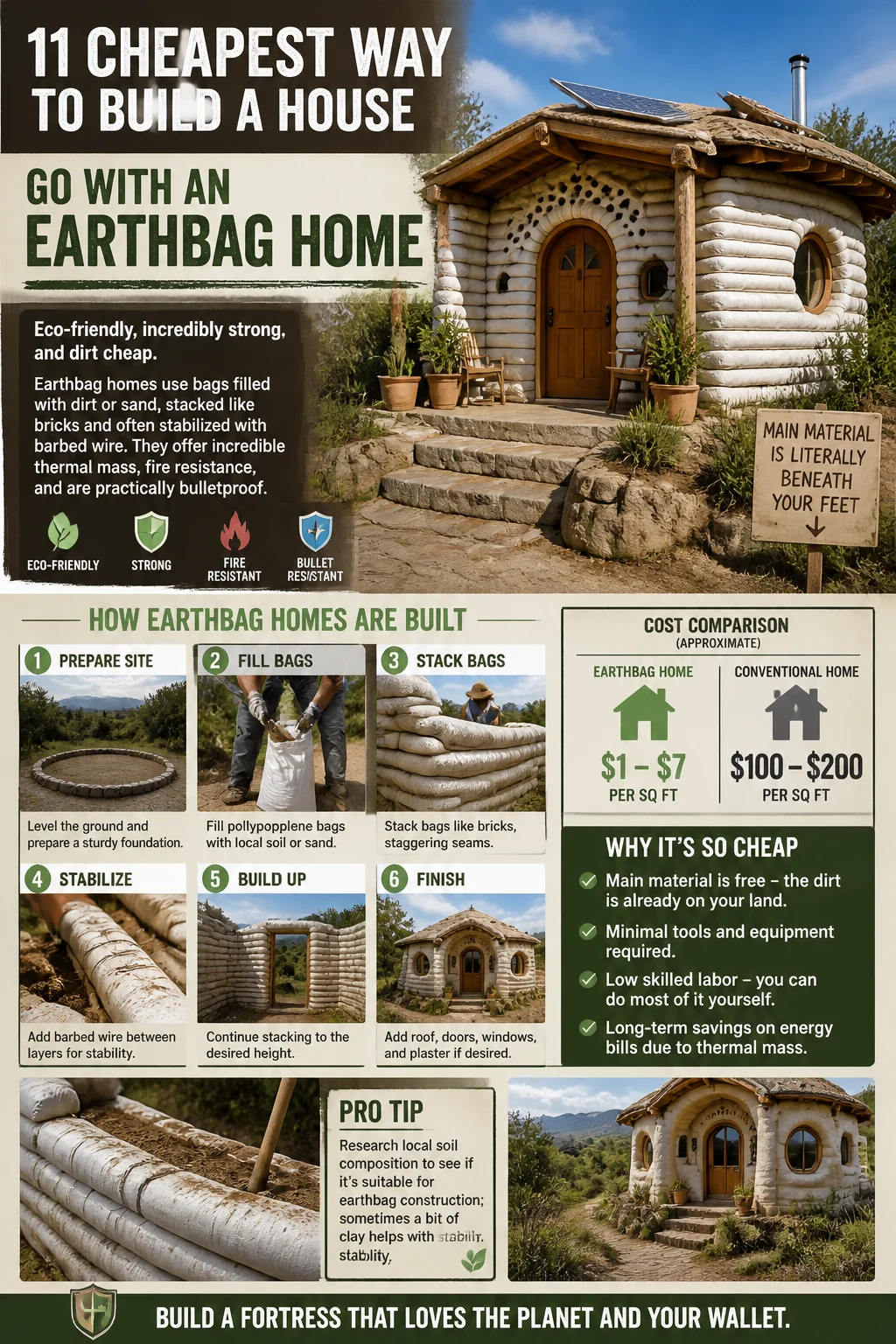
Earthbag homes use bags filled with dirt or sand, stacked like bricks and often stabilized with barbed wire. They offer incredible thermal mass, fire resistance, and are practically bulletproof. The main “material” is literally beneath your feet, making material costs laughably low.
Pro tip: Research local soil composition to see if it’s suitable for earthbag construction; sometimes a bit of clay helps with stability.
Build a fortress that loves the planet and your wallet.
7. Explore a Dome Home
Futuristic vibes, phenomenal efficiency, and less material.

Geodesic dome homes enclose the largest volume of interior space with the least amount of surface area, meaning fewer materials needed for the shell. Their unique shape makes them incredibly strong against extreme weather and super energy-efficient, which means lower bills for you.
Pro tip: While the exterior is efficient, plan your interior layout carefully to maximize usable space. Curved walls can be tricky for furniture.
Live inside a work of art that saves you serious cash on heating and cooling.
8. Utilize Recycled Materials
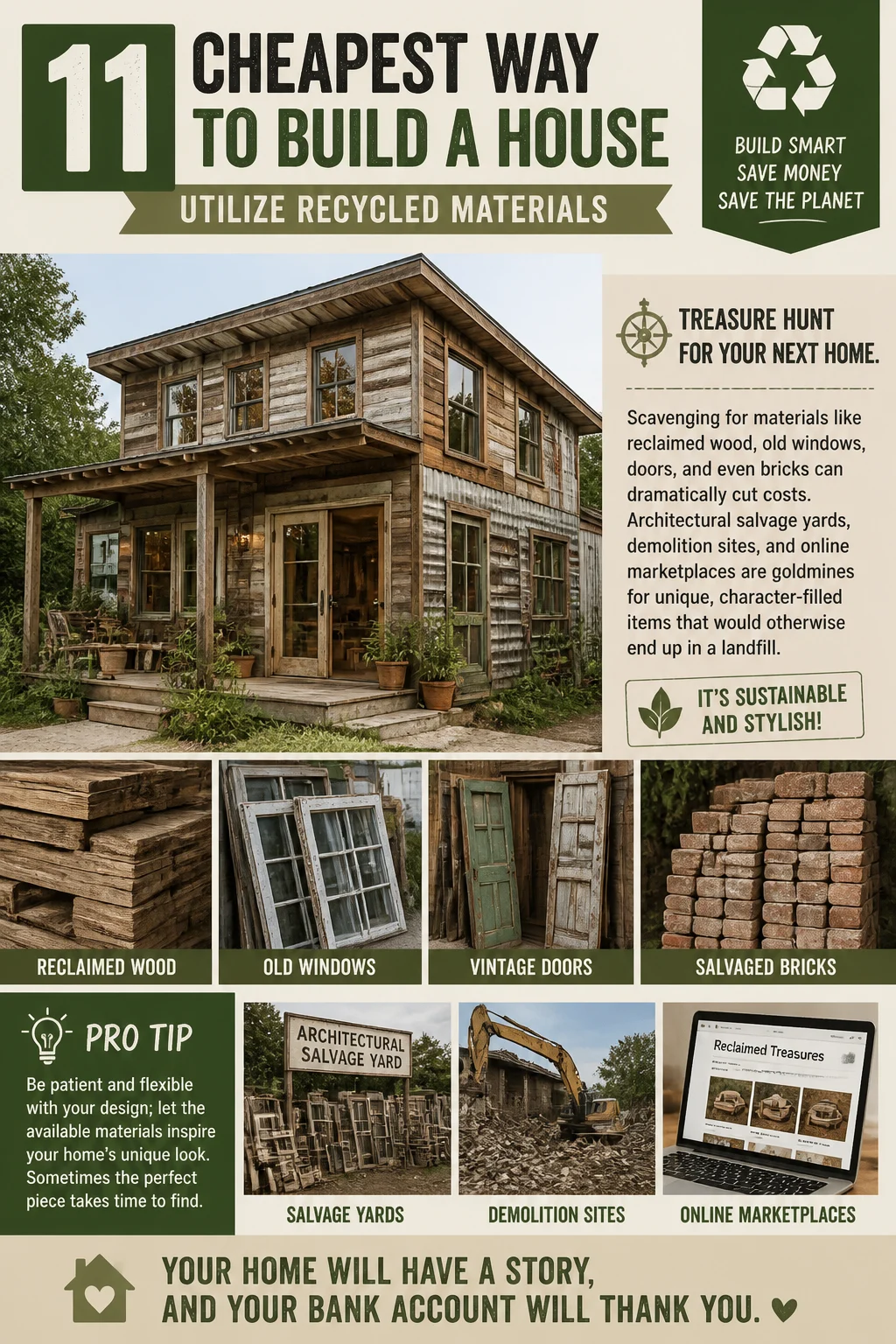
Treasure hunt for your next home.
Scavenging for materials like reclaimed wood, old windows, doors, and even bricks can dramatically cut costs. Architectural salvage yards, demolition sites, and online marketplaces are goldmines for unique, character-filled items that would otherwise end up in a landfill. It’s sustainable and stylish!
Pro tip: Be patient and flexible with your design; let the available materials inspire your home’s unique look. Sometimes the perfect piece takes time to find.
Your home will have a story, and your bank account will thank you.
9. Build a Simple, Open-Concept Box Home
No frills, all function, maximum savings.
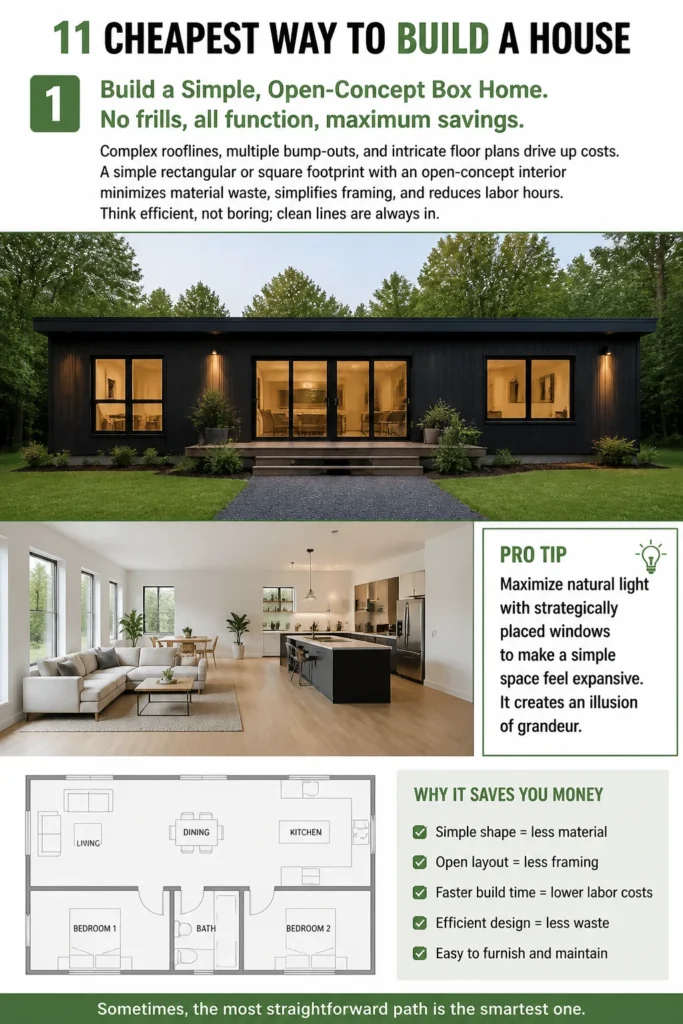
Complex rooflines, multiple bump-outs, and intricate floor plans drive up costs. A simple rectangular or square footprint with an open-concept interior minimizes material waste, simplifies framing, and reduces labor hours. Think efficient, not boring; clean lines are always in.
Pro tip: Maximize natural light with strategically placed windows to make a simple space feel expansive. It creates an illusion of grandeur.
Sometimes, the most straightforward path is the smartest one.
10. Do It Yourself (Smartly)
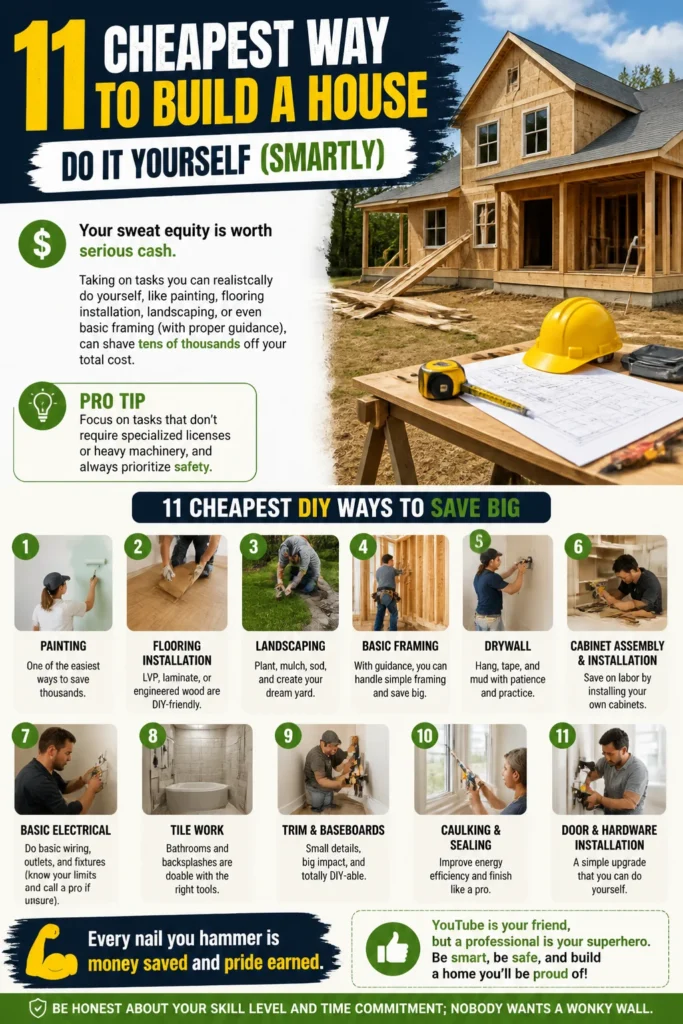
Your sweat equity is worth serious cash.
Taking on tasks you can realistically do yourself, like painting, flooring installation, landscaping, or even basic framing (with proper guidance!), can shave tens of thousands off your total cost. Just be honest about your skill level and time commitment; nobody wants a wonky wall.
Pro tip: Focus on tasks that don’t require specialized licenses or heavy machinery, and always prioritize safety. YouTube is your friend, but a professional is your superhero.
Every nail you hammer is money saved and pride earned.
11. Start with a Shell and Finish Later
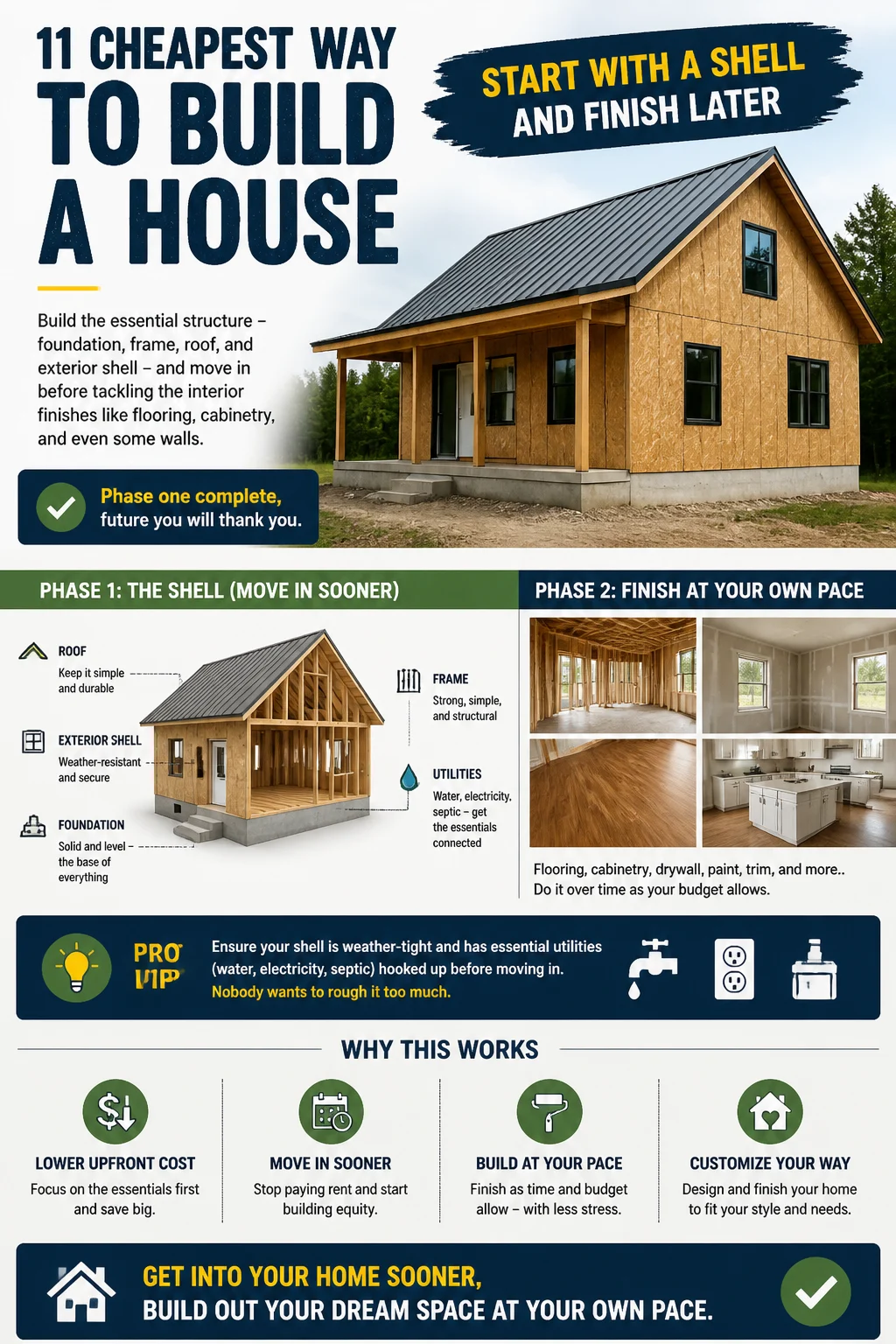
Phase one complete, future you will thank you.
Build the essential structure – foundation, frame, roof, and exterior shell – and move in before tackling the interior finishes like flooring, cabinetry, and even some walls. This significantly reduces the initial outlay, allowing you to save up for the fun stuff later. It’s like buying a house and getting an ongoing project for free.
Pro tip: Ensure your shell is weather-tight and has essential utilities (water, electricity, septic) hooked up before moving in. Nobody wants to rough it too much.
Get into your home sooner, build out your dream space at your own pace.
💼 The Money Management Toolkit
Knowledge is power, but proper execution requires the right tools. Getting your financial life organized doesn't have to be overwhelming. These 5 physical management tools are exactly what successful households use to budget, track cash, and secure their most important assets.
📝 Clever Fox Budget Planner & Bill Organizer
The ultimate analog command center for your finances. Sometimes keeping your budget in an app just doesn't stick. Physically writing down your goals, tracking expenses, and planning for debt payoff creates a level of accountability that digital spreadsheets simply can't match.
💵 A6 Leather Cash Stuffing Binder
The viral tool that made the cash-envelope budgeting system popular again. By allocating actual physical cash to designated envelopes (groceries, dining out, fun money), you physically cap your spending, making it virtually impossible to overdraft or overspend.
🔥 Fireproof & Waterproof Document Safe
A critical piece of financial security that many families overlook. Protecting your passports, birth certificates, property deeds, and estate planning documents from disaster is just as important as protecting the money in your bank account.
🏷️ Brother P-Touch Digital Label Maker
The unsung hero of a functional home office. When tax season rolls around or you need to find an important receipt, having perfectly labeled and categorized filing cabinets or accordion folders saves hours of frustrating searches and potential late fees.
🔒 SentrySafe Compact Fireproof Lock Box
For the physical assets that need extra heavy-duty protection—think emergency cash reserves, hard drives with Bitcoin cold wallets, or physical precious metals. This compact, locking safe provides peace of mind that your physical wealth is secure at home.
Conclusion
See? Building your dream home doesn’t have to break the bank or require a secret lottery win. It’s all about thinking outside the traditional box, embracing clever solutions, and maybe getting a little dirty. From tiny living to repurposed containers, these options prove that smart design and a bit of elbow grease can get you into a home you love, without the soul-crushing mortgage. Now go forth and build something awesome!