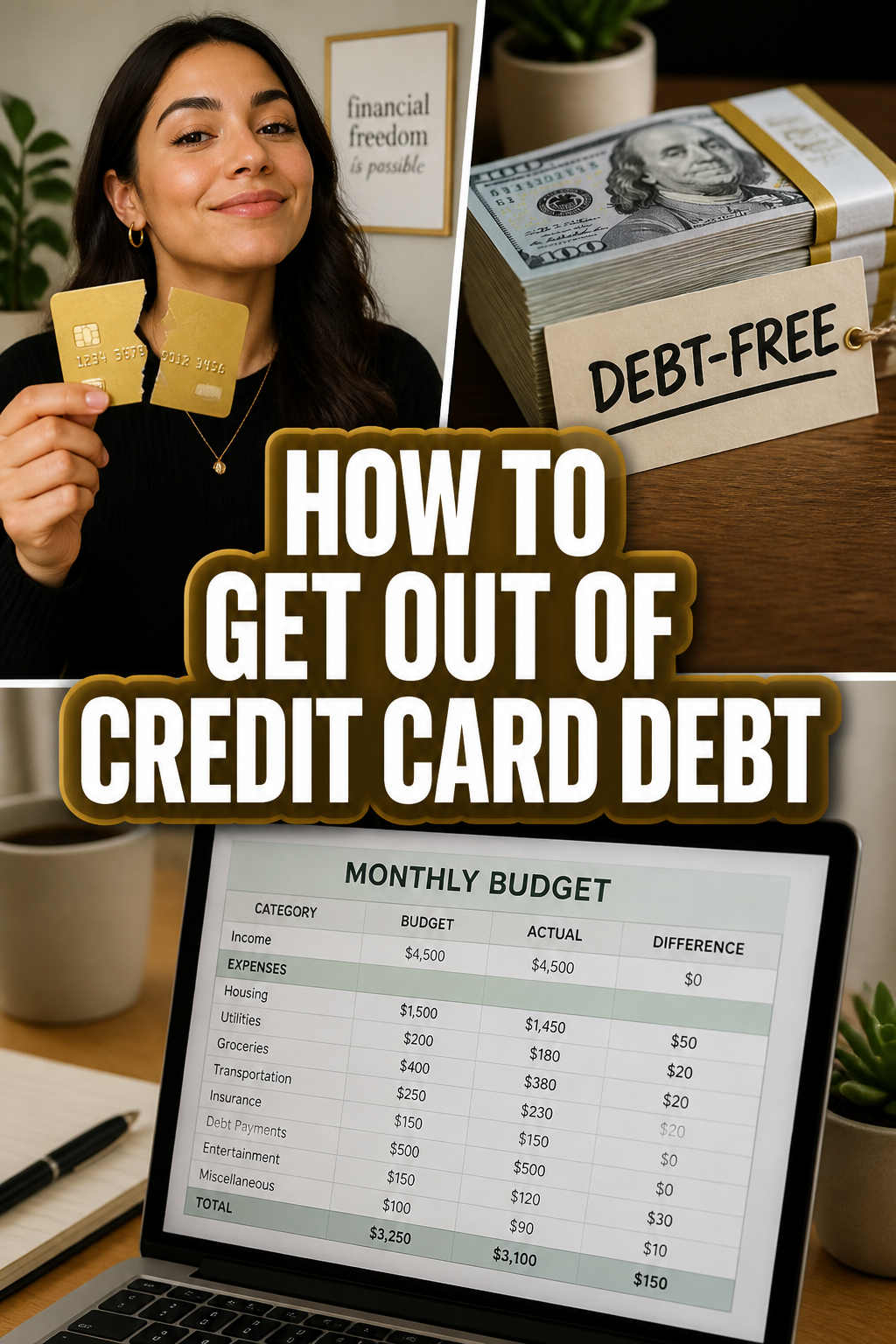
💰 How To Get Out Of Credit Card Debt
📚 The Financial Literacy Library
The best investment you can ever make is in your own financial education. These 5 cornerstone books are what millionaires, financial advisors, and wealth-builders universally recommend for completely rewiring how you think about earning, saving, and investing money.
🧠 The Psychology of Money
Doing well with money isn't necessarily about what you know—it's about how you behave. Morgan Housel masterfully breaks down the emotional and psychological biases that secretly dictate our financial decisions, offering a true paradigm shift in how to view wealth.
🏠 Rich Dad Poor Dad
The #1 personal finance book of all time for a reason. This foundational read shatters the myth that you need to earn a high income to be rich, teaching you the critical difference between working for money and making your money work for you via assets.
📈 Atomic Habits
While not strictly a finance book, building wealth is absolutely dependent on the daily habits you cultivate. James Clear provides the definitive framework for breaking bad spending habits and effortlessly automating the good ones that lead to long-term success.
📊 The Simple Path to Wealth
The ultimate antidote to complex, intimidating financial advice. JL Collins provides an incredibly accessible, low-stress roadmap to financial independence through index fund investing, perfectly explaining why simplicity beats Wall Street complexity every time.
💳 I Will Teach You to Be Rich
A tactical, no-BS, 6-week program that actually works. Ramit Sethi teaches you how to crush debt, automate your savings, and negotiate your salary—all while guilt-free spending on the things you truly love. A must-read for modern money management.
I remember the crushing weight of credit card statements arriving each month, a constant reminder of money owed, not money saved.
It felt like a never-ending cycle, but I discovered a path out – a practical, step-by-step journey that transformed my finances and my peace of mind.
This guide shares the exact strategies I used, making complex financial concepts easy to understand so you can reclaim your financial freedom too.
Quick Overview
This guide will equip you with a clear roadmap to tackle your credit card debt head-on, build lasting money habits, and start your journey toward financial independence.
- Time needed: 1-2 hours to read and set up initial plan; ongoing effort for several months to years depending on debt.
- Difficulty: Beginner to Intermediate. No prior financial expertise required.
- What you’ll need: Your credit card statements, a pen and paper or spreadsheet, an honest look at your spending, and a determination to succeed.
Step-by-Step Instructions
Step 1: Face the Music and Tally It Up
The first, most crucial step is to understand the full scope of your debt. This can feel daunting, but it’s like a doctor diagnosing an illness – you need to know what you’re dealing with before you can treat it.
Gather all your credit card statements, recent bank statements, and any other loan documents.
List every single debt you have. Include the creditor’s name, the total balance owed, the minimum monthly payment, and most importantly, the interest rate (APR) for each card.
Calculate your total debt. Seeing the number in black and white can be a powerful motivator. It’s not about judgment, it’s about clarity.
Pro Tip: Don’t just look at the total. Understand the interest rates. High-interest cards are like financial quicksand, making it harder to get ahead. Highlight these; they will be a priority.
Step 2: Craft Your Blueprint – The Budget
A budget isn’t about restriction; it’s about freedom. It’s your personal financial blueprint, showing you where every dollar goes and where you can make strategic changes.
Track your income. Know exactly how much money comes in each month after taxes and deductions.
Categorize your expenses. Divide your spending into fixed costs (rent, car payment) and variable costs (groceries, entertainment). Look at the last 30-60 days of bank and credit card statements to get an accurate picture.
Identify areas for reduction. Can you cut down on dining out? Cancel unused subscriptions? Every dollar saved from your variable expenses is a dollar that can go towards debt repayment.
Allocate funds for debt. Once you know your income and expenses, dedicate a specific amount each month to debt repayment, beyond the minimums. This is your “debt payment fund.”
Pro Tip: Use a simple spreadsheet, a budgeting app like YNAB (You Need A Budget), or even pen and paper. The tool doesn’t matter as much as the consistent effort to track and adjust.
Step 3: Choose Your Debt Payoff Weapon
With your debt fully understood and a budget in place, it’s time to pick a strategy. There are two popular, highly effective methods for tackling credit card debt: the Debt Snowball and the Debt Avalanche.
Understand the Debt Snowball method. You pay minimum payments on all cards except for the one with the smallest balance. You throw every extra dollar at that smallest debt until it’s gone. Then, you take the money you were paying on the first card (minimum + extra) and apply it to the next smallest debt. This method builds momentum and motivation.
Explore the Debt Avalanche method. With this approach, you pay minimum payments on all cards except for the one with the highest interest rate (APR). You attack that high-interest debt with all your extra funds. Once it’s paid off, you move to the next highest interest rate card. This method saves you the most money on interest.
Select the method that resonates with you. If you need psychological wins to stay motivated, the Snowball is often better. If you’re disciplined and want to save the most money, the Avalanche is your choice.
Pro Tip: Whichever method you choose, commit to it. Consistency is far more important than perfection. You can always adjust your strategy later if needed.
Step 4: Supercharge Your Repayment – Earn More, Spend Less
To accelerate your debt payoff, you need to create more margin in your budget. This means either increasing your income or decreasing your expenses, or ideally, both.
Find ways to cut spending. Review your variable expenses from Step 2. Can you pack lunches instead of buying? Brew coffee at home? Look for free entertainment options? Small cuts add up.
Seek temporary income boosts. Consider a side hustle: dog walking, freelance writing, delivering food, selling unused items online. Even a few hundred extra dollars a month can make a significant impact on your debt.
Negotiate bills. Call your cable, internet, and phone providers. Ask if there are cheaper plans available or if they can offer a discount. Many companies will work with you to keep your business.
Pause non-essential purchases. For a period, adopt a “debt-free first” mindset. Delay buying new gadgets or clothes until your debt is under control.
Pro Tip: Create a “No-Spend Challenge” for a week or a month. This can be a fun way to identify unnecessary spending and build new habits, revealing just how much you can save.
Step 5: Explore Debt Consolidation or Balance Transfers (Use Wisely)
For those with good credit and multiple high-interest cards, consolidating debt or transferring balances can be powerful tools. These are not quick fixes, but strategic moves to simplify and reduce interest.
Consider a balance transfer credit card. If you have good credit, you might qualify for a card with a 0% introductory APR for 12-18 months. This allows you to transfer high-interest balances and pay them down without accruing new interest during that promotional period.
Be cautious with balance transfers. Ensure you can pay off the transferred balance before the 0% APR expires, as the interest rate will jump significantly afterward. Also, be aware of balance transfer fees, usually 3-5% of the transferred amount.
Look into a personal loan for debt consolidation. A personal loan can combine multiple credit card debts into one single payment, often with a lower, fixed interest rate. This simplifies your payments and can save you money on interest over time.
Shop around for personal loans. Compare interest rates, origination fees, and repayment terms from different banks and credit unions. Ensure the new loan’s interest rate is significantly lower than your credit card rates.
Pro Tip: If you consolidate debt, resist the urge to use the newly available credit on your old cards. Cut them up or lock them away to prevent accumulating new debt. This is about breaking the cycle.
Step 6: Automate Your Payments and Savings
One of the easiest ways to ensure consistency and avoid missed payments is to automate your finances. Set it and forget it (mostly).
Set up automatic payments for your credit card debts. At a minimum, set up auto-pay for the minimum payment on all cards. Then, manually pay the extra amount towards your chosen debt payoff card.
Automate your “debt payment fund.” Once you’ve identified how much extra you can pay each month, set up an automatic transfer from your checking account to a separate savings account (or directly to the credit card) on your payday.
Schedule regular budget reviews. Even with automation, it’s wise to check in with your budget weekly or bi-weekly. This helps you stay on track, adjust for unexpected expenses, and celebrate progress.
Pro Tip: Treat your debt payments like any other essential bill. Make them a non-negotiable part of your monthly financial plan. This mental shift is incredibly powerful.
Step 7: Build Your Emergency Fund
An emergency fund is your financial shield. It prevents unexpected expenses from derailing your debt payoff plan and pushing you back into credit card reliance.
Start small. Aim for a starter emergency fund of $1,000 to $2,000. This might seem like a lot, but it covers common emergencies like a car repair or a medical co-pay.
Save consistently. Even if it’s just $25 or $50 a week, consistent contributions add up. Treat your emergency fund savings like a non-negotiable bill.
Keep it separate. Store your emergency fund in a separate, easily accessible savings account, ideally at a different bank than your primary checking account. This makes it harder to dip into for non-emergencies.
Pro Tip: Think of your emergency fund as “debt prevention.” It’s an investment in your financial stability and ensures that life’s curveballs don’t send you spiraling back into credit card debt.
Step 8: Track Your Progress and Stay Motivated
Getting out of debt is a marathon, not a sprint. Celebrating small victories and clearly seeing your progress will keep your motivation high.
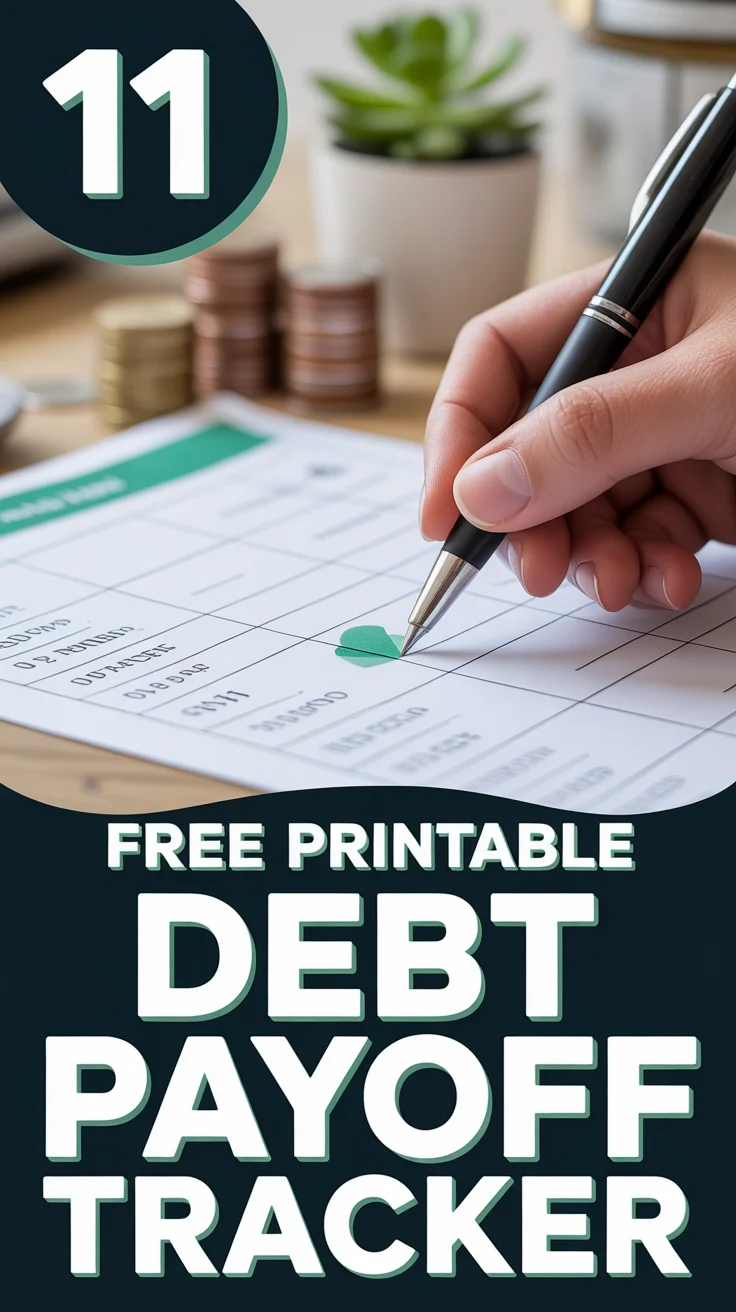
Create a visual tracker. Use a thermometer chart, a spreadsheet, or even a simple calendar to mark off payments. Seeing the numbers shrink can be incredibly encouraging.
Celebrate milestones. Paid off your first card? Made your first extra $1,000 payment? Acknowledge these wins with a small, budget-friendly reward (e.g., a nice coffee, a walk in the park, a movie night at home).
Connect with others. Join an online community or talk to a trusted friend or family member who is also working on their finances. Shared experiences can provide support and accountability.
Pro Tip: Focus on how much closer you are to being debt-free, not how much is still left. Your mindset is a powerful tool in this journey.
Step 9: Prevent Future Debt – Build Smart Habits
Paying off debt is one thing; staying out of it is another. This step is about forging new, healthy financial habits that will serve you for a lifetime.
Continue budgeting. Your budget isn’t just for debt repayment; it’s a tool for managing all your money, even after the debt is gone.
Live below your means. Make it a habit to spend less than you earn. This simple principle is the cornerstone of wealth building.
Use credit cards responsibly (if at all). If you choose to keep credit cards, treat them like debit cards. Only charge what you can immediately pay off in full each month to avoid interest.
Plan for large purchases. Instead of charging a new appliance or vacation, save up for it in advance. Cash is king.
Pro Tip: Once your credit card debt is gone, reallocate those payments towards building your emergency fund further, saving for retirement, or investing. Your “debt payment fund” becomes your “wealth-building fund.”
Step 10: Envision Your Debt-Free Future
As you approach the finish line, take time to envision what life will be like without credit card debt. This isn’t just a financial goal; it’s a lifestyle transformation.
Imagine the possibilities. What will you do with the money you used to pay towards debt? Save for a down payment? Travel? Invest for retirement?
Reflect on your journey. Think about the discipline, the sacrifices, and the lessons learned. You’ve gained invaluable financial wisdom.
Set new financial goals. Once debt-free, shift your focus to wealth accumulation. Start saving for a down payment, maxing out retirement accounts, or investing in your future.
Pro Tip: Your debt-free status is a launchpad. It’s not the end of your financial journey, but the exciting beginning of building true financial freedom and security.
Common Mistakes to Avoid
Ignoring the Problem
Many people stuff their credit card statements in a drawer, hoping the problem will disappear. Unfortunately, debt only grows with interest, making it harder to tackle later. Facing it head-on, even if uncomfortable, is the only way to gain control.
Instead, actively gather all your debt information. Knowledge is power, and understanding the full scope of your debt is the first step toward creating an effective plan to eliminate it.
Only Paying Minimums
Paying only the minimum amount on your credit cards keeps you in debt for years, sometimes decades, and costs you significantly more in interest. Minimum payments are designed to keep you paying, not to help you get out of debt quickly.
Always aim to pay more than the minimum. Every extra dollar you pay goes directly to the principal balance, reducing the amount of interest you’ll owe over time and accelerating your debt payoff.
Falling Back into Old Habits
It’s easy to pay off debt only to accumulate it again if you haven’t addressed the underlying spending habits. This creates a frustrating cycle of being “debt-free” then “in debt” again.
Focus on building sustainable, money-smart habits while paying off debt. This includes consistent budgeting, living below your means, and building an emergency fund to prevent future reliance on credit cards for unexpected expenses.
Troubleshooting
Feeling Overwhelmed
It’s natural to feel overwhelmed when facing a large amount of debt. The key is to break the problem down into smaller, manageable steps, just like this guide outlines.
Focus on one step at a time. Celebrate small victories, even just creating your debt list or cutting $20 from your grocery bill. Remember why you started, and remind yourself that every small action moves you closer to your goal.
Unexpected Expenses Derail Plan
Life happens, and unexpected costs can pop up, threatening to throw your debt payoff plan off track. This is precisely why an emergency fund is so critical.
If an emergency fund isn’t fully built yet, adjust your budget temporarily. Prioritize essential expenses and minimum debt payments. Get back on track as soon as possible, and double down on building that emergency fund to protect your plan in the future.
Difficulty Cutting Expenses
Sometimes it feels like there’s nothing left to cut from your budget. If you’ve trimmed all the fat, it might be time to look at increasing your income.
Review your budget for “sacred cows” – expenses you’ve deemed untouchable but might actually be negotiable or temporarily reducible. If cutting isn’t an option, explore side hustles or temporary ways to earn extra money to accelerate your debt repayment.
Key Takeaways
- Knowledge is Power: Fully understand your debt, including balances and interest rates, to create an effective plan.
- Budget for Freedom: A well-crafted budget is your roadmap, showing you where your money goes and where you can make strategic changes.
- Pick Your Strategy: Choose between the Debt Snowball (for motivation) or Debt Avalanche (for saving interest) and stick with it.
- Boost Your Margin: Actively seek to increase income and decrease expenses to accelerate your debt payoff.
- Build a Shield: An emergency fund is crucial to prevent future debt, protecting your progress from unexpected life events.
- Automate & Monitor: Set up automatic payments and regularly track your progress to stay consistent and motivated.
Frequently Asked Questions
Should I close my credit cards after paying them off?
Generally, it’s not recommended to close all your credit cards immediately after paying them off. Closing accounts can lower your overall available credit, which may negatively impact your credit utilization ratio and, consequently, your credit score. Instead, keep a couple of older, paid-off accounts open with a zero balance to maintain a healthy credit history and score.
What’s the difference between debt snowball and avalanche?
The debt snowball method focuses on paying off debts from smallest balance to largest, providing psychological wins and motivation. The debt avalanche method focuses on paying off debts from highest interest rate to lowest, saving you the most money on interest over time. Both are effective, but one might suit your personality better.
How long will this take?
The timeline for getting out of credit card debt depends on several factors: the total amount of debt, your interest rates, and how much extra you can pay beyond the minimums each month. By following these steps and aggressively applying extra payments, you can significantly reduce the time it takes, often cutting years off your repayment period.
Is it ever okay to use credit cards again?
Yes, but with extreme caution and responsibility. Once debt-free, you might choose to use a credit card for specific purposes, such as earning rewards or for emergencies, but only if you can commit to paying the full balance every single month. If you can’t trust yourself to do that, it’s better to avoid them entirely.
Our Top Recommended Finds
- Budget Planner Notebook: A physical tool to help you track spending, set goals, and visualize your financial progress without digital distractions.
- Personal Finance Book: A well-regarded book on personal finance can deepen your understanding and reinforce good money habits beyond this guide.
- High-Yield Savings Account: Essential for your emergency fund, this type of account helps your savings grow faster with better interest rates than traditional banks.
Your Path to Financial Freedom Starts Now
You’ve taken the critical first step by seeking out this guide. Now, it’s time to translate knowledge into action. Every single choice you make from this moment forward can bring you closer to a life free from the burden of credit card debt.
Imagine the peace of mind, the opportunities, and the financial power you’ll gain. This isn’t just about paying off debt; it’s about building a foundation for lasting wealth and a future where you control your money, not the other way around.
So, take a deep breath, pick up your statements, and begin your journey today. Your debt-free self will thank you.