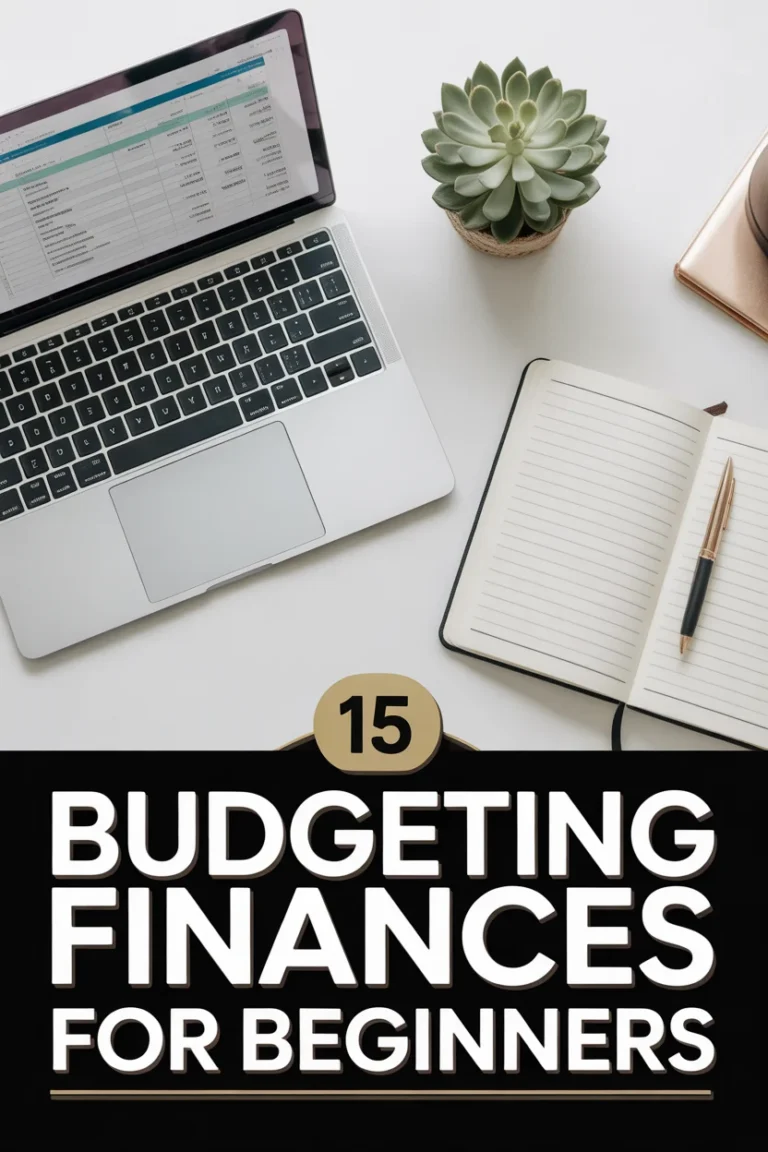
💰 How To Create A Budget
📚 The Financial Literacy Library
The best investment you can ever make is in your own financial education. These 5 cornerstone books are what millionaires, financial advisors, and wealth-builders universally recommend for completely rewiring how you think about earning, saving, and investing money.
🧠 The Psychology of Money
Doing well with money isn't necessarily about what you know—it's about how you behave. Morgan Housel masterfully breaks down the emotional and psychological biases that secretly dictate our financial decisions, offering a true paradigm shift in how to view wealth.
🏠 Rich Dad Poor Dad
The #1 personal finance book of all time for a reason. This foundational read shatters the myth that you need to earn a high income to be rich, teaching you the critical difference between working for money and making your money work for you via assets.
📈 Atomic Habits
While not strictly a finance book, building wealth is absolutely dependent on the daily habits you cultivate. James Clear provides the definitive framework for breaking bad spending habits and effortlessly automating the good ones that lead to long-term success.
📊 The Simple Path to Wealth
The ultimate antidote to complex, intimidating financial advice. JL Collins provides an incredibly accessible, low-stress roadmap to financial independence through index fund investing, perfectly explaining why simplicity beats Wall Street complexity every time.
💳 I Will Teach You to Be Rich
A tactical, no-BS, 6-week program that actually works. Ramit Sethi teaches you how to crush debt, automate your savings, and negotiate your salary—all while guilt-free spending on the things you truly love. A must-read for modern money management.
Ever felt like your money has a mind of its own, disappearing before you even know where it went? Or maybe you dream of financial freedom, a big purchase, or simply less stress, but aren’t sure how to get there. Creating a budget isn’t about restriction; it’s about empowerment, giving you the clarity and control to align your spending with your values and achieve your biggest financial aspirations.

Quick Overview
This guide will walk you through the practical steps to build a robust budget that works for you. You’ll learn how to track your money, identify saving opportunities, and create a roadmap to reach your financial goals, transforming confusion into confidence.
- Time needed: 1-2 hours for initial setup, then 15-30 minutes weekly for maintenance.
- Difficulty: Beginner
- What you’ll need: Your bank statements (last 3 months), pay stubs or income details, credit card statements, a computer/smartphone, and an open, honest mindset.
Step-by-Step Instructions
Step 1: Gather Your Financial Intel (The Discovery Phase)
Before you can plan where your money should go, you need to know where it’s been and where it’s coming from. This is your financial reconnaissance mission. Collect all relevant documents: bank statements, credit card statements, pay stubs, and any other income or expense records from the past 2-3 months. This historical data will provide a realistic baseline for your spending habits and income flow.
Pro tip: Don’t just glance at the summaries. Dig into the details. Many people are surprised by how much they spend on small, seemingly insignificant items when they see it all laid out.
Step 2: Calculate Your Monthly Income
Your income is the fuel for your financial engine. Accurately determine your total take-home pay (net income) for the month. This is the amount that actually lands in your bank account after taxes, health insurance, and retirement contributions have been deducted. If you have multiple income sources (salary, freelance work, side hustles, rental income), add them all up. If your income varies from month to month, calculate an average or, even better, use your lowest income month as your baseline to ensure you always have enough.
Pro tip: For variable income earners, consider creating a “buffer” savings account. When you have a higher-income month, set aside the surplus to cover potential dips in future months. This smooths out your cash flow and reduces stress.
Step 3: Track Your Spending (Uncover the Truth)
This is often the most eye-opening step. For the next 30 days (or by reviewing your past 2-3 months of statements), meticulously track every single dollar you spend. Don’t judge, just observe. Use a budgeting app (like Mint, YNAB, Personal Capital), a simple spreadsheet, or even a pen and paper notebook. Categorize each transaction as you go. This process reveals your true spending habits, often exposing “money leaks” you didn’t even realize existed.
Pro tip: Be brutally honest with yourself. Label that daily coffee as “coffee” not “groceries.” The more specific you are, the clearer the picture of your spending will be. Many apps can auto-categorize, but always double-check for accuracy.
Step 4: Categorize Your Expenses (Needs vs. Wants & Fixed vs. Variable)
Once you have a clear picture of where your money is going, it’s time to organize it. Divide your expenses into two main groups:
- Fixed Expenses: These are costs that are generally the same every month and are often contractual. Examples include rent/mortgage, loan payments (car, student), insurance premiums, and subscriptions.
- Variable Expenses: These costs fluctuate month-to-month and you have more control over them. Examples include groceries, utilities, dining out, entertainment, clothing, and transportation (gas).
Within these, further classify them as “Needs” (essential for living, like housing, food, utilities, minimum debt payments) and “Wants” (discretionary spending that improves your quality of life but isn’t strictly necessary, like dining out, entertainment, new gadgets). A popular guideline is the 50/30/20 Rule: 50% of your income for Needs, 30% for Wants, and 20% for Savings & Debt Repayment.
Pro tip: Don’t forget those less frequent but inevitable expenses like annual car registration, holiday gifts, or medical co-pays. Create “sinking funds” by setting aside a small amount each month into a separate savings bucket for these future costs. This prevents them from becoming budget-busters.
Step 5: Design Your Budget (Give Every Dollar a Job)
Now for the exciting part: allocating your money! Based on your income and tracked expenses, assign a specific amount of money to each category for the upcoming month. The goal is a “zero-based budget” where your Income – Expenses – Savings = Zero. This doesn’t mean your bank account is empty; it means every dollar has a purpose. Start with your fixed expenses, then allocate to your variable needs, and finally, your variable wants and savings goals.
If your initial budget shows you’re spending more than you earn, it’s time to make some tough but empowering choices. Look at your “wants” first. Can you reduce dining out? Cut down on subscriptions? If that’s not enough, review your “needs.” Can you find a cheaper cell phone plan? Reduce grocery waste? Remember, this is about aligning your money with your priorities.
Pro tip: Be realistic, especially in the beginning. Don’t cut everything out at once, or you’ll likely feel deprived and give up. Start with small, sustainable changes and gradually optimize. Build in a small “miscellaneous” or “fun money” category to avoid feeling too restricted.
Step 6: Put Your Budget into Action & Monitor Regularly
A budget isn’t a one-time creation; it’s a living document that needs regular attention. Choose your preferred budgeting tool (app, spreadsheet, or even an old-school ledger) and start tracking your spending against your allocated amounts. This means when you spend money, you record it and deduct it from the relevant category. At least once a week, review your progress. Are you on track? Are you overspending in one area and underspending in another? This regular check-in is crucial for staying accountable and making timely adjustments.
Pro tip: Schedule a weekly “money date” with yourself (or your partner). This dedicated time helps you stay consistent and makes budgeting a habit rather than a chore. It could be 15 minutes on a Sunday morning, reviewing transactions and updating your budget.
Step 7: Adjust, Optimize, and Automate
Life happens, and your budget needs to be flexible enough to adapt. Did you have an unexpected car repair? A sudden medical expense? Adjust your categories for the next month. Learn from your overspending or underspending. If you consistently go over in “groceries,” maybe your initial allocation was too low. Don’t be afraid to tweak your numbers until they accurately reflect your reality and goals.
Once you’ve got a good rhythm, start automating your savings and bill payments. Set up automatic transfers from your checking account to your savings account(s) (emergency fund, retirement, specific goals) right after you get paid. Automate bill payments for fixed expenses. This “set it and forget it” approach ensures you’re consistently working towards your goals and reduces the chance of missed payments.
Pro tip: Start small with automation. Even transferring $25 or $50 per paycheck to savings can add up significantly over time. The key is consistency.
Step 8: Set Financial Goals & Celebrate Your Wins
Budgeting isn’t just about managing money; it’s about achieving your dreams. Define your financial goals: short-term (e.g., build a $1,000 emergency fund in 3 months), mid-term (e.g., save for a down payment in 3 years), and long-term (e.g., retirement, financial independence). Assign a specific amount from your budget to each goal. Seeing your money actively contributing to these goals is incredibly motivating.
And don’t forget to celebrate! When you hit a savings milestone, pay off a debt, or stick to your budget for a full month, acknowledge your hard work. This positive reinforcement keeps you engaged and motivated for the long haul. Budgeting is a journey, and every step forward deserves recognition.
Pro tip: Visualize your goals. Create a vision board, use a progress tracker, or put a picture of your dream vacation on your fridge. Seeing your goals daily reinforces your commitment.
Common Mistakes to Avoid
Creating a budget is a learning process. Here are some common pitfalls and how to steer clear of them:
- Being Too Restrictive: Trying to cut out all “fun” money or luxuries from day one is a recipe for burnout. This often leads to feeling deprived, abandoning the budget, and binge spending.
Correct Approach: Build in a realistic amount for discretionary spending. Start with small, sustainable cuts and gradually optimize. A budget should empower you, not imprison you. - Not Tracking Consistently: Setting up a budget once and then ignoring it is like planning a trip and never looking at the map again. Your spending habits change, and unexpected expenses arise.
Correct Approach: Make budgeting a regular habit. Schedule weekly check-ins to review transactions, update categories, and adjust as needed. Consistency is key to success. - Ignoring Small, Irregular Expenses: Many people budget for big bills but forget about things like annual subscriptions, car maintenance, or holiday gifts. These “surprise” expenses can derail your budget.
Correct Approach: Create “sinking funds” for irregular but anticipated expenses. Set aside a small amount each month into a dedicated savings bucket so you’re prepared when these costs arise. - Getting Discouraged by Setbacks: You’ll likely overspend in a category or miss a savings goal at some point. Don’t let one misstep derail your entire effort.
Correct Approach: View setbacks as learning opportunities. Analyze what went wrong, adjust your budget for the next month, and get back on track. Progress, not perfection, is the goal. - Not Involving Your Partner (If Applicable): If you share finances with a partner, trying to budget unilaterally can lead to conflict and confusion.
Correct Approach: Make budgeting a team effort. Discuss financial goals, spending priorities, and review the budget together. Open communication is vital for shared financial success.
Troubleshooting
Here are some common issues you might encounter and quick solutions:
- “I don’t have enough money left over!”
Solution: Revisit your “Needs vs. Wants” classification. Are there any “wants” you can temporarily reduce or eliminate? Look for areas to cut fixed expenses (e.g., refinancing, negotiating bills). Explore ways to increase your income, even temporarily, through a side hustle or selling unused items.
- “My spending is too inconsistent/unpredictable!”
Solution: For highly variable categories (like groceries or entertainment), use an average of your past 3-6 months’ spending to set your budget. Consider implementing a “cash envelope” system for these categories to physically limit your spending. Build a small “buffer” or “miscellaneous” category for unexpected small expenses.
- “I keep overspending in certain categories!”
Solution: First, adjust your allocation if it’s truly too low. If not, identify your triggers. Are you emotionally spending? Are you not meal planning for groceries? Brainstorm specific strategies to curb spending in that area (e.g., bringing lunch to work, unsubscribing from retail emails, finding free entertainment). Sometimes, setting stricter boundaries or even a “spending freeze” in that category for a week can help reset habits.
Key Takeaways
- Budgeting is about control, not restriction: It empowers you to direct your money towards your goals.
- Knowledge is power: Accurately tracking your income and expenses is the first, crucial step.
- Be flexible and adjust: Your budget is a living document that needs regular review and adaptation.
- Automate your savings: Make consistent progress towards your goals effortless.
- Focus on your “why”: Connect your budget to your financial goals to stay motivated and celebrate every win.
Frequently Asked Questions
Q: How often should I review my budget?
A: A quick check-in weekly to categorize transactions and see where you stand is highly recommended. A deeper dive and adjustment session at the end of each month is essential to optimize and plan for the next cycle.
Q: What’s the best budgeting tool?
A: The best tool is the one you’ll actually use consistently! Options range from simple pen and paper, free spreadsheets (Google Sheets, Excel), to dedicated budgeting apps (Mint, YNAB, Rocket Money, Personal Capital). Try a few to see what fits your style and needs.
Q: Can I still have fun while budgeting?
A: Absolutely! Budgeting isn’t about eliminating fun; it’s about planning for it. By consciously allocating money to entertainment, hobbies, and dining out, you can enjoy these activities guilt-free, knowing they fit within your financial plan.
Q: What if my income is irregular?
A: Base your core budget on your lowest expected monthly income. When you have a higher-income month, use the surplus to build an emergency fund, contribute to “sinking funds” for irregular expenses, or save for larger goals. This ensures you can always cover your essentials.
What’s Next?
Congratulations! You’ve taken a monumental step towards financial control. Creating a budget is just the beginning of your money-smart journey. Here are some next steps to consider:
- Build a Robust Emergency Fund: Aim for 3-6 months of essential living expenses saved in an easily accessible, separate high-yield savings account.
- Tackle High-Interest Debt: Once your emergency fund is started, focus on paying down credit card debt or other high-interest loans using strategies like the debt snowball or debt avalanche.
- Start Investing: Even small, consistent investments can grow significantly over time thanks to compounding. Explore low-cost index funds or ETFs.
- Review Your Insurance: Ensure you have adequate coverage for health, auto, home, and life insurance to protect your financial well-being.
- Plan for Retirement: Even if it seems far away, start contributing to a 401(k) or IRA as early as possible to take advantage of tax benefits and compound growth.
Don’t wait another day. Open your bank statements, grab a notebook or an app, and start your budgeting journey today. Your future self will thank you!