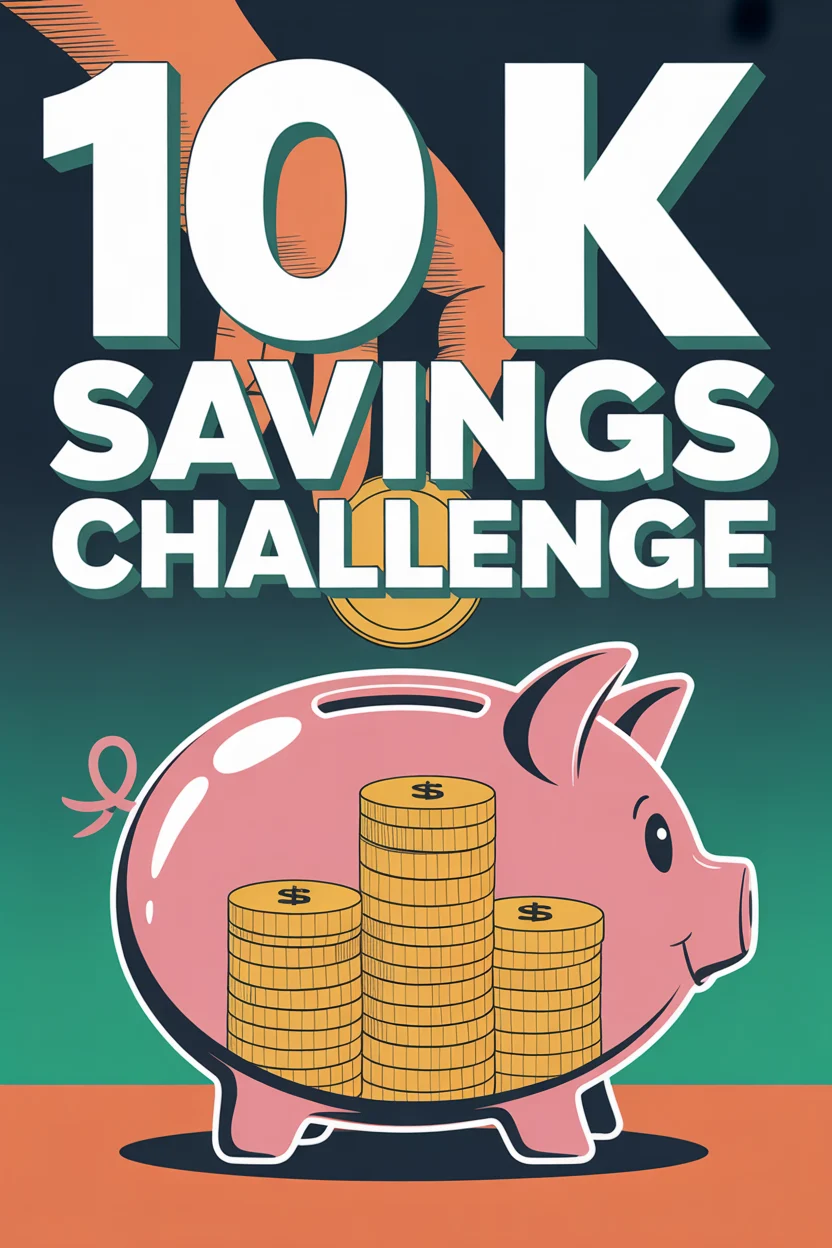
💰 10 K Savings Challenge
📚 The Financial Literacy Library
The best investment you can ever make is in your own financial education. These 5 cornerstone books are what millionaires, financial advisors, and wealth-builders universally recommend for completely rewiring how you think about earning, saving, and investing money.
🧠 The Psychology of Money
Doing well with money isn't necessarily about what you know—it's about how you behave. Morgan Housel masterfully breaks down the emotional and psychological biases that secretly dictate our financial decisions, offering a true paradigm shift in how to view wealth.
🏠 Rich Dad Poor Dad
The #1 personal finance book of all time for a reason. This foundational read shatters the myth that you need to earn a high income to be rich, teaching you the critical difference between working for money and making your money work for you via assets.
📈 Atomic Habits
While not strictly a finance book, building wealth is absolutely dependent on the daily habits you cultivate. James Clear provides the definitive framework for breaking bad spending habits and effortlessly automating the good ones that lead to long-term success.
📊 The Simple Path to Wealth
The ultimate antidote to complex, intimidating financial advice. JL Collins provides an incredibly accessible, low-stress roadmap to financial independence through index fund investing, perfectly explaining why simplicity beats Wall Street complexity every time.
💳 I Will Teach You to Be Rich
A tactical, no-BS, 6-week program that actually works. Ramit Sethi teaches you how to crush debt, automate your savings, and negotiate your salary—all while guilt-free spending on the things you truly love. A must-read for modern money management.
Ever dreamt of having a solid financial cushion, a down payment for your dream home, or the capital to kickstart a new venture? For many, the idea of saving a significant sum like $10,000 can feel daunting, a distant mountain too high to climb. But what if there was a clear, structured path to reach that summit? Enter the 10 K Savings Challenge – a popular and incredibly effective strategy designed to help you accumulate a substantial amount of money, often within a year or two, by transforming complex financial goals into actionable, manageable steps. This isn’t just about stashing cash; it’s about building powerful saving habits, understanding your money better, and gaining the confidence to tackle even bigger financial aspirations. If you’re ready to take control of your financial future and witness the remarkable power of consistent effort, you’ve come to the right place. Let’s dive into how this challenge can revolutionize your relationship with money.
What is 10 K Savings Challenge?
At its core, the 10 K Savings Challenge is a personal finance strategy where an individual commits to saving $10,000 over a predetermined period. The “K” stands for kilo, representing a thousand, so 10 K means ten thousand dollars. While the target amount is fixed, the beauty of this challenge lies in its flexibility regarding the timeframe. Some ambitious savers might aim to hit $10K in six months, requiring a more aggressive savings rate, while others might opt for a more comfortable 12-month or even 24-month plan. The key is to break down the large goal into smaller, manageable weekly or monthly contributions.
For example, to save $10,000 in one year (12 months), you would need to set aside approximately $833.33 each month. If you aim for six months, that jumps to about $1,666.67 per month. Conversely, extending it to two years means a more gentle $416.67 per month. This systematic approach demystifies the saving process, turning an abstract goal into a concrete financial roadmap.
The challenge isn’t just about the numbers; it’s a powerful tool for behavior change. It encourages participants to critically examine their income and expenses, identify areas for reduction, and explore opportunities to boost their earnings. It fosters discipline, promotes delayed gratification, and ultimately equips you with invaluable financial literacy that extends far beyond reaching the $10K mark. Whether you’re saving for an emergency fund, a down payment on a car or home, a significant investment, or simply to gain peace of mind, the 10 K Savings Challenge provides the structure and motivation to make that goal a reality.
Key Features
The success and popularity of the 10 K Savings Challenge stem from several powerful features that make it an effective tool for financial growth:
- Clear, Quantifiable Goal: Unlike vague resolutions to “save more,” the 10 K Challenge presents a specific, measurable target ($10,000). This clarity makes the goal tangible and easier to track, providing a strong sense of direction and purpose.
- Adaptable Timeline: The challenge is highly flexible, allowing individuals to choose a timeframe that aligns with their income, expenses, and desired pace. Whether it’s 6 months, 1 year, or 2 years, the ability to customize the journey ensures it remains realistic and sustainable.
- Habit Formation: By requiring consistent, incremental contributions, the challenge inherently builds strong saving habits. It transforms saving from an occasional act into a regular, automatic part of your financial routine, which is crucial for long-term financial health.
- Motivation and Accountability: The very nature of a “challenge” often brings an element of excitement and commitment. Tracking progress, seeing your balance grow, and knowing you’re working towards a specific goal provides continuous motivation. Many participants also find external accountability through friends, family, or online communities.
- Enhanced Financial Literacy: To successfully complete the challenge, you’re compelled to delve deep into your finances. This means creating a budget, tracking spending, identifying income opportunities, and making informed financial decisions, all of which boost your money management skills.
- Tangible Progress & Momentum: Witnessing your savings account grow week by week or month by month is incredibly motivating. Each contribution, no matter how small, builds momentum, making the next contribution feel easier and the ultimate goal seem more attainable.
How to Get Started
Embarking on the 10 K Savings Challenge is an exciting step towards financial empowerment. Here’s a practical, step-by-step guide to help you kick things off:
- Define Your “Why”: Before you even think about numbers, ask yourself: “What will I do with $10,000?” Is it an emergency fund to cover 3-6 months of expenses? A down payment for a car or house? A fund for further education or a dream vacation? Perhaps it’s to pay off high-interest debt. Having a compelling “why” is your strongest motivator and will keep you going when the challenge gets tough. Write it down and keep it visible!
- Assess Your Current Financial Situation:
- Track Your Income: Know exactly how much money comes in each month after taxes.
- Track Your Expenses: For at least a month, meticulously record every dollar you spend. Use a spreadsheet, a budgeting app, or even a simple notebook. This step is eye-opening and crucial for identifying “money leaks” – those small, often unconscious expenses that add up.
- Create a Budget: Based on your tracking, categorize your spending (housing, food, transportation, entertainment, etc.) and create a realistic budget. The goal is to see where your money is going and identify areas where you can cut back to free up cash for savings.
- Set a Realistic Timeline: Decide how quickly you want to reach $10,000.
- 12-Month Challenge: You’ll need to save approximately $833.33 per month.
- 6-Month Challenge: You’ll need to save approximately $1,666.67 per month.
- 24-Month Challenge: You’ll need to save approximately $416.67 per month.
Be honest with yourself about what’s achievable based on your current income and expenses. It’s better to start with a longer, more sustainable timeline than to burn out quickly.
- Create a Dedicated Savings Account: Open a separate savings account specifically for your 10 K Challenge. This physical separation helps prevent you from accidentally spending your savings and provides a clear visual of your progress. Ideally, choose a high-yield savings account to earn a little extra interest, and consider one at a different bank than your primary checking account to add an extra layer of friction against impulsive withdrawals.
- Automate Your Savings: This is arguably the most powerful step. Set up an automatic transfer from your checking account to your dedicated savings account to coincide with your paychecks. “Pay yourself first” by having your savings move before you even have a chance to spend it. Whether it’s $100, $200, or $400, automate it.
- Track Your Progress: Keep a visual tracker! This could be a simple spreadsheet, a printable savings chart you color in, or a budgeting app. Seeing your progress visually is incredibly motivating and reinforces your commitment. Celebrate milestones along the way – perhaps a small, non-monetary reward when you hit $2,500, $5,000, and $7,500.
Tips for Success
Achieving your 10 K goal requires more than just good intentions; it demands smart strategies and consistent effort. Here are some pro tips to help you stay on track and crush your challenge:
- Automate Your Savings Ruthlessly: We touched on this, but it bears repeating. Make saving non-negotiable. Treat your automatic transfer like any other bill – it’s due, and it gets paid. When your money moves to savings before it even hits your main checking account, you’re less likely to miss it. Adjust your spending to what’s left, not the other way around.
- Boost Your Income Creatively: Saving isn’t just about cutting back; it’s also about earning more. Explore side hustles: freelance writing, dog walking, tutoring, graphic design, delivering food, or selling crafts online. Declutter your home and sell unused items on platforms like eBay, Facebook Marketplace, or local consignment shops. Every extra dollar earned can go directly into your savings, accelerating your progress significantly.
- Embrace “No-Spend” Days or Weeks: Challenge yourself to go an entire day or even a week without spending any money on non-essentials. This forces you to get creative with what you already have (meal planning with pantry items, free entertainment) and makes you more mindful of every purchase. You’ll be amazed at how much you can save and how much you learn about your spending habits.
- Gamify Your Savings: Make saving fun! Create mini-challenges for yourself, like the “52-Week Savings Challenge” (where you save $1 the first week, $2 the second, etc., or vice-versa) and adapt it to your 10 K goal. Or try the “Found Money Challenge” where every loose coin, unexpected refund, or bonus goes straight into savings. Compete with a friend or family member for added motivation.
- Review and Adjust Regularly: Your financial situation isn’t static. Life happens. Make it a habit to review your budget and savings progress monthly. Are you on track? Do you need to adjust your contributions? Have new expenses cropped up, or have you found new ways to save? Flexibility and the willingness to adapt are crucial for long-term success. Don’t be afraid to tweak your plan if needed.
Common Mistakes to Avoid
Even with the best intentions, it’s easy to stumble on the path to saving $10,000. Being aware of common pitfalls can help you navigate them successfully:
- Not Having a Clear “Why”: As mentioned, without a compelling reason for saving, motivation will dwindle, and it will be easy to give up when things get tough. A vague goal like “I want to save money” is rarely enough to sustain the effort.
- Being Unrealistic with Your Budget: Setting overly aggressive savings targets that leave no room for enjoyment or unexpected expenses is a recipe for burnout. An unsustainable budget leads to frustration and often results in abandoning the challenge altogether. Be honest about what you can realistically save while still living comfortably.
- Forgetting to Track Progress: If you don’t know where you stand, it’s hard to stay motivated. Neglecting to track your savings means you miss out on the psychological boost of seeing your numbers grow and the opportunity to make timely adjustments.
- Giving Up After a Setback: Life is unpredictable. You might have an unexpected expense, a dip in income, or simply a month where you fall short of your savings goal. Don’t let one setback derail your entire challenge. Learn from it, adjust your plan, and get back on track. Progress, not perfection, is the goal.
- Not Automating Your Savings: Relying solely on willpower to transfer money to savings each month is a common mistake. Life gets busy, and discretionary transfers are often the first thing to be forgotten or postponed. Automation removes the decision-making and ensures consistency.
- Ignoring Small “Money Leaks”: While big expenses are easy to spot, it’s often the small, recurring costs that silently erode your savings potential. Think unused subscriptions, daily coffees, impulse buys, or eating out too frequently. These “leaks” can add up to hundreds of dollars a month.
FAQ
Is the 10 K Savings Challenge only for high earners?
Absolutely not! The 10 K Savings Challenge is designed to be adaptable for everyone, regardless of their income level. While higher earners might reach the goal faster, the core principles of budgeting, expense reduction, and income generation apply universally. For those with lower incomes, the challenge might involve a longer timeline, more aggressive expense cutting, or a greater focus on side hustles, but it’s entirely achievable.
What if I can’t save the target amount every month/week?
Don’t get discouraged! The goal is progress, not perfection. If you have a month where you fall short, don’t view it as a failure. Instead, analyze why it happened, adjust your budget for the next month, or look for ways to make up the difference (e.g., selling an item, taking on a small gig). You can also extend your timeline if needed. Flexibility is key to making the challenge sustainable.
Should I pay off debt or save first?
This is a common dilemma. Generally, it’s wise to have a small emergency fund ($1,000 to $2,000) first, even if you have debt. This prevents you from going further into debt if an unexpected expense arises. After that, prioritize high-interest debt (like credit cards) as the interest payments often far outweigh any interest you’d earn on savings. Once high-interest debt is tackled, you can aggressively pursue your 10 K savings while making minimum payments on lower-interest debts.
What’s the best place to keep my 10 K savings?
The best place is a dedicated, separate high-yield savings account. Look for online banks that offer competitive interest rates, as these often outperform traditional brick-and-mortar banks. Ensure the account is FDIC-insured (in the US) or covered by equivalent deposit protection in your country for safety. Keeping it separate from your checking account helps reduce the temptation to dip into it for everyday expenses.
💼 The Money Management Toolkit
Knowledge is power, but proper execution requires the right tools. Getting your financial life organized doesn't have to be overwhelming. These 5 physical management tools are exactly what successful households use to budget, track cash, and secure their most important assets.
📝 Clever Fox Budget Planner & Bill Organizer
The ultimate analog command center for your finances. Sometimes keeping your budget in an app just doesn't stick. Physically writing down your goals, tracking expenses, and planning for debt payoff creates a level of accountability that digital spreadsheets simply can't match.
💵 A6 Leather Cash Stuffing Binder
The viral tool that made the cash-envelope budgeting system popular again. By allocating actual physical cash to designated envelopes (groceries, dining out, fun money), you physically cap your spending, making it virtually impossible to overdraft or overspend.
🔥 Fireproof & Waterproof Document Safe
A critical piece of financial security that many families overlook. Protecting your passports, birth certificates, property deeds, and estate planning documents from disaster is just as important as protecting the money in your bank account.
🏷️ Brother P-Touch Digital Label Maker
The unsung hero of a functional home office. When tax season rolls around or you need to find an important receipt, having perfectly labeled and categorized filing cabinets or accordion folders saves hours of frustrating searches and potential late fees.
🔒 SentrySafe Compact Fireproof Lock Box
For the physical assets that need extra heavy-duty protection—think emergency cash reserves, hard drives with Bitcoin cold wallets, or physical precious metals. This compact, locking safe provides peace of mind that your physical wealth is secure at home.
Conclusion
The 10 K Savings Challenge is more than just a financial goal; it’s a transformative journey that empowers you to take charge of your money, build lasting habits, and unlock a new level of financial confidence. It proves that significant savings are not reserved for the wealthy, but are attainable through discipline, smart strategies, and a clear vision.
By breaking down a seemingly daunting sum into manageable steps, defining your “why,” automating your efforts, and staying resilient through setbacks, you’re not just saving $10,000; you’re investing in your financial education, your peace of mind, and your future. This challenge lays the groundwork for even bigger financial accomplishments, from investing for retirement to achieving true financial independence.
So, are you ready to embrace the challenge? Start today, even if it’s just by setting up that dedicated savings account or tracking your spending for a week. Every small step forward builds momentum towards your ultimate goal. Your future self will thank you for taking this leap. Let’s make that 10 K dream a reality!