💰 10K Savings Challenge Biweekly
📚 The Financial Literacy Library
The best investment you can ever make is in your own financial education. These 5 cornerstone books are what millionaires, financial advisors, and wealth-builders universally recommend for completely rewiring how you think about earning, saving, and investing money.
🧠 The Psychology of Money
Doing well with money isn't necessarily about what you know—it's about how you behave. Morgan Housel masterfully breaks down the emotional and psychological biases that secretly dictate our financial decisions, offering a true paradigm shift in how to view wealth.
🏠 Rich Dad Poor Dad
The #1 personal finance book of all time for a reason. This foundational read shatters the myth that you need to earn a high income to be rich, teaching you the critical difference between working for money and making your money work for you via assets.
📈 Atomic Habits
While not strictly a finance book, building wealth is absolutely dependent on the daily habits you cultivate. James Clear provides the definitive framework for breaking bad spending habits and effortlessly automating the good ones that lead to long-term success.
📊 The Simple Path to Wealth
The ultimate antidote to complex, intimidating financial advice. JL Collins provides an incredibly accessible, low-stress roadmap to financial independence through index fund investing, perfectly explaining why simplicity beats Wall Street complexity every time.
💳 I Will Teach You to Be Rich
A tactical, no-BS, 6-week program that actually works. Ramit Sethi teaches you how to crush debt, automate your savings, and negotiate your salary—all while guilt-free spending on the things you truly love. A must-read for modern money management.
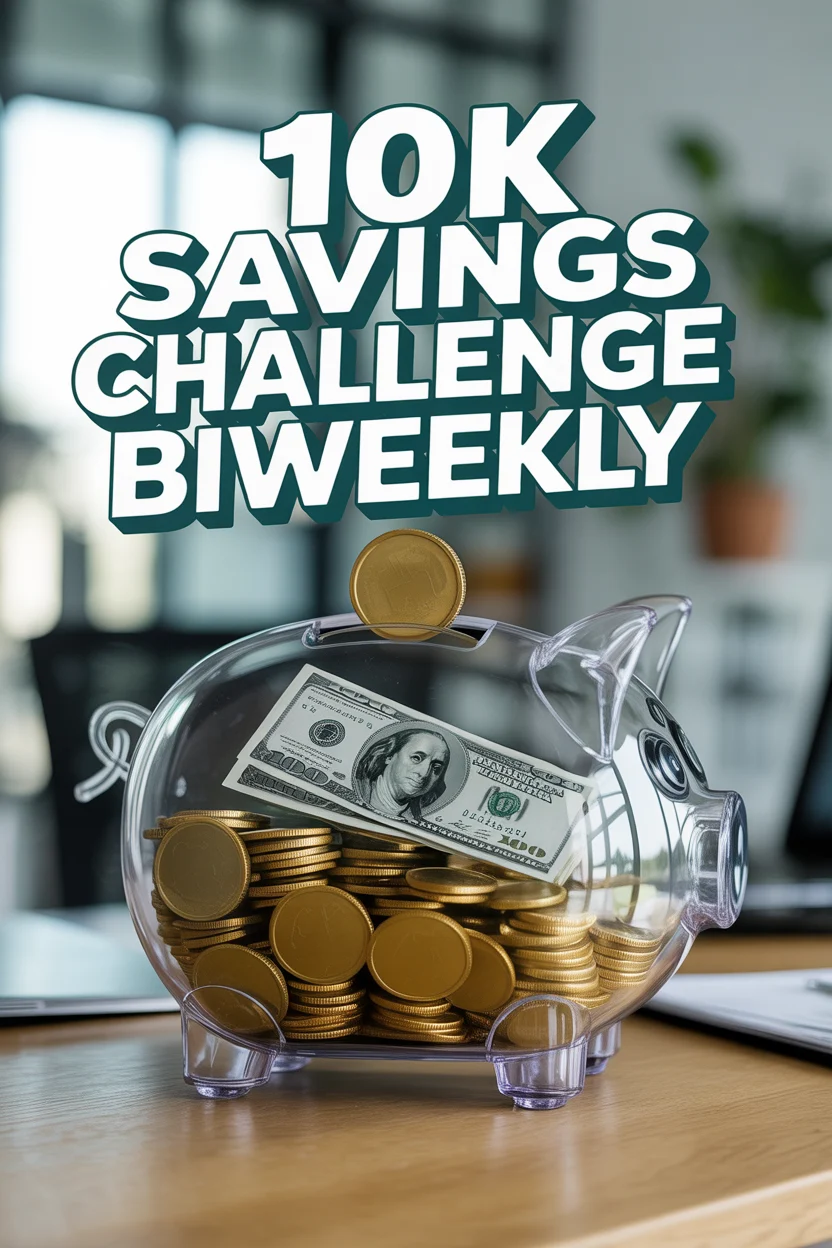
Embarking on a savings journey can feel like climbing a mountain, especially when you’re looking at a big number like $10,000. But what if you could break that mountain down into manageable, biweekly steps? That’s precisely the magic of the 10K Savings Challenge Biweekly! It’s not just about stashing away cash; it’s about building consistent habits, understanding your money, and empowering yourself to achieve significant financial milestones. In a world where financial security often feels out of reach, this challenge offers a clear, actionable path to boost your savings, reduce stress, and open doors to future opportunities. Whether you dream of a down payment, a new car, a fantastic vacation, or simply a robust emergency fund, this guide will equip you with the strategies and mindset to turn that $10,000 goal into a reality, one biweekly step at a time.

What is 10K Savings Challenge Biweekly?
The 10K Savings Challenge Biweekly is a structured, systematic approach designed to help you accumulate $10,000 in savings by making regular deposits every two weeks. Unlike traditional savings methods that might feel overwhelming due to the large lump sum target, this challenge breaks it down into smaller, more digestible increments. The “biweekly” aspect is key here; it aligns perfectly with common pay cycles, making it easier to integrate into your existing financial routine right after payday.
The core concept is brilliantly simple: instead of trying to save a huge amount all at once, you commit to setting aside a specific sum every two weeks. This consistency is where the power lies. Over time, these small, regular contributions compound, steadily bringing you closer to your $10,000 goal. There isn’t one single “official” amount you must save each biweekly period; the beauty of this challenge is its flexibility. You can tailor the amount based on your income, expenses, and desired timeframe. For instance, if you aim to hit $10,000 in two years, you’d need to save approximately $192.30 every two weeks ($10,000 / 52 biweekly periods). If you stretch it to three years, that drops to about $128.20 per biweekly period ($10,000 / 78 biweekly periods). This adaptability makes it accessible to a wide range of budgets and financial situations.
It’s more than just a savings plan; it’s a habit-building exercise. By consistently engaging with your savings every two weeks, you train your brain to prioritize financial growth. It helps you become more aware of your spending, identify areas where you can cut back, and ultimately fosters a stronger, more disciplined relationship with your money. The 10K Savings Challenge Biweekly transforms a daunting financial objective into an achievable series of small victories.
Key Features
The 10K Savings Challenge Biweekly isn’t just another savings plan; it boasts several features that make it particularly effective and appealing:
- Accessibility and Gradual Growth: One of its biggest strengths is that it allows you to start small. You don’t need a huge lump sum to begin. By breaking down $10,000 into smaller biweekly chunks, it feels less intimidating and more achievable, even for those new to serious saving. This gradual approach ensures you’re not overstretching your budget from day one, allowing you to build momentum.
- Habit Formation: The biweekly cadence is crucial for building a consistent saving habit. It ties directly into most people’s pay schedules, making it easier to integrate into your routine. Every two weeks, you’re prompted to take action, reinforcing the behavior until it becomes second nature. This consistency is far more powerful than sporadic, larger deposits.
- Clear, Achievable Goal: Having a specific target ($10,000) provides a strong motivator. It’s a tangible number that you can visualize and work towards. The biweekly structure helps you see continuous progress, which keeps motivation high and reminds you that the goal is indeed within reach.
- Flexibility and Customization: While the end goal is fixed, the path to get there is flexible. You can adjust the biweekly contribution amount to suit your financial circumstances. If you have a good pay period, you might save a little extra. If things are tight, you can scale back slightly without derailing the entire challenge. This adaptability prevents burnout and makes the challenge sustainable in the long run.
- Enhanced Financial Awareness: Actively participating in this challenge requires you to pay closer attention to your income and expenses. You’ll naturally start tracking where your money goes, identifying spending leaks, and making more conscious financial decisions. This heightened awareness is invaluable for long-term financial health, far beyond just saving $10,000.
- Tangible Progress and Motivation: Seeing your savings account grow every two weeks provides a powerful psychological boost. Whether you use a spreadsheet, a dedicated app, or even a printable tracker, visualizing your progress fuels your determination and keeps you engaged with the challenge.
How to Get Started
Ready to kickstart your 10K Savings Challenge Biweekly? Here’s a step-by-step guide to get you off on the right foot:
-
Define Your “Why”: Before you even think about numbers, ask yourself: Why do I want to save $10,000? Is it for an emergency fund, a down payment, a dream vacation, or peace of mind? Your “why” will be your biggest motivator when the going gets tough. Write it down and keep it visible.
-
Assess Your Current Finances (The Budget Blueprint): This is the foundation. You can’t save effectively if you don’t know where your money is going.
- Track Income: List all sources of income for a typical biweekly period.
- Track Expenses: Categorize your expenses into fixed (rent, loans, subscriptions) and variable (groceries, entertainment, dining out). Use a spreadsheet, budgeting app (like Mint, YNAB, or a simple notebook) to track every penny for a month or two.
- Identify Surplus: Subtract your total expenses from your total income. The remaining amount is what you have available for savings and discretionary spending.
This exercise is crucial for finding the “wiggle room” for your biweekly savings contribution.
-
Choose Your Biweekly Contribution Method:
- Fixed Amount: Decide on a consistent amount you’ll save every two weeks (e.g., $100, $150, $200). This is straightforward and predictable. Calculate how long it will take to reach $10,000 with this amount.
- Variable Amount (The “Snowball” or “Waterfall” Method):
- Snowball: Start small and gradually increase your biweekly savings amount over time. This builds momentum and confidence.
- Waterfall: Allocate a larger portion of ‘extra’ income (bonuses, tax refunds, side hustle earnings) towards your savings when available, while maintaining a smaller base contribution.
Choose what feels most sustainable for your lifestyle. Remember, consistency beats intensity.
-
Set Up a Dedicated Savings Account: Crucial for success! Open a separate savings account specifically for this challenge.
- High-Yield Savings Account (HYSA): Look for an online HYSA. These accounts typically offer significantly higher interest rates than traditional bank savings accounts, meaning your money works harder for you. Make sure it’s separate from your everyday checking account to avoid temptation.
- Name Your Account: Some banks allow you to nickname your accounts (e.g., “$10K Challenge Fund”). This psychological trick keeps your goal top of mind.
-
Automate Your Savings: This is arguably the most powerful step. Set up an automatic transfer from your checking account to your dedicated savings account to coincide with your biweekly paydays.
- Set It and Forget It: Automation removes the need for willpower. The money is moved before you even have a chance to spend it.
- Adjust as Needed: If you find the automated amount is too much or too little, you can always adjust it with a few clicks online.
-
Track Your Progress: Seeing your savings grow is incredibly motivating.
- Visual Trackers: Use a printable thermometer, a spreadsheet, or an app to visually track your progress towards $10,000. Color in a square or update a number every time you make a deposit.
- Regular Check-ins: Take a few minutes every biweekly period to check your balance and celebrate how far you’ve come.
Tips for Success
Making it to $10,000 isn’t just about showing up; it’s about smart strategies and a resilient mindset. Here are some pro tips to ensure your 10K Savings Challenge Biweekly is a resounding success:
-
Automate, Automate, Automate (Seriously!): This can’t be stressed enough. Set up an automatic transfer for your biweekly savings amount to your dedicated high-yield savings account. Schedule it for the day your paycheck hits. This “pay yourself first” strategy ensures your savings are prioritized before any other expenses or temptations arise. It takes the decision-making out of saving, making it effortless.
-
Find Extra Income Streams (The “Side Hustle” Boost): Accelerate your savings by bringing in more cash.
- Sell Unused Items: Declutter your home and list items on platforms like Facebook Marketplace, eBay, or local consignment shops. That old guitar or designer bag could be hundreds of dollars towards your goal.
- Gig Economy: Consider driving for a ride-share service, delivering food, freelancing your skills (writing, graphic design, web development), or dog-walking. Even a few extra hours a week can add significant amounts to your biweekly contribution.
- Temporary Gigs: Take on seasonal work or temporary projects that align with your skills.
Every extra dollar earned can go straight into your savings, dramatically shortening your timeline.
-
Cut Unnecessary Expenses (The “Budgeting Hacks” Playbook): Review your budget with a fine-tooth comb. Where can you trim the fat?
- Subscription Audit: Are you really using all those streaming services, gym memberships, or app subscriptions? Cancel what you don’t use regularly.
- Dining Out Reduction: Eating out, even fast casual, adds up quickly. Challenge yourself to cook more meals at home. Pack lunches, make your own coffee, and plan your grocery list meticulously to avoid impulse buys.
- Negotiate Bills: Call your internet, cable, or insurance providers and ask if there are better rates or discounts available. You’d be surprised how often they’ll work with you to retain your business.
- “No-Spend” Days/Weeks: Challenge yourself to go a day or even a week without spending any money on non-essentials. It forces creativity and highlights how much you might spend unconsciously.
These small cuts, when consistent, free up more money for your challenge.
-
Celebrate Small Wins (Maintain Momentum): Saving $10,000 is a marathon, not a sprint. Acknowledge and celebrate milestones along the way.
- Mini-Goals: Set smaller targets, like saving your first $1,000, $2,500, or hitting the halfway mark.
- Non-Monetary Rewards: Treat yourself to something free or low-cost that brings you joy (a hike, a movie night at home, a long bath) when you hit a milestone. Avoid spending money you’re trying to save!
These celebrations keep your motivation high and prevent burnout.
-
Educate Yourself (Become a Money-Smart Wizard): The more you understand about personal finance, the better equipped you’ll be. Read books, listen to podcasts, or follow reputable financial blogs. Learn about topics like compound interest, investing basics, debt management, and financial planning. This knowledge empowers you to make smarter decisions not just for this challenge, but for your entire financial future.
-
Review and Adjust Regularly (Life Happens): Your financial situation isn’t static. Life throws curveballs. Make it a habit to review your budget and savings plan every few months. If your income increases, consider upping your biweekly contribution. If unexpected expenses arise, don’t be afraid to temporarily adjust your savings amount rather than giving up entirely. Flexibility is key to long-term success.
Common Mistakes to Avoid
Even with the best intentions, it’s easy to stumble. Being aware of common pitfalls can help you navigate the 10K Savings Challenge Biweekly more smoothly.
-
Not Having a Budget: Trying to save without a clear budget is like driving without a map. You’ll likely get lost. Without knowing your income and expenses, you won’t know how much you can realistically save, leading to frustration, over-commitment, or under-saving. A budget provides clarity and control.
-
Being Too Ambitious Too Soon: It’s exciting to start, but don’t commit to saving an unsustainable amount right off the bat. If you try to save $500 biweekly when your budget only comfortably allows for $150, you’ll quickly feel deprived, burn out, and likely give up. Start with an achievable amount and gradually increase it as you find more wiggle room.
-
Not Automating Your Savings: Relying solely on willpower is a recipe for inconsistency. Life gets busy, and it’s easy to forget or justify not transferring money manually. Automation removes the decision-making and ensures your savings are prioritized, turning it into a non-negotiable expense.
-
Dipping Into Your Savings: Your dedicated $10K challenge account should be treated like a vault. Avoid withdrawing money for non-emergencies. Every time you dip in, you undo your hard work and break the habit you’re trying to build. If you find yourself constantly tempted, consider making the account slightly harder to access (e.g., in a different bank, requiring a few days for transfers).
-
Ignoring High-Interest Debt: While saving is crucial, high-interest debt (like credit card debt or payday loans) can quickly erode your financial progress. The interest payments can negate any gains you make in savings. Prioritize paying down high-interest debt alongside your savings challenge. Sometimes, tackling the debt first can free up more money for savings in the long run.
-
Giving Up After a Setback: Life happens. You might miss a biweekly payment due to an unexpected expense, or you might overspend one period. Don’t let one stumble derail your entire challenge. Acknowledge it, learn from it, adjust your plan if necessary, and get right back on track with the next biweekly payment. Resilience is a key ingredient for financial success.
FAQ
Here are answers to some common questions you might have about the 10K Savings Challenge Biweekly:
Q1: How long will it take to save $10K with this challenge?
A1: The timeframe depends entirely on how much you save each biweekly period. There are 26 biweekly periods in a year.
- Saving $100 biweekly: $10,000 / $100 = 100 periods, or approximately 3.8 years.
- Saving $150 biweekly: $10,000 / $150 = 66.6 periods, or approximately 2.5 years.
- Saving $200 biweekly: $10,000 / $200 = 50 periods, or approximately 1.9 years.
You can adjust your biweekly contribution to fit your desired timeline.
Q2: What if I miss a biweekly payment? Should I give up?
A2: Absolutely not! Missing a payment is a setback, not a failure. Life is unpredictable, and sometimes unexpected expenses or income fluctuations occur. The key is resilience. Don’t beat yourself up. Instead, acknowledge it, adjust your plan for the next period (maybe save a little extra if possible, or just resume your regular amount), and get back on track. Consistency over perfection is the motto here.
Q3: Where should I keep my savings for this challenge?
A3: We highly recommend using a High-Yield Savings Account (HYSA). These are typically online-only banks that offer significantly higher interest rates than traditional brick-and-mortar banks. This means your money earns more while it sits there, helping you reach your goal faster. Ensure the account is separate from your everyday checking account to minimize temptation and keep your challenge funds distinct.
Q4: Can I adjust the biweekly amounts as I go?
A4: Yes, absolutely! One of the greatest strengths of this challenge is its flexibility. Your income and expenses might change over time. If you get a raise or find an extra income stream, consider increasing your biweekly contribution to hit your goal faster. Conversely, if you face a temporary financial crunch, it’s okay to reduce your contribution for a period. The goal is sustainability, so make it work for your current circumstances.
💼 The Money Management Toolkit
Knowledge is power, but proper execution requires the right tools. Getting your financial life organized doesn't have to be overwhelming. These 5 physical management tools are exactly what successful households use to budget, track cash, and secure their most important assets.
📝 Clever Fox Budget Planner & Bill Organizer
The ultimate analog command center for your finances. Sometimes keeping your budget in an app just doesn't stick. Physically writing down your goals, tracking expenses, and planning for debt payoff creates a level of accountability that digital spreadsheets simply can't match.
💵 A6 Leather Cash Stuffing Binder
The viral tool that made the cash-envelope budgeting system popular again. By allocating actual physical cash to designated envelopes (groceries, dining out, fun money), you physically cap your spending, making it virtually impossible to overdraft or overspend.
🔥 Fireproof & Waterproof Document Safe
A critical piece of financial security that many families overlook. Protecting your passports, birth certificates, property deeds, and estate planning documents from disaster is just as important as protecting the money in your bank account.
🏷️ Brother P-Touch Digital Label Maker
The unsung hero of a functional home office. When tax season rolls around or you need to find an important receipt, having perfectly labeled and categorized filing cabinets or accordion folders saves hours of frustrating searches and potential late fees.
🔒 SentrySafe Compact Fireproof Lock Box
For the physical assets that need extra heavy-duty protection—think emergency cash reserves, hard drives with Bitcoin cold wallets, or physical precious metals. This compact, locking safe provides peace of mind that your physical wealth is secure at home.
Conclusion
The 10K Savings Challenge Biweekly is more than just a method to save money; it’s a powerful framework for building lasting financial habits and transforming your relationship with money. By breaking down a significant financial goal into manageable, biweekly steps, it demystifies the saving process and makes it accessible to everyone. You’re not just saving $10,000; you’re cultivating discipline, sharpening your budgeting skills, and gaining invaluable financial literacy.
Remember, the journey of a thousand miles begins with a single step – or in this case, a single biweekly transfer. Embrace the power of automation, seek out opportunities for extra income, be diligent in cutting unnecessary expenses, and celebrate every milestone along the way. Don’t be discouraged by minor setbacks; instead, view them as opportunities to learn and adjust. Your “why” will be your guiding star, keeping you motivated through every phase of the challenge.
Imagine the sense of accomplishment and the financial freedom that comes with having $10,000 in your savings account. This challenge isn’t just about reaching a number; it’s about proving to yourself what you’re capable of. It’s about empowering your financial future and setting a foundation for even greater wealth-building endeavors. So, take that first step today. Set up your dedicated account, automate your first transfer, and embark on your journey to a more secure and prosperous financial life. Your future self will thank you!