💰 30 Day Money Saving Challenge
📚 The Financial Literacy Library
The best investment you can ever make is in your own financial education. These 5 cornerstone books are what millionaires, financial advisors, and wealth-builders universally recommend for completely rewiring how you think about earning, saving, and investing money.
🧠 The Psychology of Money
Doing well with money isn't necessarily about what you know—it's about how you behave. Morgan Housel masterfully breaks down the emotional and psychological biases that secretly dictate our financial decisions, offering a true paradigm shift in how to view wealth.
🏠 Rich Dad Poor Dad
The #1 personal finance book of all time for a reason. This foundational read shatters the myth that you need to earn a high income to be rich, teaching you the critical difference between working for money and making your money work for you via assets.
📈 Atomic Habits
While not strictly a finance book, building wealth is absolutely dependent on the daily habits you cultivate. James Clear provides the definitive framework for breaking bad spending habits and effortlessly automating the good ones that lead to long-term success.
📊 The Simple Path to Wealth
The ultimate antidote to complex, intimidating financial advice. JL Collins provides an incredibly accessible, low-stress roadmap to financial independence through index fund investing, perfectly explaining why simplicity beats Wall Street complexity every time.
💳 I Will Teach You to Be Rich
A tactical, no-BS, 6-week program that actually works. Ramit Sethi teaches you how to crush debt, automate your savings, and negotiate your salary—all while guilt-free spending on the things you truly love. A must-read for modern money management.
Hey there, money-savvy friend! Are you looking to kickstart your savings, gain better control over your finances, or simply build healthier money habits? If so, you’ve landed in the perfect spot. In a world brimming with financial complexities, sometimes all we need is a simple, actionable plan to get started. That’s precisely what the 30 Day Money Saving Challenge offers – a focused, short-term sprint designed to transform your financial outlook without overwhelming you.
We all know the importance of saving, but putting it into practice often feels like climbing Mount Everest. From unexpected expenses to the allure of impulse buys, our wallets seem to have a mind of their own. This challenge isn’t about drastic, unsustainable cuts; it’s about making conscious choices, understanding your spending patterns, and building momentum. Think of it as a financial boot camp that’s manageable, motivational, and surprisingly effective. Ready to unlock your saving potential and set yourself on the path to financial freedom? Let’s dive in!
What is 30 Day Money Saving Challenge?
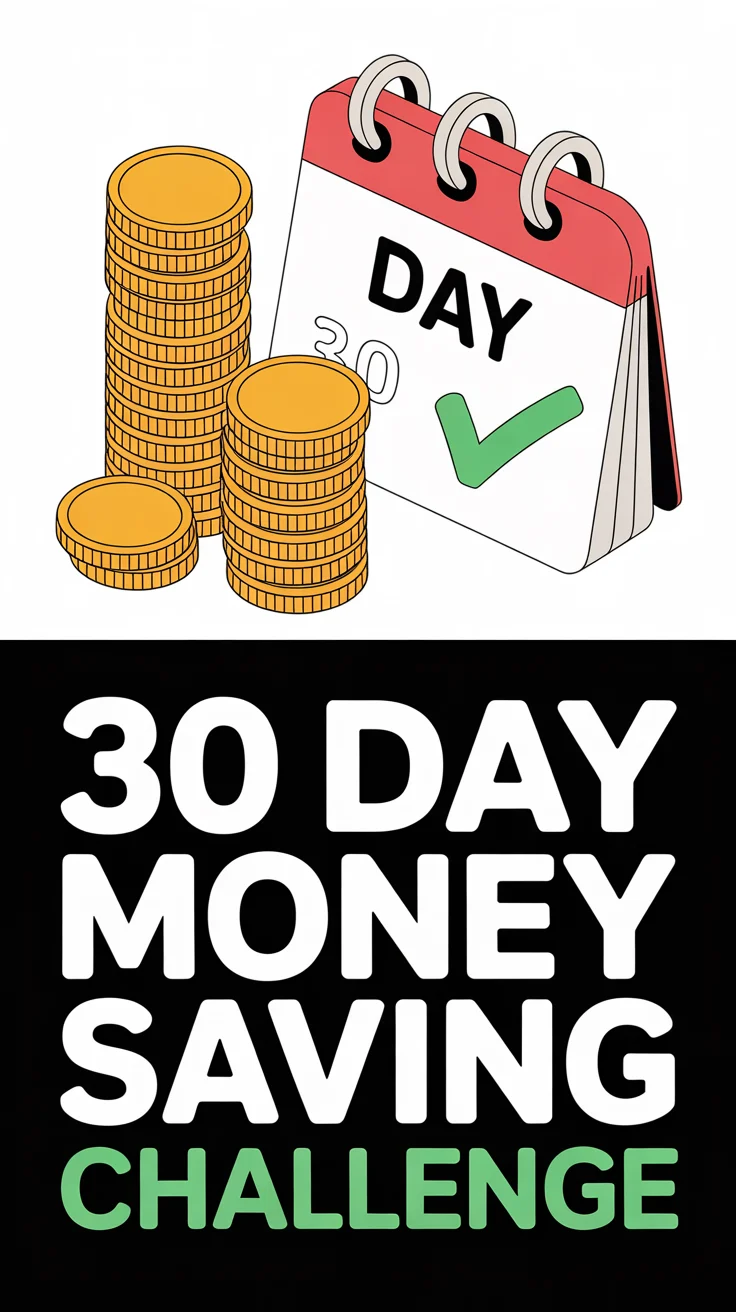
The 30 Day Money Saving Challenge is a structured, short-term financial endeavor designed to help you save money and develop better spending habits over a month-long period. Unlike long-term savings goals that can sometimes feel daunting, this challenge breaks down the process into daily or weekly achievable steps, making it less intimidating and more engaging. It’s a powerful tool for anyone – from budgeting beginners to seasoned savers – looking to inject some discipline and consciousness into their financial routine.
At its core, the challenge encourages you to identify areas where you can reduce spending, reallocate funds, and consciously make choices that align with your saving objectives. There are many variations, but the fundamental idea remains the same: commit to a specific saving action each day or week for 30 days. For example, some challenges might involve saving a small, incrementally increasing amount each day (e.g., $1 on day 1, $2 on day 2, up to $30 on day 30), while others might focus on eliminating specific expenses (like no-spend days or cutting out daily coffees). The beauty of this challenge lies in its flexibility and the immediate gratification of seeing your savings grow, often without feeling like you’re sacrificing too much.
It’s more than just accumulating a lump sum; it’s about building awareness. Over these 30 days, you’ll likely uncover spending habits you never noticed, differentiate between needs and wants, and gain a clearer picture of where your money truly goes. This newfound understanding is invaluable, providing a solid foundation for sustainable financial health beyond the challenge itself. It’s a practical, hands-on lesson in budgeting, delayed gratification, and the power of small, consistent actions.
Key Features
The 30 Day Money Saving Challenge isn’t just a gimmick; it’s built on several robust principles that make it highly effective. Understanding these key features can help you maximize your success and carry the positive momentum forward.
- Short-Term Commitment, Long-Term Impact: One of its most appealing aspects is its finite duration. Thirty days is long enough to build a habit but short enough to feel manageable and not overwhelming. This short-term focus makes it easier to stay motivated and committed, knowing there’s an end date. Yet, the habits and insights gained can last a lifetime, fostering sustainable financial well-being.
- Habit Formation Through Repetition: Financial discipline isn’t born overnight. It’s cultivated through consistent action. By performing a specific saving task daily or weekly, you’re essentially programming your brain to adopt new, positive money habits. Whether it’s packing lunch, skipping a daily latte, or reviewing your spending, these repetitive actions become second nature, making future saving efforts much easier.
- Immediate and Visible Results: There’s nothing quite as motivating as seeing your progress in real-time. With this challenge, you’ll witness your savings grow day by day. This immediate feedback loop provides a powerful psychological boost, reinforcing your efforts and encouraging you to stick with the plan. It turns an abstract goal into a tangible achievement, making the saving journey feel rewarding.
- Flexibility and Customization: One size doesn’t fit all when it comes to personal finance. The 30 Day Money Saving Challenge is highly adaptable to your unique financial situation, income, and goals. You can choose a challenge that suits your lifestyle, whether it’s a fixed daily amount, a specific spending freeze, or a more complex budgeting exercise. This flexibility ensures that the challenge is realistic and sustainable for you, increasing your chances of success.
- Enhanced Financial Awareness: Beyond the money saved, a significant benefit is the heightened awareness you gain about your spending habits. By actively tracking and adjusting your expenditures, you’ll pinpoint areas of unnecessary spending, understand your financial triggers, and distinguish between wants and needs. This insight is invaluable for creating a more effective long-term budget and making smarter financial decisions in the future.
How to Get Started
Embarking on your 30 Day Money Saving Challenge is an exciting step towards financial empowerment. Here’s a practical, step-by-step guide to help you set yourself up for success from day one:
- Define Your “Why” (Set a Clear Goal): Before you even think about cutting expenses, ask yourself: Why am I doing this? Is it for an emergency fund, a down payment, a vacation, or simply to get out of debt? Having a clear, motivating goal will be your anchor when willpower wanes. Write it down, make it specific, and visualize achieving it. For instance, instead of “save money,” aim for “save $500 for a weekend getaway by the end of next month.”
- Choose Your Challenge Type: There’s no single “right” way to do a 30-day challenge. Pick one that resonates with you and your current financial situation:
- The Incremental Challenge: Save $1 on Day 1, $2 on Day 2, up to $30 on Day 30. Total saved: $465.
- The Fixed Daily Amount: Commit to saving a consistent amount, say $5 or $10, every single day for 30 days. This is straightforward and predictable.
- The “No-Spend” Days: Designate specific days (e.g., Tuesdays and Thursdays) where you spend absolutely no money on non-essentials.
- The “Category Freeze”: Pick a specific spending category (like dining out, entertainment, or impulse shopping) and commit to spending $0 in that category for the entire 30 days.
- The “DIY Combo”: Mix and match! Maybe you do incremental savings for 20 days and then add 10 “no-spend” days.
Be realistic about what you can commit to without feeling overly deprived.
- Set Up a Dedicated Savings Account: To avoid dipping into your challenge savings, open a separate savings account, preferably one that’s not easily accessible for everyday transactions. Label it something motivating, like “30 Day Challenge Fund.” This physical separation makes your progress more tangible and reduces the temptation to spend.
- Create a Tracking System: You can’t manage what you don’t track! Whether it’s a simple notebook, a printable template, a spreadsheet, or a budgeting app, find a method to log your daily savings and spending. Seeing your progress visually is incredibly motivating. Mark off each day you successfully complete your challenge and watch your savings grow.
- Prepare for Success: Anticipate potential hurdles. If your challenge involves packing lunch, ensure you have groceries. If it’s a no-spend day, plan free activities. Remove temptations by unsubscribing from marketing emails or unfollowing enticing online stores. A little preparation goes a long way in preventing slip-ups.
Tips for Success
A 30-day challenge is a sprint, but even sprints require strategy. Here are some pro tips to ensure you cross that finish line triumphantly and build lasting financial muscle:
- Be Realistic, Not Restrictive: While ambition is great, setting overly aggressive goals can lead to burnout and failure. If you try to cut out every single non-essential expense all at once, you might feel deprived and give up. Start with manageable adjustments. For instance, instead of cutting coffee entirely, try making it at home three times a week. Small, sustainable changes are far more effective than drastic, temporary ones.
- Track Every Single Penny: This isn’t just about what you save; it’s about understanding where your money goes. Use a budgeting app (like Mint, YNAB), a simple spreadsheet, or even a pen and paper. Categorize your expenses. This act of tracking shines a spotlight on your spending habits, revealing leaks you might not have noticed. Knowledge is power, and in this case, it’s money saved.
- Find an Accountability Partner: Share your challenge with a friend, family member, or colleague. Having someone to check in with, share successes, and commiserate with during tough moments can provide immense motivation. You can even challenge each other, turning it into a friendly competition!
- Automate Your Savings (Where Possible): If your challenge involves saving a fixed amount daily or weekly, set up an automatic transfer from your checking to your dedicated savings account. “Set it and forget it” is a powerful strategy. This removes the mental effort and ensures consistency, making it much harder to skip a day. Even if it’s just $5 a day, that’s $150 by the end of the month without you having to lift a finger each time.
- Celebrate Small Wins (Non-Financially!): Acknowledge your progress! After a week of successful saving, treat yourself to a long bath, a nature walk, or an hour with a good book. The reward shouldn’t involve spending money you’re trying to save. These small celebrations reinforce positive behavior and keep your spirits high, preventing the challenge from feeling like a chore.
- Review and Adjust Regularly: Don’t wait until day 30 to see how you did. Check in with your progress weekly, or even daily. Are you finding certain aspects too difficult? Are you hitting your targets? If something isn’t working, adjust your strategy. The goal is progress, not perfection. This flexibility ensures the challenge remains sustainable and effective for you.
Common Mistakes to Avoid
Even with the best intentions, it’s easy to stumble during a money-saving challenge. Being aware of these common pitfalls can help you navigate them successfully and stay on track:
- Setting Unrealistic Goals: This is perhaps the biggest pitfall. If you aim to save 50% of your income in 30 days when you’ve never saved before, you’re setting yourself up for failure. Overly ambitious goals lead to feelings of deprivation, frustration, and ultimately, giving up. Start small, build confidence, and then gradually increase your targets. Remember, consistency beats intensity.
- Not Tracking Progress: “Out of sight, out of mind” applies to your money, too. If you’re not actively logging your savings and spending, it’s easy to lose motivation or even unknowingly overspend. Without tracking, you miss the crucial feedback loop that shows you what’s working and what isn’t, and you lose the visual gratification of seeing your money grow.
- Giving Up After One Slip-Up: Life happens! You might accidentally buy that coffee on a “no-spend” day, or an unexpected expense might throw you off. The mistake isn’t the slip-up itself, but letting it derail your entire challenge. Don’t fall into the “all or nothing” trap. Forgive yourself, learn from it, and get right back on track the next day. One missed day doesn’t negate the previous ones.
- Ignoring Your “Why”: As mentioned earlier, your “why” is your fuel. If you lose sight of your goal – that vacation, emergency fund, or debt repayment – the challenge can quickly feel like pointless deprivation. Regularly revisit your goal. Put a picture of your dream vacation on your fridge or set it as your phone wallpaper. Remind yourself what you’re working towards.
- Depriving Yourself Too Much: While saving involves making cuts, extreme deprivation can backfire spectacularly, leading to a “splurge” mentality once the challenge is over. It’s like a restrictive diet leading to a binge. Allow for small, pre-planned indulgences or factor in a modest “fun money” budget. The aim is to build sustainable habits, not to suffer for 30 days.
- Not Planning Ahead: Winging it is a recipe for disaster. If your challenge involves packing lunches, but you don’t grocery shop, you’ll inevitably buy takeout. If you plan a “no-spend” day but have no free activities lined up, you might get bored and spend. A little foresight and planning for daily actions can drastically improve your success rate.
FAQ
Let’s tackle some common questions you might have about embarking on your 30 Day Money Saving Challenge:
Q1: Is this challenge only for people with a lot of disposable income?
A: Absolutely not! The beauty of the 30 Day Money Saving Challenge is its adaptability. You can tailor it to any income level. Even if you start by saving just $1 a day, that’s $30 in a month – a significant achievement for someone on a tight budget. The primary goal is to build awareness and habits, which are valuable regardless of your income. It’s about making conscious choices with the money you do have.
Q2: What if I miss a day or accidentally overspend? Should I just give up?
A: Please don’t! Everyone makes mistakes, and unexpected events happen. The key is resilience. If you miss a day, don’t dwell on it. Simply pick up where you left off the next day. Think of it as a minor detour, not a dead end. You can even try to make up for it by saving a little extra on subsequent days if that feels motivating, but the most important thing is to get back on track and not let one slip-up derail your entire progress.
Q3: How much money can I realistically expect to save in 30 days?
A: This varies greatly depending on your income, expenses, and the specific challenge you choose. With an incremental challenge (saving $1-$30), you’d save $465. If you cut out a $5 daily coffee, that’s $150. Many participants report saving anywhere from a few hundred dollars to over a thousand, especially if they’re diligent about cutting discretionary spending. The real value, however, isn’t just the lump sum, but the insights gained into your spending habits that lead to long-term savings.
Q4: What should I do after the 30 days are over?
A: Congratulations, you’ve completed the challenge! Now, don’t just revert to old habits.
- Review Your Success: Look at how much you saved and what you learned about your spending.
- Maintain Good Habits: Identify the habits that worked best for you (e.g., packing lunch, automated savings) and integrate them into your permanent routine.
- Set New Goals: Use your momentum to tackle a bigger financial goal, like building a 3-month emergency fund or investing.
- Consider a New Challenge: Maybe try a different type of saving challenge, or extend this one for another 30, 60, or 90 days!
The 30 days are just the beginning of your journey to financial mastery.
💼 The Money Management Toolkit
Knowledge is power, but proper execution requires the right tools. Getting your financial life organized doesn't have to be overwhelming. These 5 physical management tools are exactly what successful households use to budget, track cash, and secure their most important assets.
📝 Clever Fox Budget Planner & Bill Organizer
The ultimate analog command center for your finances. Sometimes keeping your budget in an app just doesn't stick. Physically writing down your goals, tracking expenses, and planning for debt payoff creates a level of accountability that digital spreadsheets simply can't match.
💵 A6 Leather Cash Stuffing Binder
The viral tool that made the cash-envelope budgeting system popular again. By allocating actual physical cash to designated envelopes (groceries, dining out, fun money), you physically cap your spending, making it virtually impossible to overdraft or overspend.
🔥 Fireproof & Waterproof Document Safe
A critical piece of financial security that many families overlook. Protecting your passports, birth certificates, property deeds, and estate planning documents from disaster is just as important as protecting the money in your bank account.
🏷️ Brother P-Touch Digital Label Maker
The unsung hero of a functional home office. When tax season rolls around or you need to find an important receipt, having perfectly labeled and categorized filing cabinets or accordion folders saves hours of frustrating searches and potential late fees.
🔒 SentrySafe Compact Fireproof Lock Box
For the physical assets that need extra heavy-duty protection—think emergency cash reserves, hard drives with Bitcoin cold wallets, or physical precious metals. This compact, locking safe provides peace of mind that your physical wealth is secure at home.
Conclusion
The 30 Day Money Saving Challenge isn’t just a temporary fix for your finances; it’s a powerful catalyst for long-term change. By committing to just one month of focused effort, you’re not only accumulating savings but, more importantly, cultivating invaluable habits, gaining profound insights into your spending patterns, and building the confidence to take control of your financial future.
Think of it as laying a strong foundation. Each small, consistent step you take – whether it’s skipping that impulse purchase, packing your lunch, or diligently tracking your expenses – contributes to a larger, more resilient financial structure. You’ll discover that managing your money doesn’t have to be a chore; it can be an empowering journey of discovery and growth.
So, are you ready to embark on this journey? The path to financial freedom starts with a single step, and the 30 Day Money Saving Challenge provides the perfect starting line. Choose your challenge, set your goals, and embrace the adventure. Your future self (and your wallet!) will thank you for it. Let’s make these next 30 days the beginning of your most financially savvy year yet!