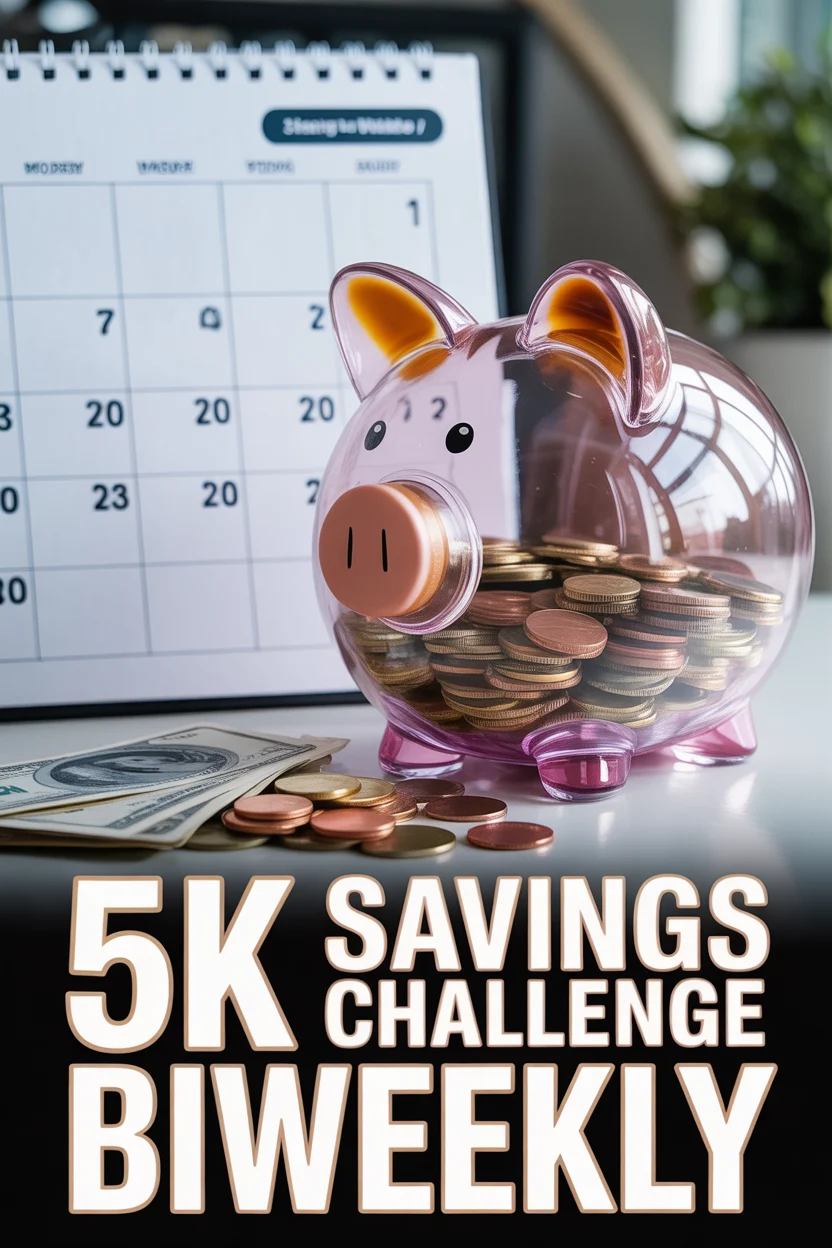
💰 5K Savings Challenge Biweekly
📚 The Financial Literacy Library
The best investment you can ever make is in your own financial education. These 5 cornerstone books are what millionaires, financial advisors, and wealth-builders universally recommend for completely rewiring how you think about earning, saving, and investing money.
🧠 The Psychology of Money
Doing well with money isn't necessarily about what you know—it's about how you behave. Morgan Housel masterfully breaks down the emotional and psychological biases that secretly dictate our financial decisions, offering a true paradigm shift in how to view wealth.
🏠 Rich Dad Poor Dad
The #1 personal finance book of all time for a reason. This foundational read shatters the myth that you need to earn a high income to be rich, teaching you the critical difference between working for money and making your money work for you via assets.
📈 Atomic Habits
While not strictly a finance book, building wealth is absolutely dependent on the daily habits you cultivate. James Clear provides the definitive framework for breaking bad spending habits and effortlessly automating the good ones that lead to long-term success.
📊 The Simple Path to Wealth
The ultimate antidote to complex, intimidating financial advice. JL Collins provides an incredibly accessible, low-stress roadmap to financial independence through index fund investing, perfectly explaining why simplicity beats Wall Street complexity every time.
💳 I Will Teach You to Be Rich
A tactical, no-BS, 6-week program that actually works. Ramit Sethi teaches you how to crush debt, automate your savings, and negotiate your salary—all while guilt-free spending on the things you truly love. A must-read for modern money management.
Imagine waking up one year from today, opening your banking app, and seeing a crisp $5,000 sitting in a dedicated savings account. This isn’t money for your monthly rent or your grocery bill; this is a pure financial cushion, a “peace of mind” fund, or the seed money for your next big adventure. For many, the idea of saving five thousand dollars feels like a mountain too high to climb. However, when you break that mountain down into small, manageable steps that align with your paycheck, the summit becomes much more attainable. This is the essence of the 5K Savings Challenge Biweekly.
The beauty of the biweekly approach is its harmony with the modern lifestyle. Most professionals receive their salary every two weeks, making it the perfect interval to “pay yourself first.” By syncing your savings goals with your income cycle, you remove the friction of manual transfers and the temptation to spend what you haven’t yet tucked away. In this guide, we will explore how to transform your financial habits, master the art of the biweekly save, and build a wealth-building mindset that lasts far beyond the challenge itself.
What is 5K Savings Challenge Biweekly?
The 5K Savings Challenge Biweekly is a structured financial plan designed to help you save exactly $5,000 over the course of one year (52 weeks) by making contributions every two weeks. Since there are 26 biweekly periods in a year, the math is straightforward: you need to save approximately $192.31 every two weeks to hit the $5,000 mark.
While the goal is fixed, the method can be flexible. There are generally two ways to approach this challenge:
- The Consistent Method: You save the exact same amount ($192.31) every single payday. This is ideal for those with a steady income and a fixed budget. It builds a predictable habit that eventually feels like a regular utility bill—only this one pays you back with interest.
- The Incremental Method: You start with a smaller amount and gradually increase it as you find more ways to save or earn. For example, you might start at $100 for the first few periods and ramp up to $250 toward the end of the year. This is great for beginners who need to “warm up” their saving muscles.
Regardless of the method, the core philosophy is about consistency. It’s about moving away from the “save what is left at the end of the month” mentality—which usually results in saving nothing—and moving toward a proactive, “pay yourself first” strategy.
Key Features
Why has the 5K Savings Challenge Biweekly become a viral sensation in the personal finance world? It’s because it bridges the gap between a “wish” and a “plan.” Here are the key features that make this challenge so effective:
1. Psychological Wins
Large goals can be paralyzing. When you think about $5,000, your brain might focus on all the things you have to give up to get there. But when you think about $192, it feels like a manageable sacrifice. It’s the cost of a few nice dinners or a modest shopping trip. Breaking the goal down provides frequent “micro-wins” every two weeks, keeping your motivation high.
2. Alignment with Cash Flow
Most people struggle with saving because their expenses and savings goals aren’t synced with their income. By using a biweekly schedule, you are setting aside money the moment it hits your account. This reduces “lifestyle creep,” where your spending expands to fill the amount of money available in your checking account.
3. Automation-Friendly
One of the strongest features of this challenge is how easily it can be automated. Most banking platforms allow you to set up recurring transfers. By automating $192.31 every two weeks, you remove the need for willpower. The challenge runs in the background of your life while you focus on other things.
4. Flexibility and Accessibility
This challenge doesn’t require a six-figure salary. It requires discipline and a few smart “hacks” to free up cash. Whether you are a student with a part-time job or a seasoned professional, the biweekly structure can be adjusted to fit your specific financial landscape.
How to Get Started
Ready to take the plunge? Following these steps will ensure you set a solid foundation for your 5K Savings Challenge Biweekly.
Step 1: Perform a Financial Audit
Before you can save $192.31 every two weeks, you need to know where your money is currently going. Look at your last three months of bank statements. Identify “leaks”—subscriptions you don’t use, excessive dining out, or impulse purchases. Knowing your starting point is crucial for finding the extra cash needed for the challenge.
Step 2: Choose Your “Vault”
Don’t keep your challenge money in your everyday checking account. It’s too easy to accidentally spend it. Open a High-Yield Savings Account (HYSA). These accounts currently offer much higher interest rates than traditional savings accounts, meaning your $5,000 will actually grow into a bit more than $5,000 thanks to compound interest.
Step 3: Set Up Automation
This is the most important step. Log into your payroll provider or your bank and set up a recurring transfer. If your employer allows you to split your direct deposit into two different accounts, send the $192.31 directly to your “Vault” and the rest to your checking account. If you never see the money, you won’t miss it.
Step 4: Create a Visual Tracker
There is something deeply satisfying about checking off a box. Create a simple chart with 26 boxes, each representing a biweekly period. Every time a transfer is made, color in a box. Place this tracker somewhere visible, like your fridge or your workspace, to keep the goal top-of-mind.
Tips for Success
Saving $5,000 in a year is a marathon, not a sprint. Use these pro-tips to stay on track even when life gets in the way.
The “24-Hour Rule” for Impulse Buys
Before you make any non-essential purchase over $30, wait 24 hours. Often, the “need” for the item is just a temporary dopamine hit. If you still want it after a day, consider it, but more often than not, you’ll realize you don’t need it, and that money can go toward your challenge.
Leverage Windfalls
Throughout the year, you might receive “unexpected” money: tax refunds, birthday gifts, work bonuses, or even a three-paycheck month (which happens twice a year for biweekly earners). Instead of spending these windfalls, “dump” them into your 5K account. This creates a buffer for the times when your budget might be tighter.
Master the Art of the “Substitution”
You don’t have to live a life of deprivation. Instead, find cheaper substitutes. If you love coffee, invest in a high-quality thermos and brew at home. If you love movies, host a potluck movie night instead of going to the cinema. These small shifts can easily save you $50–$100 a week.
Focus on the “Big Three”
While skipping lattes is a popular tip, the real savings are found in the “Big Three”: Housing, Transportation, and Food. If you can negotiate your rent, carpool to work, or master meal prepping, you will hit your $192.31 goal much faster than by just cutting out small treats.
Common Mistakes to Avoid
Many people start savings challenges with high energy but drop out after a few months. Avoid these common pitfalls:
- Being Too Aggressive: If you’ve never saved a dime, jumping straight into $192.31 might be a shock to your system. It’s okay to start smaller and work your way up. Consistency is more important than the initial amount.
- Ignoring the Emergency Fund: If you don’t have a basic emergency fund (usually $1,000), your 5K challenge will be derailed the first time your car needs a repair. Use the first few pay periods of the challenge to build that base layer first.
- The “All or Nothing” Mentality: If you miss a biweekly payment or can only contribute $50 one time, don’t quit! Life happens. Just pick up where you left off. Every dollar you save is a dollar more than you had before.
- Keeping the Money Accessible: If your savings account is linked to a debit card in your wallet, you are tempting fate. Keep your “Vault” separate and slightly inconvenient to access.
FAQ
Can I start the 5K Savings Challenge Biweekly at any time of the year?
Absolutely! While many people start in January, there is no “wrong” time to improve your finances. If you start in June, you’ll have your $5,000 by next June. The best time to start was yesterday; the second best time is today.
What if I don’t get paid biweekly?
The math remains the same. If you get paid weekly, you would save about $96.15 per week. If you get paid monthly, you would save $416.67 per month. The biweekly structure is just a popular framework because it matches many corporate pay cycles.
Is $5,000 enough for an emergency fund?
For many individuals, $5,000 is a fantastic “starter” emergency fund that covers 1–3 months of essential expenses. However, the ideal emergency fund is typically 3–6 months of expenses. Use this challenge as a stepping stone to that larger goal.
Should I save or pay off debt first?
This is a personal choice, but a common strategy is to save a small starter emergency fund (like $1,000), then focus on high-interest debt (like credit cards), and then finish the 5K challenge. If your debt interest is lower than what you earn in a savings account, prioritize saving.
💼 The Money Management Toolkit
Knowledge is power, but proper execution requires the right tools. Getting your financial life organized doesn't have to be overwhelming. These 5 physical management tools are exactly what successful households use to budget, track cash, and secure their most important assets.
📝 Clever Fox Budget Planner & Bill Organizer
The ultimate analog command center for your finances. Sometimes keeping your budget in an app just doesn't stick. Physically writing down your goals, tracking expenses, and planning for debt payoff creates a level of accountability that digital spreadsheets simply can't match.
💵 A6 Leather Cash Stuffing Binder
The viral tool that made the cash-envelope budgeting system popular again. By allocating actual physical cash to designated envelopes (groceries, dining out, fun money), you physically cap your spending, making it virtually impossible to overdraft or overspend.
🔥 Fireproof & Waterproof Document Safe
A critical piece of financial security that many families overlook. Protecting your passports, birth certificates, property deeds, and estate planning documents from disaster is just as important as protecting the money in your bank account.
🏷️ Brother P-Touch Digital Label Maker
The unsung hero of a functional home office. When tax season rolls around or you need to find an important receipt, having perfectly labeled and categorized filing cabinets or accordion folders saves hours of frustrating searches and potential late fees.
🔒 SentrySafe Compact Fireproof Lock Box
For the physical assets that need extra heavy-duty protection—think emergency cash reserves, hard drives with Bitcoin cold wallets, or physical precious metals. This compact, locking safe provides peace of mind that your physical wealth is secure at home.
Conclusion
The 5K Savings Challenge Biweekly is more than just a math problem; it is a journey toward financial empowerment. By committing to this challenge, you are telling yourself that your future security is worth more than today’s fleeting impulses. You are building a habit of discipline that will serve as the foundation for all your future wealth-building endeavors.
Remember, the goal isn’t just the $5,000—it’s the person you become in the process of saving it. You will become someone who is mindful of their spending, someone who understands the power of automation, and someone who has the confidence to handle life’s unexpected turns. So, take that first step today. Set up your account, schedule your first transfer, and watch as your small, biweekly actions transform into a significant financial victory. You’ve got this!