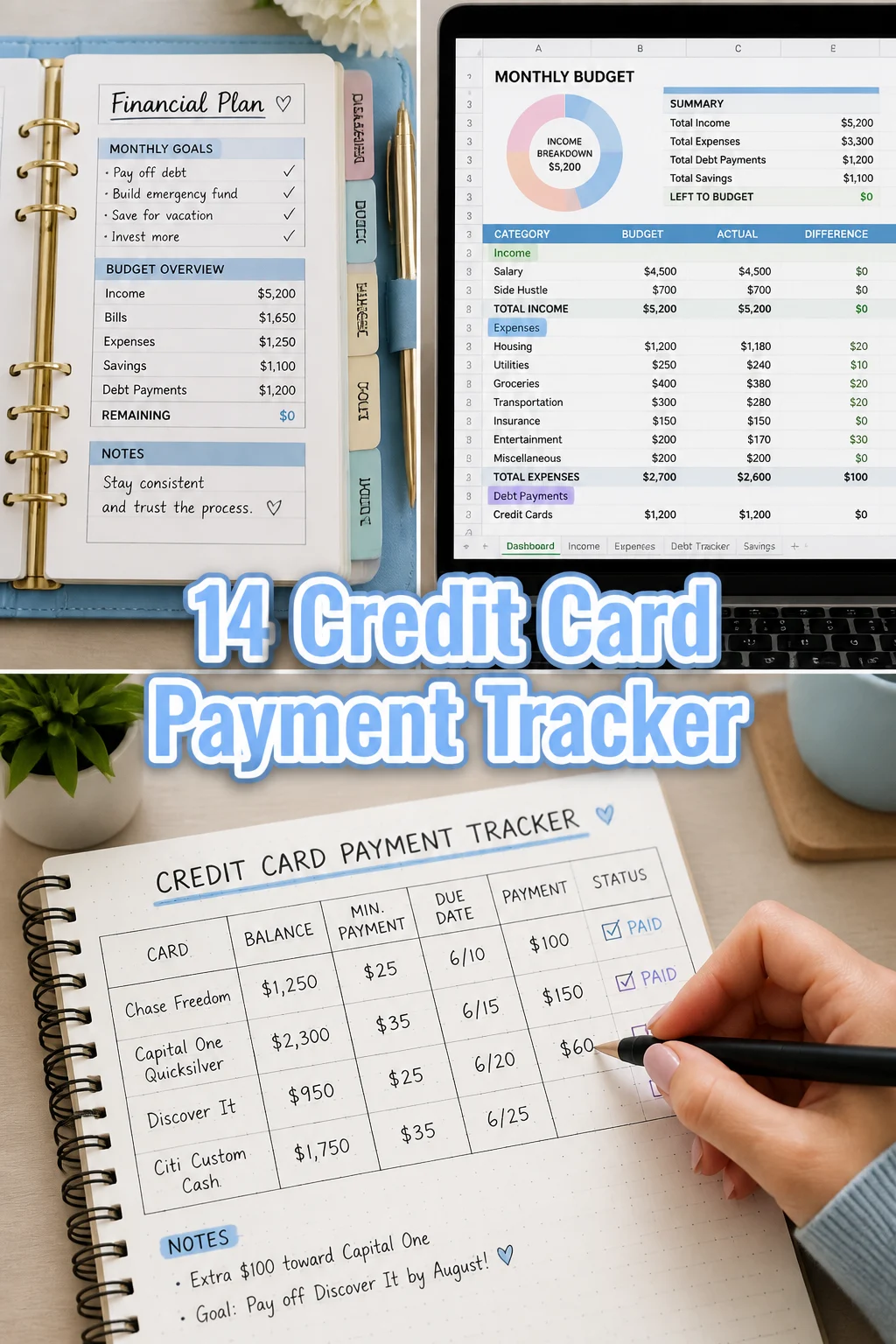
💳 14 Credit Card Payment Tracker
📚 The Financial Literacy Library
The best investment you can ever make is in your own financial education. These 5 cornerstone books are what millionaires, financial advisors, and wealth-builders universally recommend for completely rewiring how you think about earning, saving, and investing money.
🧠 The Psychology of Money
Doing well with money isn't necessarily about what you know—it's about how you behave. Morgan Housel masterfully breaks down the emotional and psychological biases that secretly dictate our financial decisions, offering a true paradigm shift in how to view wealth.
🏠 Rich Dad Poor Dad
The #1 personal finance book of all time for a reason. This foundational read shatters the myth that you need to earn a high income to be rich, teaching you the critical difference between working for money and making your money work for you via assets.
📈 Atomic Habits
While not strictly a finance book, building wealth is absolutely dependent on the daily habits you cultivate. James Clear provides the definitive framework for breaking bad spending habits and effortlessly automating the good ones that lead to long-term success.
📊 The Simple Path to Wealth
The ultimate antidote to complex, intimidating financial advice. JL Collins provides an incredibly accessible, low-stress roadmap to financial independence through index fund investing, perfectly explaining why simplicity beats Wall Street complexity every time.
💳 I Will Teach You to Be Rich
A tactical, no-BS, 6-week program that actually works. Ramit Sethi teaches you how to crush debt, automate your savings, and negotiate your salary—all while guilt-free spending on the things you truly love. A must-read for modern money management.
Okay, real talk. Adulting is basically a never-ending game of “Did I pay that yet” and “Wait, when is that due” especially when it comes to credit cards. It’s like juggling flaming chainsaws while riding a unicycle, right But what if I told you there’s a way to ditch the financial acrobatics and actually feel in control of your plastic pals That’s where a killer credit card payment tracker swoops in like your financial superhero. Forget the panic; we’re about to make sure you never miss a beat (or a payment) again. Let’s get tracking.
1. The OG Spreadsheet Guru
Yeah, spreadsheets. Don’t roll your eyes. This is where you become the master of your financial universe. You build it, you control it.
Create columns for card name, due date, minimum payment, amount paid, and confirmation number. Manually entering payments gives you a tangible sense of accomplishment, and let’s be honest, who doesn’t love ticking things off a list Pro tip: Color-code your due dates to instantly spot what’s coming up next. It’s surprisingly satisfying to watch those cells fill up green.
This method works because it forces you to actively engage with your finances, giving you a crystal-clear overview of everything.
2. Digital Calendar Sync
Your phone’s already glued to your hand, right So put it to work. Use your existing digital calendar (Google Calendar, Outlook, Apple Calendar) to track payments.
Set up recurring events for each credit card’s due date. Include the card name, minimum payment, and a direct link to the payment portal in the event description. Pro tip: Set the reminder for 2-3 days before the actual due date. That buffer is your best friend when life gets chaotic. This tracker works because it integrates seamlessly into your daily digital life, making it nearly impossible to forget.
3. The Budgeting App Power-Up
Why reinvent the wheel when there are apps designed to be your financial co-pilot Budgeting apps like Mint, YNAB, or Personal Capital are total game-changers.
These apps often integrate directly with your bank and credit card accounts, automatically pulling in transactions and tracking due dates. They’ll send you push notifications, so you don’t even have to remember to check. Pro tip: Explore the app’s custom alert features; some let you set specific thresholds or reminders for large payments. This works because it automates much of the heavy lifting, giving you peace of mind with minimal effort.
4. Physical Planner Punch-Out
Old school, but gold. If you’re a pen-and-paper person, your trusty physical planner can be an incredibly effective tracker.
Dedicate a section or a specific page each month to your credit card payments. List each card, its due date, and the amount. As you pay, physically cross it off or use a satisfying sticker. Pro tip: Use a different colored pen for each card to make it visually distinct and easy to scan. There’s something undeniably satisfying about marking things off with your own hand.
5. Whiteboard Warrior
Got a wall A whiteboard is a fantastic, highly visible way to track payments, especially if you share finances or just need a constant visual reminder.
Write down each card, its due date, and the amount due. Use magnets or different colored markers to indicate paid items. It’s erasable and reusable, making monthly updates a breeze. Pro tip: Place it somewhere you see every single day, like the kitchen or home office. Its sheer visibility makes it work; you literally can’t ignore it.
6. The “Payday First” Strategy
This isn’t a tracker in the traditional sense, but a payment strategy that acts as one. Flip the script on due dates and pay your minimums (or more) as soon as you get paid.
Instead of waiting for individual due dates, batch all your payments right after your paycheck hits. This way, the money is gone before you can accidentally spend it, and you don’t have to remember multiple dates. Pro tip: Set up automated minimum payments through your bank for all cards to ensure you’re always covered. This works because it simplifies your payment schedule to one single event, reducing mental load.
7. Two-Factor Reminder System
Because one reminder is never enough, right Combine a digital alert with a physical cue for maximum payment security.
Set a calendar reminder on your phone AND leave a physical sticky note on your laptop, wallet, or coffee maker. The redundancy ensures that even if you miss one, the other catches your eye. Pro tip: Make the physical note something a little silly or attention-grabbing, like “PAY THE CARDS, SILLY GOOSE!” This works because it creates a double-net, making it nearly impossible for a payment to slip through the cracks.
8. The “Minimum Plus Extra” Trick
Again, more of a strategy, but it helps you track progress by seeing your balances drop faster. Instead of just paying the minimum, always add a little extra.
Even an additional $5 or $10 above the minimum payment can make a significant difference over time, both in interest saved and in how quickly you pay down debt. Pro tip: Round up your payment to the nearest $10 or $20. It’s a small mental trick that adds up without feeling like a huge sacrifice. This works by giving you a tangible sense of accelerating progress, which is a powerful motivator.
9. Email Alerts Overload
Let your inbox do some heavy lifting for you. Sign up for every single payment reminder email your credit card companies offer.
Yes, your inbox might get a bit crowded, but you’ll have multiple notifications for each card. Create a specific folder in your email client for “Bill Reminders” to keep them organized. Pro tip: Mark these emails as “important” or “starred” so they stand out. This works because it leverages a system you already check regularly, turning your inbox into a command center.
10. The “Card Stack” Method
This is a super simple, physical reminder for those who still carry their credit cards. It’s surprisingly effective for visual learners.
Keep the credit cards with upcoming due dates stacked on top of your wallet or in a highly visible spot on your desk. Once paid, move them to the back of the stack. Pro tip: Only use this for cards you need to pay manually or those with irregular due dates. This works because it’s a constant, physical nudge that’s hard to ignore before you even leave the house.
11. Recurring Transfer Setup
Automate, automate, automate. This method is about setting up automatic transfers from your checking account directly to your credit card accounts.
Most banks allow you to schedule recurring payments for the minimum amount or a fixed higher amount. This ensures payments are made on time, every time, without you lifting a finger. Pro tip: Still check your statements monthly to ensure the correct amount was debited and for any suspicious activity. This works because it practically eliminates the risk of missed payments due to forgetfulness.
12. The “Snowball/Avalanche” Visual
Make debt repayment a game. This tracking method focuses on motivating you through the debt reduction process itself.
Create a visual chart, graph, or even a thermometer to track your progress as you pay down balances using either the debt snowball or avalanche method. Seeing the line move or the color fill up is incredibly motivating. Pro tip: Celebrate small milestones along the way. Paid off your smallest card Treat yourself to a fancy coffee. This works because it gamifies a tough task, turning repayment into a visible victory.
13. Shared Family Calendar
Is your financial life a team sport If you’re managing finances with a partner or housemate, a shared calendar is your secret weapon.
Use a digital shared calendar (like Google Family Calendar) to list all credit card due dates and who is responsible for paying them. This ensures everyone is in the loop and no payment gets missed. Pro tip: Assign specific payment responsibilities clearly to avoid confusion and double-payments. This works because it fosters teamwork and accountability in managing shared financial obligations.
14. The “Review Day” Ritual
Sometimes, the best tracker is a dedicated moment of financial zen. Pick one day a week or month to review all your accounts.
Set aside 15-30 minutes to log into all your credit card and bank accounts. Confirm payments have been made, check for pending transactions, and note upcoming due dates. Pro tip: Pair this ritual with something enjoyable, like your favorite podcast or a delicious cup of tea, to make it less of a chore. This works because it promotes proactive oversight, catching potential issues before they become actual problems.
💼 The Money Management Toolkit
Knowledge is power, but proper execution requires the right tools. Getting your financial life organized doesn't have to be overwhelming. These 5 physical management tools are exactly what successful households use to budget, track cash, and secure their most important assets.
📝 Clever Fox Budget Planner & Bill Organizer
The ultimate analog command center for your finances. Sometimes keeping your budget in an app just doesn't stick. Physically writing down your goals, tracking expenses, and planning for debt payoff creates a level of accountability that digital spreadsheets simply can't match.
💵 A6 Leather Cash Stuffing Binder
The viral tool that made the cash-envelope budgeting system popular again. By allocating actual physical cash to designated envelopes (groceries, dining out, fun money), you physically cap your spending, making it virtually impossible to overdraft or overspend.
🔥 Fireproof & Waterproof Document Safe
A critical piece of financial security that many families overlook. Protecting your passports, birth certificates, property deeds, and estate planning documents from disaster is just as important as protecting the money in your bank account.
🏷️ Brother P-Touch Digital Label Maker
The unsung hero of a functional home office. When tax season rolls around or you need to find an important receipt, having perfectly labeled and categorized filing cabinets or accordion folders saves hours of frustrating searches and potential late fees.
🔒 SentrySafe Compact Fireproof Lock Box
For the physical assets that need extra heavy-duty protection—think emergency cash reserves, hard drives with Bitcoin cold wallets, or physical precious metals. This compact, locking safe provides peace of mind that your physical wealth is secure at home.
Conclusion
Alright, financial rockstar, you’ve got the tools. Ditching the stress of missed payments isn’t just about avoiding late fees; it’s about reclaiming your brain space and feeling totally in charge of your money. Pick a tracker, make it yours, and watch your financial anxiety shrink. Because honestly, adulting is hard enough without playing hide-and-seek with your credit card bills. Go forth and conquer your finances. You’ve got this.