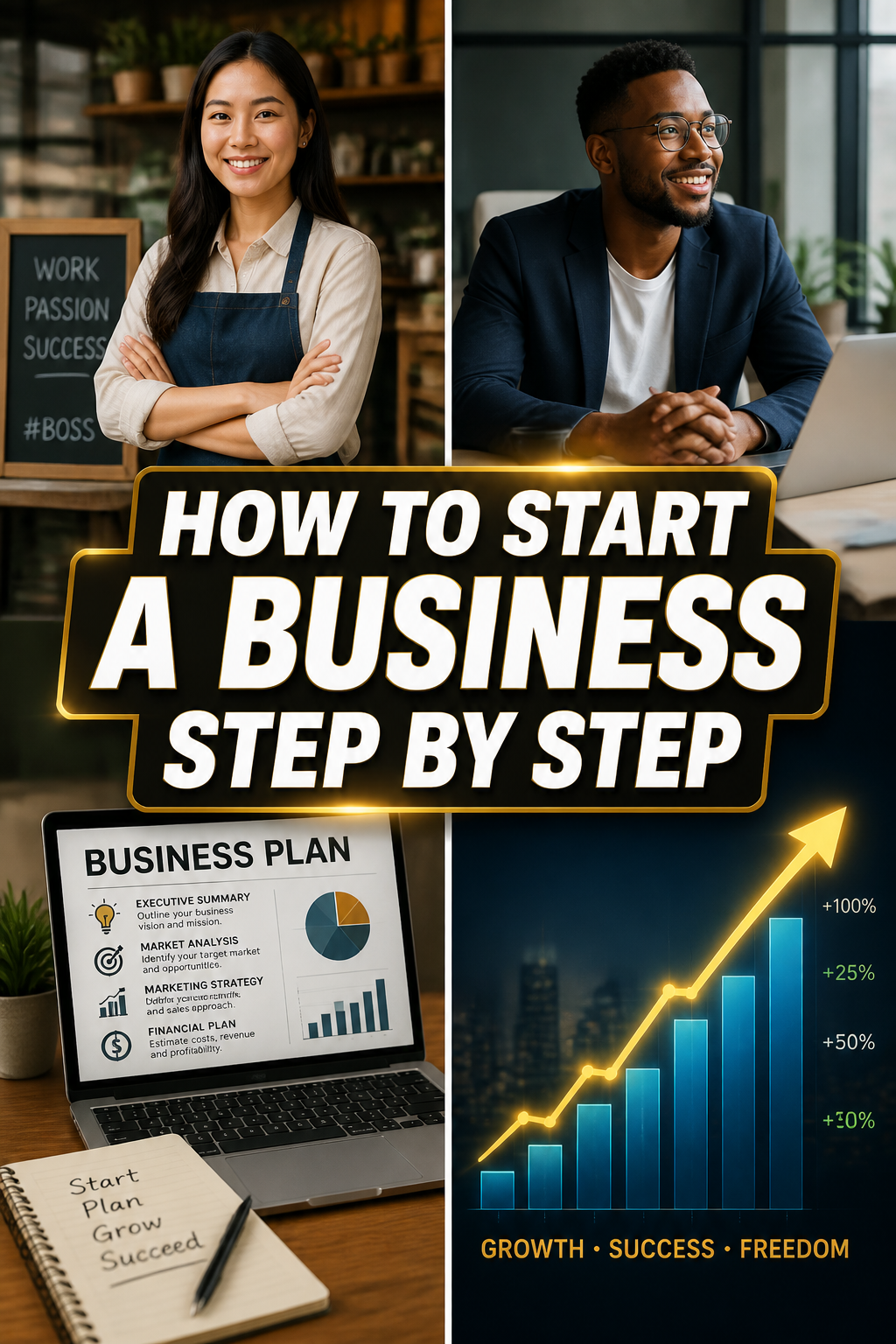
🚀 How To Start A Business Step By Step
📚 The Financial Literacy Library
The best investment you can ever make is in your own financial education. These 5 cornerstone books are what millionaires, financial advisors, and wealth-builders universally recommend for completely rewiring how you think about earning, saving, and investing money.
🧠 The Psychology of Money
Doing well with money isn't necessarily about what you know—it's about how you behave. Morgan Housel masterfully breaks down the emotional and psychological biases that secretly dictate our financial decisions, offering a true paradigm shift in how to view wealth.
🏠 Rich Dad Poor Dad
The #1 personal finance book of all time for a reason. This foundational read shatters the myth that you need to earn a high income to be rich, teaching you the critical difference between working for money and making your money work for you via assets.
📈 Atomic Habits
While not strictly a finance book, building wealth is absolutely dependent on the daily habits you cultivate. James Clear provides the definitive framework for breaking bad spending habits and effortlessly automating the good ones that lead to long-term success.
📊 The Simple Path to Wealth
The ultimate antidote to complex, intimidating financial advice. JL Collins provides an incredibly accessible, low-stress roadmap to financial independence through index fund investing, perfectly explaining why simplicity beats Wall Street complexity every time.
💳 I Will Teach You to Be Rich
A tactical, no-BS, 6-week program that actually works. Ramit Sethi teaches you how to crush debt, automate your savings, and negotiate your salary—all while guilt-free spending on the things you truly love. A must-read for modern money management.
Starting a business can feel like climbing a mountain, especially when you’re just beginning.
I remember my first venture; the excitement was matched only by the sheer confusion about money and next steps.
This guide distills years of learning into practical, money-smart advice, helping you navigate the journey with confidence and a solid financial footing.
Quick Overview
This guide will equip you with a clear roadmap to launch your business, focusing on smart financial decisions from day one.
You’ll learn how to validate your ideas, manage your money, and grow sustainably.
- Time needed: 4-8 weeks (for initial planning and launch prep)
- Difficulty: Beginner to Intermediate
- What you’ll need: A notebook, pen, computer, internet access, and a commitment to learn.
Step-by-Step Instructions
Step 1: Discover Your Idea & Understand Your Market
Every great business starts with an idea that solves a problem or fulfills a need. Don’t just pick something you like; find what people truly want and are willing to pay for.
This early validation saves you immense time and money down the line.
- Brainstorm problems you or others face daily. What irritates you? What could be easier?
- Identify your ideal customer. Who are they? What are their habits, their struggles, their aspirations?
- Research existing solutions. How do competitors address these needs? What are their strengths and weaknesses?
- Talk to potential customers. Ask open-ended questions about their pain points, not just if they’d buy your product. This is free market research.
- Validate your concept with a simple survey or by offering a small, free version of your service.
Pro Tip: Starting a business with minimal upfront cost means you need to be creative. Look for ways to test your idea without spending a dime. Use free online survey tools or simply talk to people in your network.
Step 2: Craft Your Business Plan (Your Financial GPS)
A business plan isn’t just for investors; it’s your personal financial GPS. It helps you clarify your vision, set realistic goals, and predict potential challenges.
Keep it concise and focused on the essentials.
- Define your mission and vision. What problem do you solve, and what future do you envision?
- Outline your product or service. What exactly are you offering? What makes it unique?
- Detail your market analysis. Based on Step 1, who are you serving and what’s the competitive landscape?
- Plan your marketing and sales strategy. How will people find out about you? How will you make sales?
- Create financial projections. Estimate your startup costs, operating expenses, and projected revenue for the first 1-3 years. Be conservative with income and generous with expenses.
Pro Tip: Your initial financial projections don’t need to be perfect. The goal is to understand your break-even point and how much money you need to survive before making a profit. This helps you save strategically.
Step 3: Secure Your Finances (Smart Funding Strategies)
Many aspiring entrepreneurs get stuck here, thinking they need a huge sum. The truth is, many successful businesses start small, often “bootstrapped” with personal savings.
Prioritize low-cost options to minimize risk.
- Start with personal savings. This is often the cheapest capital you can get. How much can you realistically save each month?
- Utilize a side hustle. Generate extra income specifically to fund your business. This reduces reliance on loans.
- Explore micro-loans or small business grants if absolutely necessary. Research local programs that support new entrepreneurs.
- Avoid high-interest debt like credit cards for startup costs. If you must use a credit card, ensure you have a clear repayment plan and can pay it off quickly.
- Budget meticulously. Track every dollar in and out. Know exactly where your money is going.
Pro Tip: Before you even think about external funding, challenge yourself to reduce your personal expenses. Every dollar saved is a dollar you don’t have to borrow, lowering your financial stress.
Step 4: Handle the Legal & Administrative (Get Official)
Getting your business officially recognized protects you and provides credibility. This step can seem daunting, but it’s often simpler and less expensive than you think.
Prioritize the essentials based on your business type and location.
- Choose a business structure. Options include Sole Proprietorship, LLC, or Corporation. An LLC offers personal liability protection and is often a good choice for small businesses.
- Register your business name. Check if your desired name is available and register it with your state or local government.
- Obtain an Employer Identification Number (EIN) from the IRS. It’s like a Social Security number for your business. It’s free and easy to get online.
- Secure necessary licenses and permits. Requirements vary by industry and location. Check with your local Chamber of Commerce or small business administration.
- Open a dedicated business bank account. This is crucial for separating personal and business finances, simplifying taxes, and showing professionalism.
Pro Tip: Don’t pay hundreds of dollars for an online service to set up your LLC if you can do it yourself for the state filing fee. Research your state’s Secretary of State website for direct instructions and forms. It’s often much cheaper.
Step 5: Build Your Minimum Viable Product/Service (MVP)
An MVP is the simplest version of your product or service that can be launched to solve your core customer problem and gather feedback.
It’s about getting started quickly and learning, not perfection.
- Identify the absolute core features needed to solve your customer’s primary problem. What’s essential, not just nice-to-have?
- Create your MVP with minimal resources. Can you offer a manual service before building an app? Can you sell one product variation before launching a full line?
- Launch it to a small group of early adopters. These are your first, forgiving customers who understand they’re testing something new.
- Gather feedback relentlessly. Ask what they like, what they don’t, and what they wish it did.
- Iterate based on feedback. Use what you learn to improve your offering, adding features strategically rather than guessing.
Pro Tip: Building an MVP is a massive money-saving strategy. Instead of investing heavily in a full-blown product that might not resonate, you test the waters with minimal risk. Think “pilot program” or “beta version.”
Step 6: Price Your Offer (Profitably and Fairly)
Pricing isn’t just about covering costs; it’s about reflecting value and ensuring your business is sustainable. Underpricing leaves money on the table; overpricing can deter customers.
Find the sweet spot that works for both you and your market.
- Calculate your costs. Include direct costs (materials, labor) and indirect costs (rent, marketing, your own salary).
- Research competitor pricing. How do similar offerings compare? Where do you fit in?
- Determine your value proposition. What unique benefits do you offer that justify your price? Are you premium, budget-friendly, or somewhere in between?
- Test different price points. Start with a price you think is fair, and be prepared to adjust based on customer response and sales data.
- Consider tiered pricing or package deals. Offer different options to appeal to a wider range of customers and budgets.
Pro Tip: Don’t be afraid to charge what you’re worth. Many new entrepreneurs underprice their services or products, which can lead to burnout and financial struggle. Your time, skill, and value have a cost.
Step 7: Market & Sell (Without Breaking the Bank)
You can have the best product in the world, but if no one knows about it, you won’t make sales. Smart marketing focuses on reaching your ideal customers efficiently.
Leverage free and low-cost channels first.
- Build a simple online presence. A free social media profile or a basic website (using platforms like Squarespace or Wix) is often enough to start.
- Use content marketing. Share valuable information related to your business through blog posts, social media updates, or short videos. This builds trust and attracts customers naturally.
- Network within your industry and community. Attend local events, join online groups, and connect with potential collaborators or customers.
- Ask for referrals and testimonials. Satisfied customers are your best marketers. Encourage them to spread the word.
- Run targeted, small-budget ads (e.g., Facebook Ads) once you understand your customer and message, and only if you have a clear return on investment.
Pro Tip: Focus on building relationships, not just broadcasting messages. Engage with your audience, listen to their feedback, and provide genuine value. This organic approach is incredibly cost-effective.
Step 8: Launch & Learn (Iterate and Grow)
The “launch” isn’t a finish line; it’s the starting gun. Once you’re live, your real learning begins. Be prepared to adapt and refine your approach based on real-world results.
Embrace a mindset of continuous improvement.
- Monitor your initial sales and customer feedback closely. What’s working? What isn’t?
- Track your key performance indicators (KPIs). These might include website traffic, conversion rates, customer acquisition cost, or customer lifetime value.
- Be Agile. Don’t be afraid to pivot if your initial assumptions were wrong. The market will tell you what it wants.
- Automate repetitive tasks where possible. Use tools for scheduling, email marketing, or social media posting to save time.
- Continuously seek ways to improve your product, service, and customer experience.
Pro Tip: Set aside dedicated time each week to review your business’s performance and finances. This isn’t just about making money; it’s about understanding the health of your venture and making informed decisions.
Step 9: Manage Your Money (Daily Habits for Wealth)
Effective financial management is the backbone of a sustainable business. It’s not just about making sales; it’s about keeping profits and growing your wealth.
Develop disciplined money habits from day one.
- Separate business and personal finances. Use your dedicated business bank account and credit cards.
- Track all income and expenses meticulously. Use simple accounting software or a spreadsheet. This is vital for tax time and understanding profitability.
- Pay yourself a consistent salary, even if it’s small to start. Budget for this just like any other business expense.
- Set aside money for taxes. As a business owner, you’ll likely pay estimated taxes quarterly. Don’t get caught unprepared.
- Reinvest profits wisely. Prioritize investments that directly contribute to growth or efficiency, like better equipment or marketing tools.
Pro Tip: Adopt a “pay yourself first” mentality, not just personally, but for your business’s future. Set up automatic transfers for tax savings, emergency funds, and future investments. This builds financial resilience.
Step 10: Scale Smart (Sustainable Growth)
Once your business is stable and profitable, you’ll naturally think about growth. Scaling smart means expanding without overextending your resources or taking on unnecessary risk.
Growth should be strategic and measured.
- Analyze what’s working best. Double down on your most profitable products, services, or marketing channels.
- Delegate or outsource tasks that are not core to your expertise. Your time is valuable.
- Expand cautiously. Before hiring staff or opening new locations, ensure you have consistent demand and sufficient capital.
- Monitor your cash flow constantly. Growth often requires more cash, so ensure you have enough liquidity.
- Build a strong network of mentors and advisors. Their experience can guide you through growth challenges.
Pro Tip: Don’t mistake revenue for profit. A growing business can still go bankrupt if it’s not managed properly. Focus on profitable growth and maintaining healthy margins. Always keep an eye on your bottom line.
Common Mistakes to Avoid
Ignoring Your Personal Budget
Many new entrepreneurs pour all their energy into the business budget but neglect their personal finances. This can lead to immense stress and force hasty business decisions.
Keep your personal financial house in order. Have a solid emergency fund and a clear understanding of your minimum living expenses before you fully commit to your business.
Overspending Before Proving the Concept
It’s tempting to invest in fancy office space, professional branding, or expensive equipment right away. However, doing so before you’ve validated your idea and made initial sales is a huge risk.
Start lean, prove your concept, and then invest in upgrades as your business generates revenue. Your MVP mentality should extend to your initial spending.
Skipping Market Validation
Believing your idea is brilliant without talking to potential customers is a common and costly mistake. You might build something nobody wants or needs.
Always engage with your target audience early and often. Their feedback is invaluable and will save you from wasting resources on a product or service that won’t sell.
Fear of Starting Small
The pressure to launch big and perfect can paralyze many aspiring business owners. They wait for the “perfect” website, the “perfect” product, or the “perfect” amount of funding.
Successful entrepreneurs often start with a small, imperfect version of their vision. The quicker you launch and get feedback, the faster you can learn and grow.
Troubleshooting
Running Out of Money Quickly
This is a common fear. Review your financial projections from Step 2. Were they realistic? Cut unnecessary expenses immediately. Look for ways to generate quicker revenue, even if it’s through a temporary side hustle or a smaller version of your main offering. Revisit your personal budget to see where you can tighten up.
Feeling Overwhelmed by Tasks
It’s easy to feel swamped when wearing many hats. Prioritize tasks that directly generate revenue or are critical for compliance. Delegate or outsource non-essential tasks if your budget allows. Consider using a project management tool to organize your workload. Remember, you don’t have to do everything perfectly at once.
Lack of Customer Interest
If your sales are slow or feedback is lukewarm, revisit Step 1 (Market Research) and Step 5 (MVP). Is your product truly solving a problem for your target audience? Is your marketing reaching the right people with the right message? Be open to pivoting your idea or refining your messaging based on what you learn.
Key Takeaways
- Start Lean and Validate: Test your ideas with minimal investment before committing significant resources.
- Master Your Money: Budget meticulously, separate personal and business finances, and save strategically.
- Focus on Value: Your business succeeds by solving real problems for customers and delivering clear value.
- Embrace Learning: The journey is iterative; be prepared to adapt, gather feedback, and continuously improve.
- Build Resilience: Financial discipline and a strong mindset are your best assets against entrepreneurial challenges.
Frequently Asked Questions
Can I start a business with no money?
While “no money” is difficult, “very little money” is absolutely possible. Focus on service-based businesses that require only your time and skills, or product businesses that use a dropshipping model or pre-orders to minimize inventory costs. Leverage free marketing channels and personal networks.
How do I know if my idea is good?
An idea is good if it solves a real problem for a specific group of people who are willing to pay for the solution. The best way to know is through market validation: talk to potential customers, run small experiments, and see if there’s genuine interest and demand.
When should I quit my day job?
Only quit your day job when your business generates enough consistent income to cover your personal living expenses, and you have a solid emergency fund (3-6 months of expenses) saved. Ideally, your business should be showing consistent profitability and growth before you make the leap.
What’s the most important financial habit?
The most important financial habit is consistently tracking every dollar that comes in and goes out of your business. This gives you a clear picture of your financial health, helps you make informed decisions, and ensures you’re prepared for taxes and future investments.
Our Top Recommended Finds
- A Durable Notebook and Pen: For capturing ideas, sketching plans, and tracking initial thoughts without digital distractions.
- Simple Accounting Software (e.g., Wave, QuickBooks Self-Employed): Essential for tracking income, expenses, and preparing for tax time, making financial management easy.
- A Reliable Laptop or Computer: Your central hub for research, communication, website building, and administrative tasks.
Your Entrepreneurial Journey Starts Now
The path to starting a business is an adventure, filled with learning and growth. Remember, every major enterprise began with a single, courageous step.
You don’t need a perfect plan, just a commitment to start and the willingness to learn along the way.
Take that first practical step today. Begin by validating your idea, or by outlining a simple budget. Your future self will thank you for taking action now.