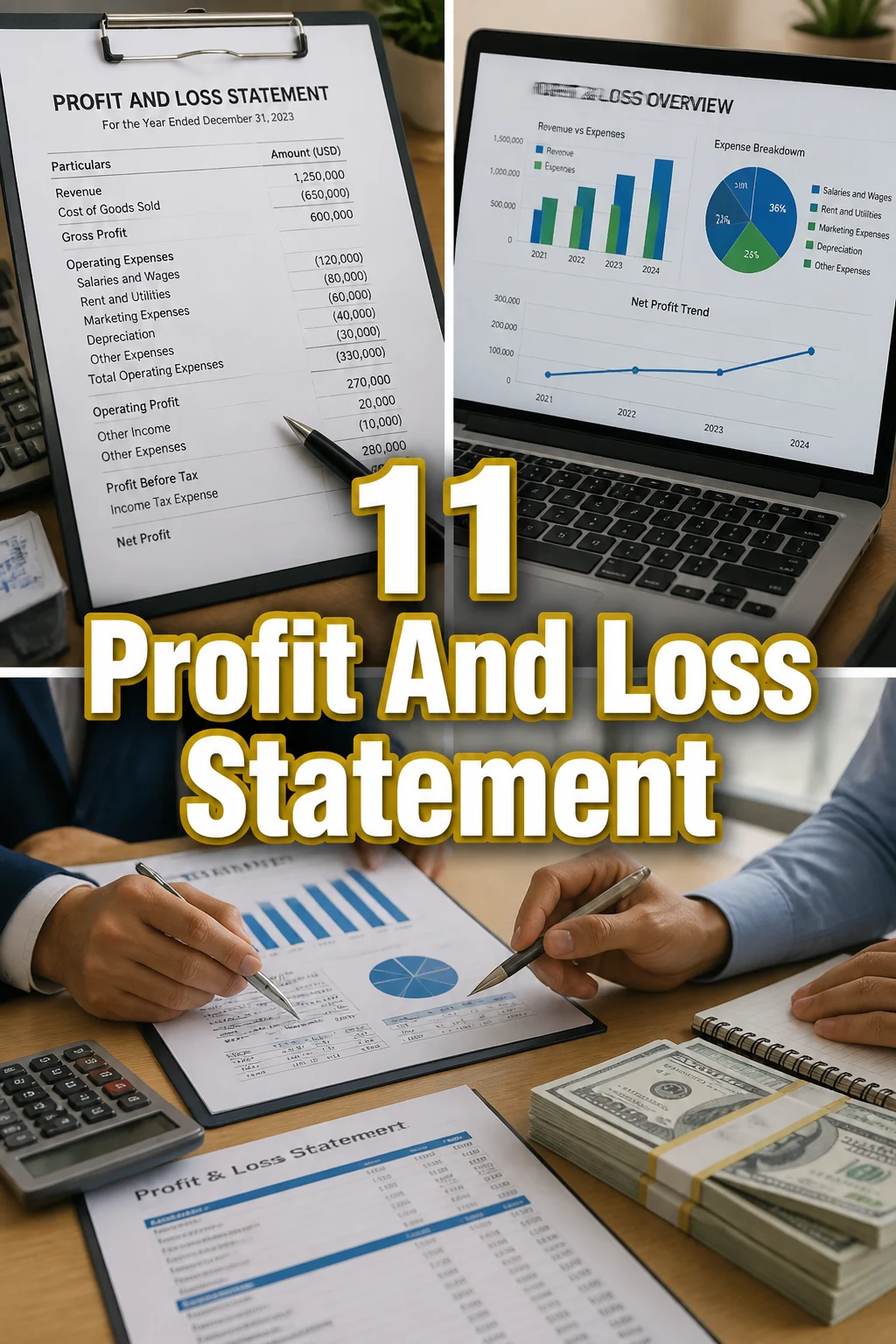
💸 11 Profit And Loss Statement
📚 The Financial Literacy Library
The best investment you can ever make is in your own financial education. These 5 cornerstone books are what millionaires, financial advisors, and wealth-builders universally recommend for completely rewiring how you think about earning, saving, and investing money.
🧠 The Psychology of Money
Doing well with money isn't necessarily about what you know—it's about how you behave. Morgan Housel masterfully breaks down the emotional and psychological biases that secretly dictate our financial decisions, offering a true paradigm shift in how to view wealth.
🏠 Rich Dad Poor Dad
The #1 personal finance book of all time for a reason. This foundational read shatters the myth that you need to earn a high income to be rich, teaching you the critical difference between working for money and making your money work for you via assets.
📈 Atomic Habits
While not strictly a finance book, building wealth is absolutely dependent on the daily habits you cultivate. James Clear provides the definitive framework for breaking bad spending habits and effortlessly automating the good ones that lead to long-term success.
📊 The Simple Path to Wealth
The ultimate antidote to complex, intimidating financial advice. JL Collins provides an incredibly accessible, low-stress roadmap to financial independence through index fund investing, perfectly explaining why simplicity beats Wall Street complexity every time.
💳 I Will Teach You to Be Rich
A tactical, no-BS, 6-week program that actually works. Ramit Sethi teaches you how to crush debt, automate your savings, and negotiate your salary—all while guilt-free spending on the things you truly love. A must-read for modern money management.
Alright, let’s get real. You’ve heard the buzzwords, maybe even seen the spreadsheets, but a Profit And Loss Statement probably sounds about as exciting as watching paint dry. Wrong. Dead wrong, my friend. This isn’t just for corporate titans or your super-serious accountant. This little gem is your secret weapon for understanding where your money goes, where it comes from, and how to make more of it for that dream vacay or your next big side hustle. Think of it as your business’s, or even your personal project’s, ultimate report card. And trust us, you’ll actually want to read this one.
1. The OG Scorecard What a P&L Actually Is
Here’s the lowdown on the legend. A Profit And Loss Statement, or P&L, is essentially a financial report that summarizes the revenues, costs, and expenses incurred during a specific period. It tells you whether your venture is making money or, well, not. It’s like checking your health stats, but for your cash flow.
Pro tip: Don’t just glance. Dive deep into the numbers to see the real story. It’s rarely just black and white.
It’s the foundational truth-teller, showing your financial performance over a given timeframe, usually a quarter or a year.
2. Revenue Rhapsody Tracking Your Incoming Cash
This is the fun part, right? Revenue is all the money you’re pulling in from selling your amazing products or services. It’s the top line, the big number that makes you feel like a boss. Without this, there’s no game.
Keep an eye on gross revenue versus net revenue. Returns and discounts can chip away at that initial glory.
Knowing your revenue streams helps you double down on what’s working and rethink what isn’t. Go chase that paper.
3. Cost Crusade Where Your Money Actually Goes
Every hero needs an antagonist, and for your revenue, it’s costs. These are the direct expenses tied to producing what you sell. Think raw materials, manufacturing, or even direct labor. This isn’t the stuff you just pay for to exist, it’s the stuff you pay for to create.
Understanding your Cost of Goods Sold (COGS) is crucial. It’s the direct price tag of your output.
If your costs are too high, even booming revenue won’t save your bacon. This is where efficiency becomes your superpower.
4. Gross Profit Glamour The First Big Win
Subtract your COGS from your revenue, and bam! You’ve got your gross profit. This is your first real indicator of how well your core operations are performing before all the other overheads kick in. It’s the margin you make on each sale.
A healthy gross profit margin means your product or service is priced right and your production costs are in check.
This number tells you if your fundamental business model is even viable. If it’s weak, time for a serious chat with your pricing strategy.
5. Operating Expenses Odyssey Keeping the Lights On
Okay, so you’ve made a gross profit. Now for the operational stuff. This includes all the expenses not directly tied to making your product: rent, salaries, marketing, utilities, software subscriptions, that fancy coffee machine. These are the costs of just being in business.
Categorize your operating expenses meticulously. Are you spending too much on things that don’t directly drive growth?
This section reveals if your overhead is eating into your potential profits. Cut the fat where you can, but don’t starve the beast.
6. Net Profit Nirvana The Real Bottom Line
After you’ve accounted for all revenues and all expenses (both COGS and operating), what’s left? That’s your net profit, baby! This is the ultimate number, telling you how much money your business truly earned. It’s the ultimate mic drop moment.
A positive net profit means you’re winning. A negative one means it’s time for a serious strategy session.
This is the number that really counts, showing your overall financial health and success.
7. The Timeframe Twist Why Dates Matter
A P&L isn’t a snapshot; it’s a video clip. It covers a specific period, like a month, quarter, or year. You can’t compare January’s P&L to a full year’s P&L and expect it to make sense. Context is king here.
Always check the reporting period. Consistency is key when comparing performance over time.
Understanding the timeframe helps you track trends and make informed decisions, not just knee-jerk reactions.
8. Trendspotting Tango Seeing Patterns in Your Numbers
Don’t just look at one P&L. Look at a series of them. Are your revenues consistently growing? Are your expenses creeping up? Spotting these trends helps you anticipate future performance and nip problems in the bud. It’s like predicting the fashion cycle, but with cash.
Compare your P&L statements side-by-side over several periods. Look for consistent growth or worrying dips.
This sequential analysis is where the real insights lie, transforming raw data into actionable intelligence.
9. Budgeting BFF How P&L Informs Your Spending
Your P&L is like a brutally honest friend telling you if you can afford that new designer bag or if you need to chill. It shows where your money has gone, which is invaluable for deciding where it should go in the future. It’s your compass for creating a realistic budget.
Use historical P&L data to set realistic and achievable budget targets for future periods.
It helps you allocate resources wisely, ensuring you’re investing in growth, not just maintaining the status quo.
10. Decision-Making Dynamo Using Data to Level Up
Thinking about launching a new product? Hiring more staff? Expanding your marketing efforts? Your P&L provides the cold, hard data you need to make smart choices. It takes the guesswork out of big decisions, turning hunches into calculated risks.
Before making any significant business move, consult your P&L to assess the potential impact on your profitability.
Empower yourself with data. It’s the ultimate tool for strategic planning and growth.
11. Future-Proofing Fun Planning for What’s Next
Ultimately, understanding your P&L isn’t just about reviewing the past; it’s about shaping your future. By regularly analyzing your financial performance, you can identify opportunities, mitigate risks, and build a more resilient and profitable venture. It helps you dodge bullets and seize golden tickets.
Regularly review and project your P&L to anticipate challenges and opportunities, staying several steps ahead.
This proactive approach ensures your financial health for the long haul, letting you sleep soundly.
💼 The Money Management Toolkit
Knowledge is power, but proper execution requires the right tools. Getting your financial life organized doesn't have to be overwhelming. These 5 physical management tools are exactly what successful households use to budget, track cash, and secure their most important assets.
📝 Clever Fox Budget Planner & Bill Organizer
The ultimate analog command center for your finances. Sometimes keeping your budget in an app just doesn't stick. Physically writing down your goals, tracking expenses, and planning for debt payoff creates a level of accountability that digital spreadsheets simply can't match.
💵 A6 Leather Cash Stuffing Binder
The viral tool that made the cash-envelope budgeting system popular again. By allocating actual physical cash to designated envelopes (groceries, dining out, fun money), you physically cap your spending, making it virtually impossible to overdraft or overspend.
🔥 Fireproof & Waterproof Document Safe
A critical piece of financial security that many families overlook. Protecting your passports, birth certificates, property deeds, and estate planning documents from disaster is just as important as protecting the money in your bank account.
🏷️ Brother P-Touch Digital Label Maker
The unsung hero of a functional home office. When tax season rolls around or you need to find an important receipt, having perfectly labeled and categorized filing cabinets or accordion folders saves hours of frustrating searches and potential late fees.
🔒 SentrySafe Compact Fireproof Lock Box
For the physical assets that need extra heavy-duty protection—think emergency cash reserves, hard drives with Bitcoin cold wallets, or physical precious metals. This compact, locking safe provides peace of mind that your physical wealth is secure at home.
Conclusion
So, there you have it. The Profit And Loss Statement isn’t some dusty relic for finance nerds; it’s your personal crystal ball for financial success. By getting cozy with your revenues, costs, and profits, you’re not just tracking money; you’re taking control of your financial destiny. Go forth, analyze, and conquer. Your bank account will thank you.