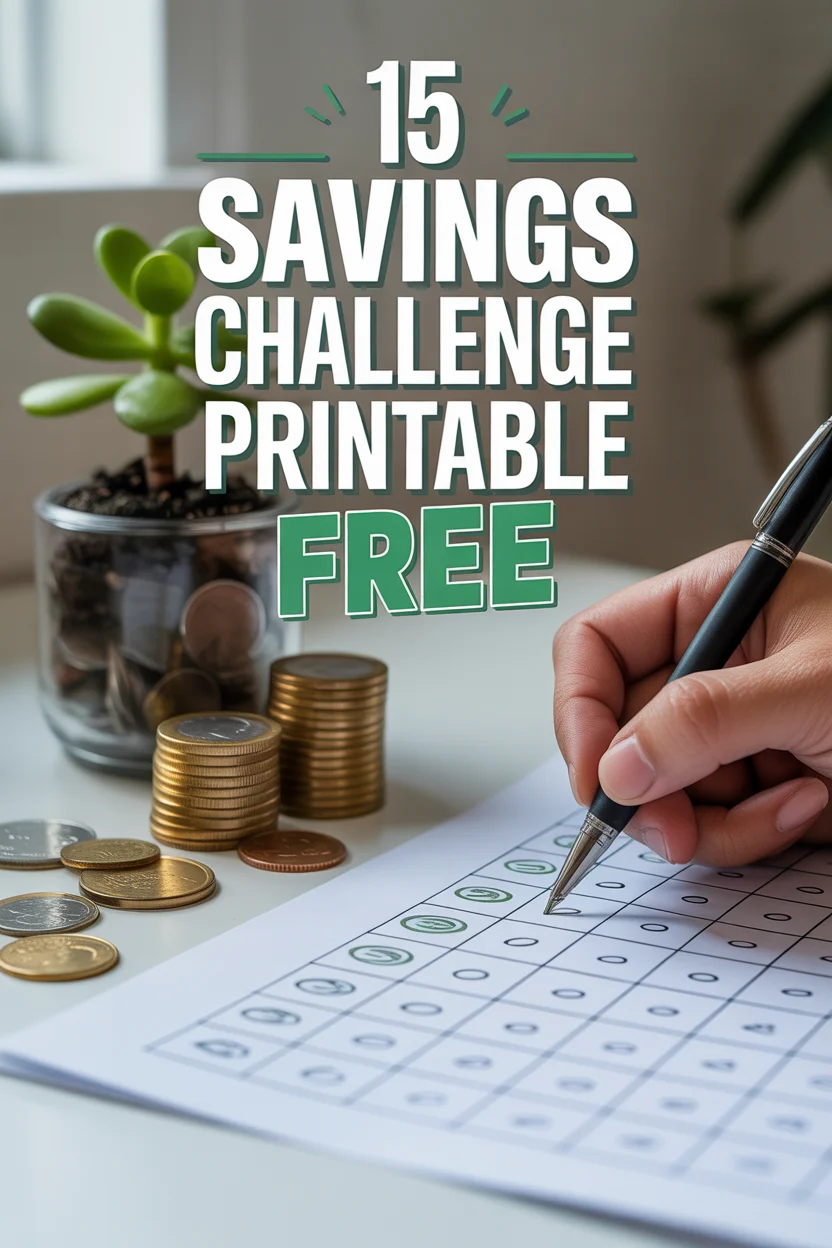
💰 15 Savings Challenge Printable Free
📚 The Financial Literacy Library
The best investment you can ever make is in your own financial education. These 5 cornerstone books are what millionaires, financial advisors, and wealth-builders universally recommend for completely rewiring how you think about earning, saving, and investing money.
🧠 The Psychology of Money
Doing well with money isn't necessarily about what you know—it's about how you behave. Morgan Housel masterfully breaks down the emotional and psychological biases that secretly dictate our financial decisions, offering a true paradigm shift in how to view wealth.
🏠 Rich Dad Poor Dad
The #1 personal finance book of all time for a reason. This foundational read shatters the myth that you need to earn a high income to be rich, teaching you the critical difference between working for money and making your money work for you via assets.
📈 Atomic Habits
While not strictly a finance book, building wealth is absolutely dependent on the daily habits you cultivate. James Clear provides the definitive framework for breaking bad spending habits and effortlessly automating the good ones that lead to long-term success.
📊 The Simple Path to Wealth
The ultimate antidote to complex, intimidating financial advice. JL Collins provides an incredibly accessible, low-stress roadmap to financial independence through index fund investing, perfectly explaining why simplicity beats Wall Street complexity every time.
💳 I Will Teach You to Be Rich
A tactical, no-BS, 6-week program that actually works. Ramit Sethi teaches you how to crush debt, automate your savings, and negotiate your salary—all while guilt-free spending on the things you truly love. A must-read for modern money management.
Hey money mavens and future millionaires (or at least, future less-stressed people), ever feel like saving money is a bit like trying to catch smoke with a net? Yeah, us too. But what if we told you it doesn’t have to be a total drag? What if we said you could actually enjoy watching your bank account grow? Shocking, right? We’re diving deep into some seriously fun, totally doable savings challenges, all with a side of free printables because, let’s be real, who doesn’t love a good visual tracker? Time to kick those money goals into high gear without sacrificing your daily latte (unless you want to, you rebel).

1. The 52-Week Challenge
This one is a classic for a reason, people. You start small, saving just a dollar, and gradually increase your weekly contribution. Imagine adding a dollar to a jar for week one, then two dollars for week two, all the way up to fifty-two dollars on the final week. You end up with a sweet $1,378 by the year’s end, practically painlessly. A pro tip: reverse it to save the bigger chunks when you’re feeling flush from holiday bonuses, or just when you’re less likely to be tempted by summer sales. It works because it builds a consistent saving habit without overwhelming your budget upfront.
2. The No-Spend Challenge
Ready to truly test your willpower? This challenge asks you to designate a period – a day, a weekend, a week, or even a month – where you spend absolutely nothing on non-essentials. Think groceries and bills are okay, but that impulse buy at Target or your daily coffee run? Nope. You quickly realize how much cash leaks from your wallet on things you don’t actually need. Try it for a week, you might surprise yourself and find an extra $100 or more. This works by forcing you to confront your spending habits head-on.
3. The Round-Up Challenge
This one is sneaky good, almost like magic. Every time you make a purchase, you round up to the nearest dollar and stash that change away. Many banks even offer this feature automatically, making it utterly effortless. If your coffee costs $3.75, an extra $0.25 goes into savings. Over time, those pennies turn into real money, often amounting to hundreds of dollars without you even noticing. It works because it leverages tiny, unnoticeable contributions.
4. The $5 Bill Challenge
This challenge is delightfully simple. Every time you get a $5 bill, you immediately put it into a designated savings spot – a jar, an envelope, or a separate bank account. No spending it, no breaking it, just save it. You might be surprised how often those greenbacks pop up. We know a friend who saved over $800 in a year just doing this. It works because it makes saving feel like a fun game, a treasure hunt for fives.
5. The Latte Factor Challenge
Okay, we mentioned lattes earlier, but hear us out. This challenge isn’t about depriving yourself; it’s about awareness. Identify one small, daily expense you could easily cut back on – that fancy coffee, a daily snack, or even a streaming service you barely use. Put that money directly into savings instead. If your daily latte is $5, that’s $1,825 in a year. Imagine that. This works by highlighting how small, consistent changes create massive impact.
6. The Savings Bingo Challenge
Who doesn’t love a good game of bingo? Create a bingo card with different amounts to save (e.g., $10, $25, $50, $75). Each time you save one of those amounts, you mark it off. The goal is to get a line, or even a full card, to hit your savings target. Make it extra fun by adding a small reward for yourself when you complete a line. It’s a fantastic way to gamify your saving and keep motivation high. This works because it adds a playful, visual element to your financial goals.
7. The Weather Wednesday Challenge
This one is a bit quirky but totally effective. Every Wednesday, whatever the high temperature is in your city, you save that amount in dollars. If it’s 75 degrees, you save $75. If it’s a chilly 30 degrees, you save $30. You’ll definitely want to check your local forecast! Over a year, this can add up to a significant sum, especially if you live somewhere with varied seasons. It works by introducing an element of surprise and variability, making it less monotonous.
8. The Change Jar Challenge
Remember those old-school piggy banks? This is basically that, but with a modern twist. At the end of each day, empty all your loose change from your wallet or pockets into a jar. Don’t touch it until the jar is full, or for a set period like six months. You’ll be amazed at how quickly those dimes and quarters pile up. We’ve seen people collect hundreds of dollars without even trying. This works because it’s a completely effortless way to save.
9. The Bi-Weekly Paycheck Challenge
If you get paid every two weeks, this one is for you. In months with three paychecks, dedicate that “extra” paycheck entirely to savings. It feels like a bonus, so it’s easier to part with. This means twice a year, you get a serious boost to your savings account without feeling the pinch of a regular bill cycle. It is a brilliant strategy for boosting your emergency fund. This works by leveraging irregular income for significant savings.
10. The Debt Payoff First Challenge
Sometimes, the best saving is actually not paying interest. This challenge focuses on aggressively paying down high-interest debt first. Every extra dollar you put towards credit card debt or personal loans is money you won’t lose to interest, which is essentially saving. Once that debt is gone, you can redirect those payments directly into your savings account. It’s like getting a raise. This works because it eliminates a major financial drain, freeing up future funds.
11. The Pantry Challenge
Before you hit the grocery store, challenge yourself to eat meals made only from what you already have in your pantry, fridge, and freezer. This forces you to get creative and use up items before they expire, saving you money on your grocery bill. You might be surprised by how many meals you can cobble together. A week of this can easily save you $50-$100. This works by reducing food waste and cutting down on unnecessary grocery spending.
12. The Birthday Money Challenge
Got some birthday cash or a holiday bonus coming your way? This challenge is simple: save 100% of it. No splurging, no “treating yourself” (unless your treat is financial security, which it totally should be). This is free money you didn’t budget for, so it’s the perfect candidate for a savings boost. Even a modest gift can make a difference. This works because it capitalizes on unexpected windfalls.
13. The Reverse 52-Week Challenge
We mentioned the regular 52-week challenge, but sometimes starting big feels better. With the reverse, you save $52 in week one, $51 in week two, and so on, until you’re saving just $1 in the final week. This is great for those who have more disposable income at the beginning of the year or want to get the heaviest lifting done early. You still end up with $1,378, just with a different pacing. This works by front-loading your savings when motivation is highest.
14. The “I Didn’t Buy It” Challenge
Did you almost buy that new gadget, those shoes, or that extra app subscription? But then you thought better of it? Fantastic! Now, take the money you would have spent and immediately transfer it to your savings. This makes you actively aware of your non-purchases and rewards your discipline. It’s a powerful way to turn temptation into tangible savings. This works by converting avoided spending into actual savings.
15. The “Save Your Raise” Challenge
If you’re lucky enough to get a raise or a bonus at work, this challenge is a no-brainer. Instead of letting your lifestyle inflate to meet your new income, commit to saving a percentage (or even all) of that extra money. You were already living comfortably before the raise, so you won’t miss it. This is how people rapidly accelerate their savings and build wealth. This works by preventing lifestyle creep and dedicating new income to future goals.
💼 The Money Management Toolkit
Knowledge is power, but proper execution requires the right tools. Getting your financial life organized doesn't have to be overwhelming. These 5 physical management tools are exactly what successful households use to budget, track cash, and secure their most important assets.
📝 Clever Fox Budget Planner & Bill Organizer
The ultimate analog command center for your finances. Sometimes keeping your budget in an app just doesn't stick. Physically writing down your goals, tracking expenses, and planning for debt payoff creates a level of accountability that digital spreadsheets simply can't match.
💵 A6 Leather Cash Stuffing Binder
The viral tool that made the cash-envelope budgeting system popular again. By allocating actual physical cash to designated envelopes (groceries, dining out, fun money), you physically cap your spending, making it virtually impossible to overdraft or overspend.
🔥 Fireproof & Waterproof Document Safe
A critical piece of financial security that many families overlook. Protecting your passports, birth certificates, property deeds, and estate planning documents from disaster is just as important as protecting the money in your bank account.
🏷️ Brother P-Touch Digital Label Maker
The unsung hero of a functional home office. When tax season rolls around or you need to find an important receipt, having perfectly labeled and categorized filing cabinets or accordion folders saves hours of frustrating searches and potential late fees.
🔒 SentrySafe Compact Fireproof Lock Box
For the physical assets that need extra heavy-duty protection—think emergency cash reserves, hard drives with Bitcoin cold wallets, or physical precious metals. This compact, locking safe provides peace of mind that your physical wealth is secure at home.
Conclusion
Alright, you savvy savers! There you have it – fifteen totally doable, sometimes cheeky, always effective ways to boost your bank balance with our savings challenge printable free guides. Remember, the best challenge is the one you actually stick with. Pick one (or two, if you’re feeling ambitious!), grab a printable, and start making those money moves. Your future self will totally thank you for being so financially fabulous. Go on, get saving!