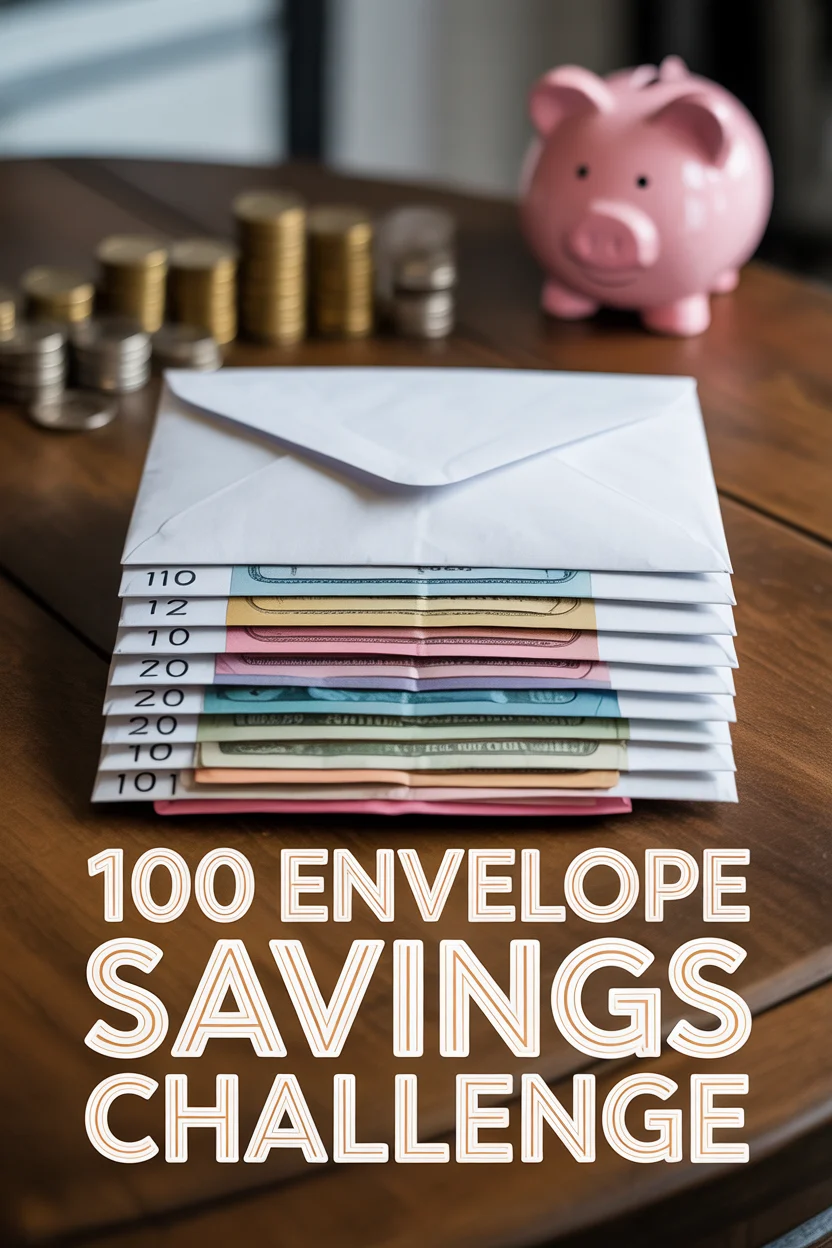
💰 100 Envelope Savings Challenge
📚 The Financial Literacy Library
The best investment you can ever make is in your own financial education. These 5 cornerstone books are what millionaires, financial advisors, and wealth-builders universally recommend for completely rewiring how you think about earning, saving, and investing money.
🧠 The Psychology of Money
Doing well with money isn't necessarily about what you know—it's about how you behave. Morgan Housel masterfully breaks down the emotional and psychological biases that secretly dictate our financial decisions, offering a true paradigm shift in how to view wealth.
🏠 Rich Dad Poor Dad
The #1 personal finance book of all time for a reason. This foundational read shatters the myth that you need to earn a high income to be rich, teaching you the critical difference between working for money and making your money work for you via assets.
📈 Atomic Habits
While not strictly a finance book, building wealth is absolutely dependent on the daily habits you cultivate. James Clear provides the definitive framework for breaking bad spending habits and effortlessly automating the good ones that lead to long-term success.
📊 The Simple Path to Wealth
The ultimate antidote to complex, intimidating financial advice. JL Collins provides an incredibly accessible, low-stress roadmap to financial independence through index fund investing, perfectly explaining why simplicity beats Wall Street complexity every time.
💳 I Will Teach You to Be Rich
A tactical, no-BS, 6-week program that actually works. Ramit Sethi teaches you how to crush debt, automate your savings, and negotiate your salary—all while guilt-free spending on the things you truly love. A must-read for modern money management.
In a world buzzing with complex financial jargon and intimidating investment strategies, sometimes the most powerful tools for building wealth are the simplest ones. Imagine a savings method that’s not only incredibly effective but also fun, tangible, and deeply satisfying. Enter the 100 Envelope Savings Challenge – a viral sensation that’s helping people worldwide transform their financial habits and achieve their savings goals, one envelope at a time.
Whether you dream of a down payment for a house, a lavish vacation, an emergency fund that provides peace of mind, or simply want to kickstart a consistent savings habit, this challenge offers a unique and engaging path. It demystifies the idea of saving large sums by breaking it down into manageable, bite-sized contributions, turning what could be a daunting task into an exciting game. It’s about more than just accumulating cash; it’s about building financial discipline, fostering a money-smart mindset, and experiencing the tangible joy of watching your wealth grow. Let’s dive in and discover how this ingenious method can revolutionize your financial journey.
What is 100 Envelope Savings Challenge?
At its core, the 100 Envelope Savings Challenge is a straightforward yet powerful system designed to help you save a significant amount of money over a set period. The premise is delightfully simple: you take 100 envelopes, number them from 1 to 100, and then, on a regular basis (weekly, bi-weekly, or even daily), you pick an envelope and put the corresponding cash amount into it. For example, if you pick envelope #25, you deposit $25. If you pick envelope #7, you deposit $7.
The magic happens when you add up all the numbers from 1 to 100. The sum is exactly $5,050. This means by completing the challenge, you will have accumulated over five thousand dollars! It’s a fantastic way to save a substantial sum without feeling overwhelmed, as each individual contribution is relatively small and manageable.
The beauty of this challenge lies in its tangibility. Unlike digital savings where numbers on a screen can feel abstract, here you’re dealing with physical cash and real envelopes filling up. This tactile experience creates a strong psychological connection to your savings, making your progress visible and incredibly motivating. Each time you stuff an envelope, you’re not just moving money; you’re actively building a physical representation of your financial future.
Many participants choose to spread the challenge over 100 weeks (roughly two years), contributing one envelope per week. However, its flexibility allows you to adapt it to your own financial situation and goals. You could do two envelopes a week, or even combine smaller numbers to meet a larger one if your budget allows. This adaptability makes it accessible to almost anyone, regardless of their income level or current financial standing.
Beyond just saving money, the 100 Envelope Challenge implicitly teaches valuable budgeting skills. To consistently contribute, you’ll naturally start paying more attention to where your money is going, identifying areas where you can trim expenses to free up cash for your envelopes. It transforms saving from a chore into an engaging project, fostering a wealth-building mindset that extends far beyond the duration of the challenge itself.
Key Features
The popularity of the 100 Envelope Savings Challenge isn’t just a fleeting trend; it’s built on several robust features that make it an exceptionally effective and engaging savings strategy:
- Tangible & Visual Progress: In an increasingly digital world, the physical act of filling envelopes with cash offers a unique and powerful psychological boost. You can literally see your savings grow, which provides immense motivation and a strong sense of accomplishment. This visual feedback makes the abstract concept of “saving” feel concrete and real.
- Gamified Approach to Saving: The challenge turns saving into a fun game. Picking an envelope, whether randomly or strategically, introduces an element of excitement and anticipation. This gamification makes it easier to stick with the habit, transforming a potentially tedious task into an enjoyable activity.
- Flexibility and Adaptability: This isn’t a one-size-fits-all plan. You can adjust the frequency of your contributions (weekly, bi-weekly, or even daily), the order in which you pick envelopes, or even modify the amounts if necessary. This adaptability ensures that the challenge can fit various budgets, income levels, and timelines, making it accessible to a wide audience.
- Significant Accumulation: By consistently contributing, you end up with a substantial sum of $5,050. This isn’t pocket change; it’s enough to make a real impact on a significant financial goal, whether it’s an emergency fund, a down payment, or a dream vacation. The cumulative effect of small, consistent actions is truly astounding.
- Budgeting Awareness & Discipline: To successfully complete the challenge, you’ll naturally become more mindful of your spending. It encourages you to analyze your budget, identify areas for cost-cutting, and prioritize your financial goals. This heightened awareness fosters strong financial discipline and helps you develop better money management habits that will serve you long-term.
- Low Barrier to Entry: You don’t need complex financial products or a high-income bracket to start. All you need are 100 envelopes, a marker, and a commitment to save. This simplicity makes it an ideal starting point for anyone looking to improve their financial health.
How to Get Started
Ready to embark on your savings adventure? Getting started with the 100 Envelope Savings Challenge is incredibly simple. Here’s a step-by-step guide to set you up for success:
- Gather Your Tools:
- 100 Envelopes: Standard letter envelopes work perfectly. You can buy them in bulk at office supply stores or online.
- A Marker: Any permanent marker will do for numbering.
- A Container: A decorative box, a sturdy basket, or even a shoebox will serve as a safe and private place to store your numbered envelopes and your growing savings.
- A Tracker (Optional but Recommended): A simple spreadsheet, a printed template, or a dedicated app to mark off which envelopes you’ve filled. This helps you visualize progress and stay organized.
- Number the Envelopes:
Using your marker, number each of the 100 envelopes from 1 to 100. Double-check to ensure you haven’t missed any numbers or duplicated any. This step is crucial for the integrity of the challenge.
- Set Your Schedule:
Decide how frequently you want to contribute. This is where the challenge’s flexibility shines:
- Weekly (100 Weeks / ~2 Years): This is the most common approach. Each week, you pick one envelope, deposit the corresponding amount, and mark it off your tracker. This pace is manageable for most budgets.
- Bi-Weekly (50 Bi-Weeks / ~2 Years): If you get paid bi-weekly, you might pick two envelopes every payday. This keeps the timeline similar but aligns with your income cycle.
- Random / Flexible: Some people prefer to pick an envelope whenever they have extra cash. This can be less structured but works well for those with variable income. Just be mindful not to let too much time pass between contributions.
- Reverse Challenge: Start with the higher numbers first (e.g., $100, $99) and work your way down. This gets the larger contributions out of the way when motivation is highest, leaving smaller, easier amounts for later.
- Commit and Start Saving:
Pick your first envelope! Don’t overthink it – just start. Take the corresponding cash, place it inside the envelope, seal it, and put it in your designated container. Mark it off your tracker. This initial step is often the hardest, but once you begin, momentum will build.
- Track Your Progress:
Whether you use a physical chart you can color in, a simple spreadsheet, or a dedicated app, tracking is vital. It provides a visual representation of how far you’ve come and how much you still need to save. Seeing those numbers add up and envelopes fill can be incredibly motivating.
- Integrate into Your Budget:
The most effective way to succeed is to treat your envelope contribution as a non-negotiable line item in your budget, just like rent or utilities. Don’t just hope you’ll have extra cash; plan for it. Allocate a specific amount from each paycheck to ensure you can meet your weekly or bi-weekly envelope commitment.
Tips for Success
While the 100 Envelope Savings Challenge is simple, a few strategic tips can significantly boost your chances of completion and make the journey even more rewarding:
- Make it a Non-Negotiable Habit: Treat your envelope contribution like any other essential bill. Allocate money for it in your budget at the beginning of your pay cycle, rather than hoping there’s money left at the end. Consistency is the bedrock of successful saving. Consider setting a specific day each week for your envelope contribution, like “Savings Sunday.”
- Budget for Your Contributions: Don’t just rely on finding spare cash. Actively integrate your challenge contributions into your monthly or bi-weekly budget. If you’re doing the weekly method, try to set aside an average of $50.50 per week (total $5,050 / 100 weeks). This proactive budgeting ensures you always have the funds available and prevents scrambling.
- Track Your Progress Visually: Beyond just marking off envelopes, create a visual tracker you can display prominently. This could be a printed sheet with 100 squares to color in, a whiteboard list, or even a digital app. Seeing your progress visually is a powerful motivator and a constant reminder of your goal. Celebrate filling up a row or reaching a quarter-way point!
- Don’t Be Afraid to Adapt: Life happens. There might be weeks where a high-numbered envelope feels impossible. Instead of giving up, adapt! You could:
- Double up on smaller numbers: Instead of $80, put $30 and $50 into two separate envelopes.
- Use the “Reverse” Method: Start with higher numbers when your motivation is highest, or when you receive a bonus or tax refund. This leaves smaller, easier amounts for later.
- Catch Up Later: If you miss a week, don’t fret. Pick up where you left off or try to contribute extra the following week if your budget allows. The goal is completion, not perfection.
- Involve Your Support System: Share your challenge with a trusted friend, family member, or partner. They can offer encouragement, hold you accountable, or even join you in the challenge. Saving with a buddy can make the process more fun and keep you motivated, especially during challenging weeks.
- Have a Clear Goal in Mind: While saving $5,050 is a great achievement, having a specific purpose for that money will fuel your motivation. Is it for an emergency fund, a down payment, a dream vacation, or paying off high-interest debt? Visualize that goal regularly to stay focused and inspired.
Common Mistakes to Avoid
While the 100 Envelope Savings Challenge is designed for success, there are a few pitfalls that can derail your progress. Being aware of these common mistakes can help you navigate them and stay on track:
- Not Budgeting for Contributions: This is perhaps the biggest mistake. Many people try to save whatever “extra” money they have at the end of the week. This often leads to inconsistent contributions or, worse, no contributions at all. Make your envelope savings a line item in your budget that you fund first, not last.
- Picking Only Small Numbers First (or Randomly Without Strategy): While tempting to get easy wins, only picking the low numbers (1, 2, 3…) leaves all the high numbers (98, 99, 100) for later, creating a massive financial burden when your motivation might be waning. Try to mix it up, or consider the reverse challenge to get the big ones out of the way.
- Dipping into Your Savings: The envelopes are a dedicated savings fund. Once money goes in, it should stay in. Using these funds for non-emergency expenses can quickly deplete your progress and demotivate you. Treat this money as untouchable until your goal is reached.
- Getting Discouraged by Missed Weeks: Life happens, and you might miss a contribution or two. The mistake is letting this small setback turn into giving up entirely. Instead, acknowledge it, learn from it, and resume the challenge as soon as you can. It’s a marathon, not a sprint, and consistency over perfection is key.
- Not Having a Clear “Why”: Saving just for the sake of saving can feel aimless. If you don’t have a compelling reason or a specific goal for your $5,050, you’re more likely to lose motivation. Define what you’re saving for – whether it’s an emergency fund, a down payment, a vacation, or debt repayment – and keep that goal front and center.
- Keeping the Money at Home Unsecured: While the challenge involves physical cash, storing large amounts of money at home can be risky. As your envelopes fill up, consider depositing the cash into a dedicated high-yield savings account or a separate bank account regularly (e.g., once a month) to keep it safe and potentially earn a little interest.
FAQ
Q1: What if I can’t afford a high-numbered envelope one week?
Life is unpredictable, and sometimes a large contribution isn’t feasible. Don’t get discouraged! You have several options:
- Swap: If you pick #80, but can only afford $20, swap it with the #20 envelope. Just make sure to put the #80 envelope back into the mix for a future, more financially flexible week.
- Split: Instead of one high number, pick several smaller ones that add up to a similar amount (e.g., instead of $75, do $25, $30, and $20).
- Reverse Challenge: Consider starting with the higher numbers first to get them out of the way when your motivation is highest or you have extra funds (like a bonus or tax refund).
- Catch Up: If you truly can’t contribute, simply put the envelope back and try to contribute extra the following week if your budget allows. Consistency is important, but flexibility prevents burnout.
The goal is to complete the challenge, not to follow a rigid rule perfectly. Adapt it to your life.
Q2: Can I do this with digital money instead of physical cash?
Absolutely! While the physical aspect is a powerful motivator for many, you can easily adapt the 100 Envelope Savings Challenge for digital savings. Here’s how:
- Virtual Envelopes: Use a spreadsheet or a dedicated savings app to track your 100 “virtual” envelopes. When you “pick” an envelope, transfer that amount from your checking account to a separate, dedicated savings account.
- Dedicated Savings Account: Open a separate high-yield savings account specifically for this challenge. This keeps the money separate from your everyday funds and allows it to potentially earn a small amount of interest.
- Automate Transfers: Many banks allow you to set up recurring transfers. While you can’t automate the “picking” of an envelope, you can automate regular transfers of a set amount (e.g., $50/week) and then digitally “assign” these funds to various envelopes in your tracker.
The key is to maintain the discipline of moving the money into a separate, untouchable fund.
Q3: What should I save for with the $5,050?
Having a clear goal is crucial for motivation. Here are some popular ideas for what to do with your accumulated $5,050:
- Emergency Fund: This is often recommended as the first financial goal. $5,050 can provide a substantial cushion for unexpected expenses like medical bills, car repairs, or job loss.
- Down Payment: For a car, a house, or even a smaller purchase.
- Debt Repayment: Target high-interest debts like credit card balances. Paying off debt is a form of saving, as it frees up future cash flow.
- Dream Vacation: Fund that trip you’ve always wanted to take without going into debt.
- Investment Seed Money: Use it to start or boost an investment portfolio, perhaps in a Roth IRA or a brokerage account.
- Home Improvements: Save for a renovation project or a new appliance.
Choose a goal that genuinely excites and motivates you!
Q4: How long does it typically take to complete the challenge?
The duration depends entirely on your contribution schedule:
- Weekly Contributions: If you pick and fill one envelope per week, it will take 100 weeks to complete, which is approximately 1 year and 11 months (just under 2 years).
- Bi-Weekly Contributions: If you contribute twice a week (e.g., two envelopes every payday), it would take 50 weeks, or just under 1 year.
- More Frequent Contributions: If you’re able to contribute more often, you can complete it faster. Some ambitious savers aim to complete it in less than a year.
Remember, the pace is yours to set based on your budget and financial goals. The journey is as important as the destination.
💼 The Money Management Toolkit
Knowledge is power, but proper execution requires the right tools. Getting your financial life organized doesn't have to be overwhelming. These 5 physical management tools are exactly what successful households use to budget, track cash, and secure their most important assets.
📝 Clever Fox Budget Planner & Bill Organizer
The ultimate analog command center for your finances. Sometimes keeping your budget in an app just doesn't stick. Physically writing down your goals, tracking expenses, and planning for debt payoff creates a level of accountability that digital spreadsheets simply can't match.
💵 A6 Leather Cash Stuffing Binder
The viral tool that made the cash-envelope budgeting system popular again. By allocating actual physical cash to designated envelopes (groceries, dining out, fun money), you physically cap your spending, making it virtually impossible to overdraft or overspend.
🔥 Fireproof & Waterproof Document Safe
A critical piece of financial security that many families overlook. Protecting your passports, birth certificates, property deeds, and estate planning documents from disaster is just as important as protecting the money in your bank account.
🏷️ Brother P-Touch Digital Label Maker
The unsung hero of a functional home office. When tax season rolls around or you need to find an important receipt, having perfectly labeled and categorized filing cabinets or accordion folders saves hours of frustrating searches and potential late fees.
🔒 SentrySafe Compact Fireproof Lock Box
For the physical assets that need extra heavy-duty protection—think emergency cash reserves, hard drives with Bitcoin cold wallets, or physical precious metals. This compact, locking safe provides peace of mind that your physical wealth is secure at home.
Conclusion
The 100 Envelope Savings Challenge is more than just a clever trick; it’s a powerful framework for building lasting financial habits and achieving significant savings goals. By transforming the often-daunting task of saving into a tangible, gamified experience, it empowers individuals from all walks of life to take control of their financial future. You’re not just collecting cash; you’re cultivating discipline, sharpening your budgeting skills, and fostering a money-smart mindset that will serve you well for years to come.
The beauty of this challenge lies in its simplicity, adaptability, and the undeniable satisfaction of watching your progress unfold. Imagine the peace of mind an emergency fund provides, the joy of a debt-free vacation, or the excitement of a down payment made possible by your consistent efforts. The $5,050 you accumulate is a testament to your commitment and a stepping stone to even greater financial triumphs.
So, what are you waiting for? Gather your envelopes, set your goal, and take that crucial first step. Your journey to financial empowerment begins with a single envelope. Start today, and watch your savings – and your confidence – grow!