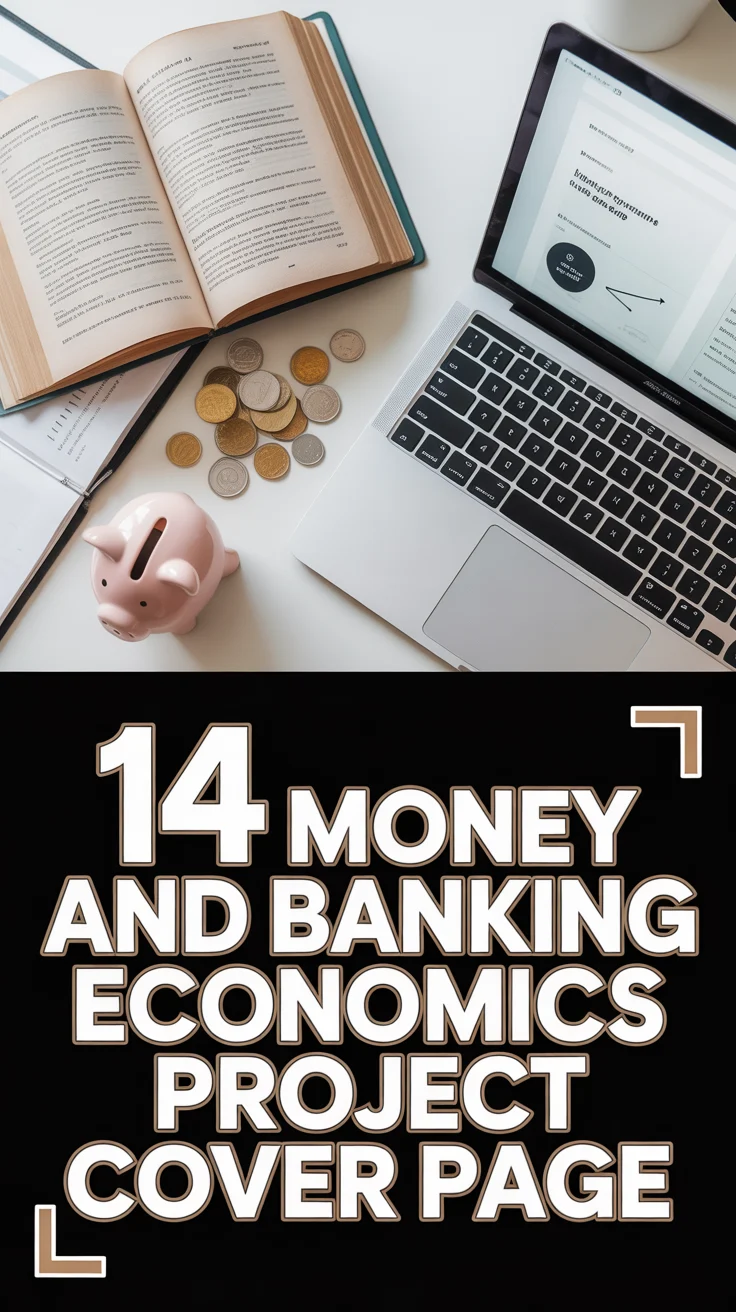
💰 14 Money And Banking Economics Project Cover Page
📚 The Financial Literacy Library
The best investment you can ever make is in your own financial education. These 5 cornerstone books are what millionaires, financial advisors, and wealth-builders universally recommend for completely rewiring how you think about earning, saving, and investing money.
🧠 The Psychology of Money
Doing well with money isn't necessarily about what you know—it's about how you behave. Morgan Housel masterfully breaks down the emotional and psychological biases that secretly dictate our financial decisions, offering a true paradigm shift in how to view wealth.
🏠 Rich Dad Poor Dad
The #1 personal finance book of all time for a reason. This foundational read shatters the myth that you need to earn a high income to be rich, teaching you the critical difference between working for money and making your money work for you via assets.
📈 Atomic Habits
While not strictly a finance book, building wealth is absolutely dependent on the daily habits you cultivate. James Clear provides the definitive framework for breaking bad spending habits and effortlessly automating the good ones that lead to long-term success.
📊 The Simple Path to Wealth
The ultimate antidote to complex, intimidating financial advice. JL Collins provides an incredibly accessible, low-stress roadmap to financial independence through index fund investing, perfectly explaining why simplicity beats Wall Street complexity every time.
💳 I Will Teach You to Be Rich
A tactical, no-BS, 6-week program that actually works. Ramit Sethi teaches you how to crush debt, automate your savings, and negotiate your salary—all while guilt-free spending on the things you truly love. A must-read for modern money management.
Okay, so you’ve got this economics project looming, right? And it’s all about money and banking. Sounds super intense, but honestly, your cover page doesn’t have to be a snooze-fest. Think of it as your first impression – make it count, make it pop, make it say “I actually understand economics and I’m cooler than you think.” We’re ditching the boring and embracing the brilliant. Let’s get that A before anyone even reads page one.
1. The Minimalist Maestro
Sometimes less is truly more, especially when you’re trying to look sophisticated. Think clean lines, a single bold font for your title, and maybe a subtle watermark of a currency symbol. It screams “I know my stuff without shouting.” Pro tip: Always use high-quality paper; it just elevates the whole vibe. This works because it’s professional, sleek, and lets your project’s content do the heavy lifting.
2. Vintage Vault Vibe
Channel your inner old-money aesthetic with a touch of history. Imagine sepia tones, old bank ledger fonts, or even a subtle background texture of an antique banknote. It hints at the rich history of financial systems. Pro tip: Find royalty-free images of historical stock certificates or coin designs to really sell the look. This option makes your project feel timeless and well-researched, without being dusty.
3. Digital Dollar Dash
Embrace the future of finance with a modern, tech-inspired design. Think geometric patterns, circuit board motifs, or abstract representations of data flow. Use a sleek, sans-serif font and perhaps a splash of neon green or electric blue. Pro tip: Incorporate subtle blockchain-like graphics without making it look like a crypto ad. This design says you’re forward-thinking and understand evolving financial landscapes.
4. Global Currency Collage
Show off your world-savvy side by featuring various international currencies. Arrange them artfully, perhaps overlapping or in a mosaic pattern. This immediately conveys a broad understanding of global economics. Pro tip: Ensure the currencies are clearly identifiable but not overwhelming. It works by making your project appear comprehensive and internationally focused.
5. The Growth Graph Getup
Transform a simple line graph into a powerful design element. Use an upward-trending graph as a background or a central motif, symbolizing economic growth and prosperity. Keep the colors clean and professional. Pro tip: Make sure the graph looks abstract enough not to imply specific data, unless you want it to. This cover instantly communicates the core concept of economic progress.
6. Abstract Art of Assets
Get a little artsy with abstract shapes and colors that evoke financial concepts. Think overlapping circles for markets, flowing lines for cash flow, or sharp angles for investment decisions. It’s sophisticated and unique. Pro tip: Stick to a limited color palette to maintain a cohesive, high-end feel. This design stands out because it’s creative yet still communicates professionalism.
7. Power of the Piggy Bank
For a slightly playful yet relevant touch, use a stylized piggy bank icon. This works especially well if your project touches on personal finance, savings, or the basics of banking. Keep the design clean and modern, not childish. Pro tip: Pair it with a mature font to balance the whimsical element. It’s memorable and approachable, inviting the reader in.
8. The Ledger Layout
Mimic the look of an old accounting ledger or a modern spreadsheet. Use a grid-like structure, perhaps with subtle lines and numbers in the background. This conveys organization and attention to detail. Pro tip: Don’t overdo the grid; it should be an underlying texture, not a dominant feature. This cover projects an image of meticulous research and structure.
9. Coin Stack Chic
A well-composed image of stacked coins can be surprisingly elegant. Play with depth of field, lighting, or even a monochromatic filter. It’s a direct visual reference to money without being cliché. Pro tip: Use high-resolution images to avoid pixelation, which totally ruins the sophisticated vibe. This simple image makes a strong, clear statement about your topic.
10. The Banking Building Blueprint
Use a subtle blueprint or architectural drawing of a classical bank building. This lends an air of tradition, stability, and institutional weight to your project. It’s serious without being stuffy. Pro tip: Opt for a muted color scheme, like deep blues or grays, to enhance the architectural feel. It implies a solid, foundational understanding of banking structures.
11. Future of Finance Fantasy
Imagine what money and banking will look like in the future. Think holographic interfaces, interconnected global networks, or futuristic payment methods. Use sleek graphics and innovative typography. Pro tip: Keep it speculative but grounded enough to show you’ve thought about real trends. This design shows ambition and a forward-looking perspective.
12. The Wealth Web
Illustrate the interconnectedness of financial systems with a web-like graphic. Think nodes and lines representing transactions, markets, and global economies. It’s a dynamic and intelligent visual. Pro tip: Use a clear, simple icon at the center of the “web” to anchor the design. This works by visually explaining the complex relationships within finance.
13. Currency Conversion Cool
Feature a subtle visual representation of currency exchange. Maybe two different currency symbols merging or a line graph showing conversion rates. It’s a smart way to hint at international finance. Pro tip: Ensure the symbols are instantly recognizable to avoid confusion. This cover suggests a nuanced understanding of global monetary flows.
14. The Investment Insight
Use imagery related to smart investment, like a magnifying glass over a stock chart or a single, strong upward arrow. This conveys focus, analysis, and strategic thinking. It’s all about making informed decisions. Pro tip: Keep the imagery sharp and impactful, avoiding cluttered visuals. This design immediately communicates depth and analytical prowess.
💼 The Money Management Toolkit
Knowledge is power, but proper execution requires the right tools. Getting your financial life organized doesn't have to be overwhelming. These 5 physical management tools are exactly what successful households use to budget, track cash, and secure their most important assets.
📝 Clever Fox Budget Planner & Bill Organizer
The ultimate analog command center for your finances. Sometimes keeping your budget in an app just doesn't stick. Physically writing down your goals, tracking expenses, and planning for debt payoff creates a level of accountability that digital spreadsheets simply can't match.
💵 A6 Leather Cash Stuffing Binder
The viral tool that made the cash-envelope budgeting system popular again. By allocating actual physical cash to designated envelopes (groceries, dining out, fun money), you physically cap your spending, making it virtually impossible to overdraft or overspend.
🔥 Fireproof & Waterproof Document Safe
A critical piece of financial security that many families overlook. Protecting your passports, birth certificates, property deeds, and estate planning documents from disaster is just as important as protecting the money in your bank account.
🏷️ Brother P-Touch Digital Label Maker
The unsung hero of a functional home office. When tax season rolls around or you need to find an important receipt, having perfectly labeled and categorized filing cabinets or accordion folders saves hours of frustrating searches and potential late fees.
🔒 SentrySafe Compact Fireproof Lock Box
For the physical assets that need extra heavy-duty protection—think emergency cash reserves, hard drives with Bitcoin cold wallets, or physical precious metals. This compact, locking safe provides peace of mind that your physical wealth is secure at home.
Conclusion
Alright, so there you have it – 14 ways to make your Money And Banking Economics Project Cover Page absolutely slay. No more sad, default title pages for you. Pick a vibe, make it yours, and hand in that project knowing you’ve already won half the battle with a killer first impression. Go forth and conquer, you economic wizard!