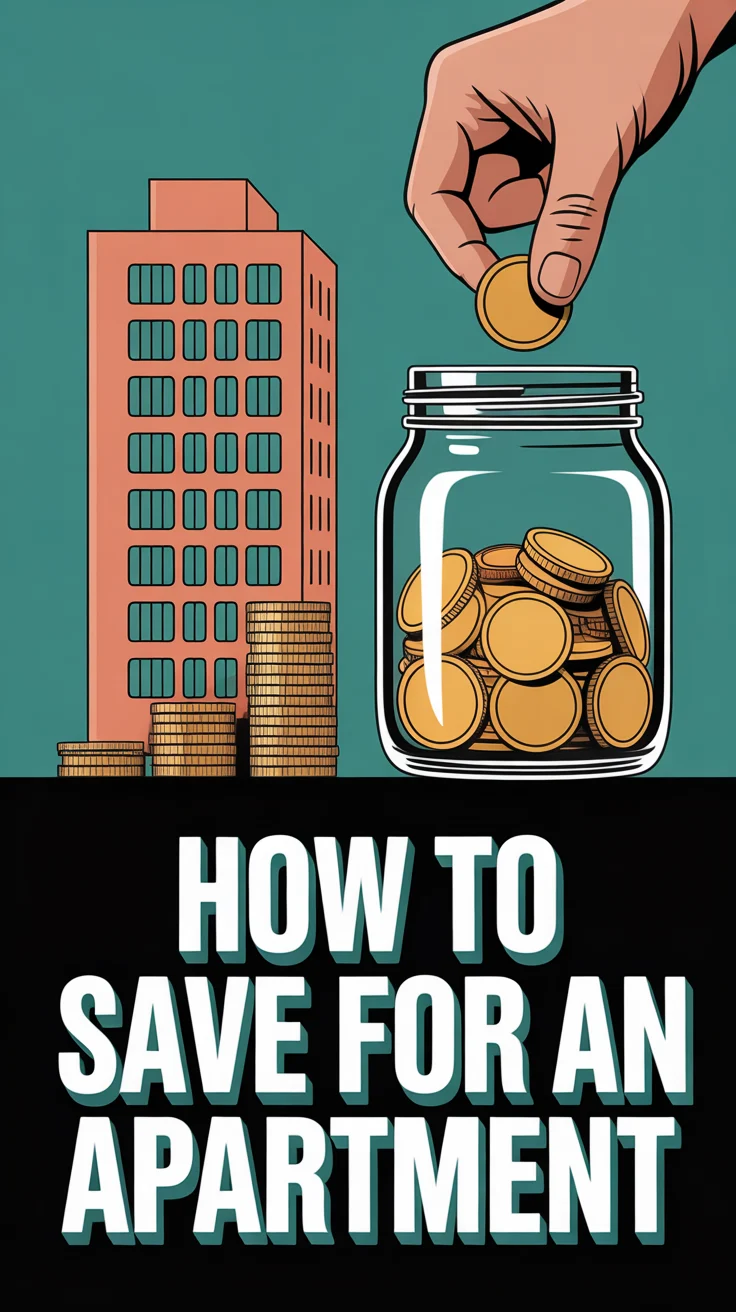
🏠 How To Save For An Apartment
📚 The Financial Literacy Library
The best investment you can ever make is in your own financial education. These 5 cornerstone books are what millionaires, financial advisors, and wealth-builders universally recommend for completely rewiring how you think about earning, saving, and investing money.
🧠 The Psychology of Money
Doing well with money isn't necessarily about what you know—it's about how you behave. Morgan Housel masterfully breaks down the emotional and psychological biases that secretly dictate our financial decisions, offering a true paradigm shift in how to view wealth.
🏠 Rich Dad Poor Dad
The #1 personal finance book of all time for a reason. This foundational read shatters the myth that you need to earn a high income to be rich, teaching you the critical difference between working for money and making your money work for you via assets.
📈 Atomic Habits
While not strictly a finance book, building wealth is absolutely dependent on the daily habits you cultivate. James Clear provides the definitive framework for breaking bad spending habits and effortlessly automating the good ones that lead to long-term success.
📊 The Simple Path to Wealth
The ultimate antidote to complex, intimidating financial advice. JL Collins provides an incredibly accessible, low-stress roadmap to financial independence through index fund investing, perfectly explaining why simplicity beats Wall Street complexity every time.
💳 I Will Teach You to Be Rich
A tactical, no-BS, 6-week program that actually works. Ramit Sethi teaches you how to crush debt, automate your savings, and negotiate your salary—all while guilt-free spending on the things you truly love. A must-read for modern money management.
The dream of having your own space – a place to truly call your own, decorate just how you like, and build your independent life – is incredibly powerful. But let’s be honest, the path to getting those keys can feel like navigating a dense financial jungle. You’re not alone if the idea of saving for an apartment feels overwhelming, but what if we told you it’s entirely achievable with the right strategy and a sprinkle of money-smart magic? This guide is your compass, designed to transform that daunting goal into a clear, actionable plan, empowering you to unlock your future home sooner than you think.
Quick Overview
This comprehensive guide will walk you through the essential steps to build a robust savings plan for your first apartment. We’ll cover everything from defining your financial goal to boosting your income and avoiding common pitfalls, all designed to make your apartment dream a reality.
- Time needed: Several hours for initial setup and planning; ongoing commitment for execution.
- Difficulty: Beginner
- What you’ll need: A pen and paper or digital budgeting tools, access to your bank accounts, and a strong dose of determination!
Step-by-Step Instructions
Step 1: Define Your Apartment Dream (And Its Cost)
Before you can save, you need to know what you’re saving for. This isn’t just about a vague idea of “an apartment”; it’s about getting specific. Research is your first, most crucial step.
- Research Average Costs: Start by looking at rental listings in your desired neighborhoods. What are the average monthly rents for the size and type of apartment you envision (studio, 1-bedroom, roommate situation)?
- Calculate the Total Target Amount: This is where many first-time savers get tripped up. It’s not just about the first month’s rent. You need to factor in:
- First Month’s Rent: (e.g., $1,500)
- Security Deposit: Typically 1-2 months’ rent (e.g., $1,500 – $3,000)
- Pet Deposit/Rent (if applicable): Often an additional one-time fee or monthly charge.
- Application Fees: Usually $30-$100 per applicant.
- Moving Costs: Truck rental, movers, packing supplies (e.g., $200 – $1,000+).
- Initial Utility Setup Fees: Electricity, gas, internet (e.g., $50 – $200 per utility).
- Furniture & Household Essentials: Don’t forget the basics like a bed, couch, kitchenware, cleaning supplies (e.g., $500 – $2,000+ depending on your needs).
- Emergency Buffer: It’s wise to have an extra 1-2 months of living expenses saved for unexpected costs or income fluctuations.
Add all these potential costs together. This grand total is your “Apartment Savings Goal.” Let’s say, for example, your total comes out to $7,000. Now you have a concrete number to work towards!
Pro tip: Use online rental calculators or spreadsheets to meticulously list out each potential cost. Don’t be afraid to over-estimate slightly; it’s better to have too much than too little.
Step 2: Assess Your Current Financial Reality
You can’t get to where you’re going without knowing where you currently stand. This step is about getting brutally honest with your money.
- Track Your Income: List all your sources of income – your main job, side hustles, freelance work, etc. Be precise with your net (after-tax) monthly income.
- Track Every Expense: For at least 1-2 months, meticulously record every single dollar you spend. This means your rent, utilities, groceries, transportation, dining out, subscriptions, impulse buys – everything. You can use:
- Budgeting apps (Mint, YNAB, Personal Capital, Simplifi)
- Spreadsheets (Google Sheets, Excel)
- A simple notebook and pen.
This tracking process isn’t about judgment; it’s about awareness. You’ll likely discover “money leaks” – those small, habitual expenses that add up without you realizing it.
Pro tip: Many banking apps now offer spending insights that can automatically categorize your transactions, making this step much easier. Look for patterns in your spending – where does your money consistently go?
Step 3: Create a Budget That Works for You
Now that you know your income and where your money is going, it’s time to build a budget that prioritizes your apartment savings goal.
- Categorize Expenses: Divide your spending into “fixed” (rent, loan payments, subscriptions) and “variable” (groceries, entertainment, dining out).
- Needs: Housing, utilities, groceries, transportation, healthcare. (Aim for 50% of your income).
- Wants: Dining out, entertainment, new clothes, subscriptions, hobbies. (Aim for 30% of your income).
- Savings & Debt Repayment: Apartment fund, emergency fund, paying down high-interest debt. (Aim for 20% of your income, or more!).
- Allocate Funds: Assign a specific amount of money to each category for the month. Be realistic, but also be firm. Your apartment fund should be one of your top priorities.
- Identify Areas for Cuts: This is where the magic happens. Look at your “wants” category. Can you reduce dining out? Cancel unused subscriptions? Cut back on daily lattes? Even small, consistent cuts can free up significant funds. For example, if you save $10 a day by making coffee at home and packing lunch, that’s $300 a month towards your apartment!
Your budget is a living document, not a rigid prison sentence. It’s a tool to guide your spending towards your goals.
Pro tip: Consider the “Zero-Based Budgeting” method (every dollar is assigned a job) or the “Envelope System” (physical or digital envelopes for cash) if you need tighter control over variable spending. The key is to find a system you can stick with consistently.
Step 4: Supercharge Your Savings Strategy
Budgeting tells your money where to go; this step ensures it actually gets there.
- Automate Your Savings: This is arguably the most powerful saving hack. Set up an automatic transfer from your checking account to a dedicated apartment savings account every payday. Treat this transfer like a non-negotiable bill. Even if it’s a small amount to start, consistency builds momentum.
- “Pay Yourself First”: Before you pay any other bills or indulge in any wants, ensure your apartment savings contribution is made. This shifts your mindset from saving what’s left over to making saving a priority.
- Open a Dedicated High-Yield Savings Account (HYSA): Don’t just stash your apartment money in your regular checking account. Open a separate, high-yield savings account. These accounts often offer significantly higher interest rates than traditional savings accounts, meaning your money grows faster, passively. Plus, having it in a separate account makes it less tempting to dip into for everyday expenses.
- Set Realistic Timelines and Mini-Goals: Break your big apartment savings goal into smaller, manageable chunks. If you need $7,000 and can save $500 a month, that’s 14 months. Celebrate reaching $1,000, then $2,000, and so on. This keeps motivation high.
Pro tip: Look for banks that offer automatic “round-ups” where your debit card purchases are rounded up to the nearest dollar, and the difference is transferred to your savings. Every little bit truly adds up!
Step 5: Boost Your Income (The Other Side of the Coin)
While cutting expenses is vital, increasing your income can dramatically accelerate your savings timeline. Don’t be afraid to get creative!
- Side Hustles: Explore opportunities to earn extra money outside your main job. This could include:
- Freelancing in your area of expertise (writing, graphic design, social media management).
- Gig economy jobs (food delivery, ride-sharing, dog walking, babysitting).
- Selling handmade goods or crafts online.
- Tutoring or teaching a skill.
- Sell Unused Items: Declutter your living space and make some cash! Use platforms like Facebook Marketplace, eBay, Poshmark, or local consignment shops for clothes, furniture, electronics, and more. Think of it as pre-furnishing your new apartment by getting rid of what you don’t need to make room for what you will.
- Negotiate Bills & Services: Call your internet, cable, or cell phone providers and ask if there are any new promotions or if they can lower your monthly rate. You’d be surprised how often they’ll negotiate to keep your business.
- Ask for a Raise: If you’ve been excelling at your job, prepare a strong case and ask for a raise. Document your achievements and contributions, and research average salaries for your role and experience level.
Pro tip: Dedicate 100% of any extra income you earn from side hustles or selling items directly to your apartment savings fund. This “found money” can make a huge impact without feeling like a sacrifice.
Step 6: Tackle Debt Strategically
High-interest debt is like a leaky bucket for your savings. It drains your resources and makes it harder to reach your goals.
- Prioritize High-Interest Debt: If you have credit card debt or personal loans with high interest rates (15% or more), tackling these should be a major priority. The interest payments alone can eat up a significant portion of your income, preventing you from saving effectively.
- Balance Debt Repayment and Saving: While aggressive debt repayment is often wise, it’s also important to keep some momentum on your apartment savings. A common strategy is to save a small, consistent amount for your apartment (e.g., $50-$100/month) while dedicating the rest of your extra funds to debt repayment. Once the high-interest debt is gone, you can redirect those payments entirely to your apartment fund.
- Consider Debt Snowball or Avalanche Methods:
- Snowball: Pay off your smallest debt first, then roll that payment into the next smallest. This builds psychological momentum.
- Avalanche: Pay off your debt with the highest interest rate first, saving you the most money in the long run.
Pro tip: Focus on making more than the minimum payments on your debt. Even an extra $20-$50 can significantly reduce the total interest paid and shorten your repayment timeline, freeing up cash flow for your apartment sooner.
Step 7: Stay Motivated & Track Your Progress
Saving for a big goal is a marathon, not a sprint. Maintaining motivation is key to long-term success.
- Visualize Your Goal: Create a vision board with pictures of your ideal apartment, furniture, or the lifestyle you envision. Place it somewhere you’ll see it daily. Keep your “why” front and center.
- Track Your Progress Regularly: Use a spreadsheet, a dedicated app, or even a simple thermometer chart to visually track how close you are to your savings goal. Seeing that number grow is incredibly motivating.
- Celebrate Milestones: When you hit your first $1,000, or you’re halfway to your goal, acknowledge it! Celebrate with a small, non-expensive reward – a special meal cooked at home, a movie night, or a walk in a beautiful park. These small wins reinforce positive habits.
- Adjust as Needed: Life happens. Your income might change, unexpected expenses might pop up, or your desired apartment costs might shift. Don’t be afraid to revisit your budget and adjust your savings plan. Flexibility is a strength, not a failure.
Pro tip: Find an accountability partner – a friend, family member, or mentor who also has financial goals. Share your progress, challenges, and celebrate successes together. This external support can be a powerful motivator.
Common Mistakes to Avoid
Even with the best intentions, it’s easy to stumble. Here are a few common pitfalls and how to steer clear of them:
-
Not Having a Clear Goal (or Underestimating Costs):
Why it’s problematic: Saving without a specific target amount or a realistic understanding of all associated costs leads to aimless saving and potential shortfalls when it’s time to move. You might save $3,000, only to realize you actually needed $7,000, leading to frustration and delays.
Correct approach: Complete Step 1 thoroughly. Research average rents, security deposits, application fees, moving costs, and initial setup expenses (utilities, basic furniture). Calculate a precise, realistic total and make that your unwavering savings target.
-
Ignoring Small, Habitual Expenses (“Death by a Thousand Cuts”):
Why it’s problematic: While cutting big expenses feels impactful, it’s often the daily coffee, impulse online purchases, or forgotten subscriptions that silently drain your budget. These “micro-spends” add up significantly over weeks and months, eroding your savings potential without you even noticing.
Correct approach: Track every single dollar for at least a month (Step 2). You’ll likely be shocked at where your money goes. Then, consciously identify and reduce these small, non-essential expenditures. Small changes, consistently applied, yield big results.
-
Relying Solely on Willpower for Saving:
Why it’s problematic: Willpower is a finite resource. If you wait until the end of the month to “see what’s left over” to save, chances are there won’t be much. Life gets in the way, and spontaneous spending often wins out over delayed gratification.
Correct approach: Automate your savings (Step 4). Set up automatic transfers to a separate, dedicated apartment savings account on payday. This removes the need for willpower and ensures you “pay yourself first,” making saving a non-negotiable part of your financial routine.
-
Not Having an Emergency Fund:
Why it’s problematic: Life throws curveballs. If you’ve put every spare penny into your apartment fund without a separate emergency fund, an unexpected car repair, medical bill, or job loss could force you to dip into your apartment savings, completely derailing your progress and motivation.
Correct approach: Ideally, build a small emergency fund (e.g., $1,000) before aggressively saving for your apartment. Once that’s established, you can save for your apartment while simultaneously building your emergency fund to 3-6 months of living expenses. This provides a crucial safety net.
Troubleshooting
It’s normal to face challenges along your savings journey. Here are common issues and how to tackle them:
-
“I can’t seem to save enough each month.”
Quick solution: Revisit your budget with a fine-tooth comb (Step 3). Are there more cuts you can make, even small ones? Are you consistently tracking your spending? If cutting isn’t enough, focus on boosting your income (Step 5). Even an extra $100-$200 a month can make a significant difference. You might also need to adjust your timeline or the scope of your apartment dream to make it more achievable.
-
“An unexpected expense derailed my progress!”
Quick solution: First, don’t beat yourself up. This is precisely why an emergency fund is so important (see Common Mistakes). If you had to dip into your apartment savings, re-evaluate your budget for the next month. Cut back on all non-essentials temporarily to replenish what you took out, or to get back on track with your original savings goal. The key is to acknowledge the setback, learn from it, and immediately adjust your plan to regain momentum.
-
“I’m losing motivation and feel like giving up.”
Quick solution: Reconnect with your “why” (Step 7). Look at your vision board, review your progress tracker, and remind yourself of the freedom and joy your own apartment will bring. Break your goal down into even smaller, more achievable mini-goals. Talk to a supportive friend or family member who can cheer you on. Sometimes, a short break from intense saving (e.g., allowing yourself a small, budgeted treat) can help prevent burnout, as long as you get right back to it.
Key Takeaways
- Clarity is Power: Define your exact apartment savings goal, including all hidden costs, to give yourself a clear target.
- Budgeting is Your Blueprint: Understand your income and expenses, then create a budget that prioritizes saving and helps you find areas to cut.
- Automate for Success: Make saving effortless by setting up automatic transfers to a dedicated, high-yield savings account.
- Boost Your Income: Explore side hustles, sell unused items, and negotiate bills to accelerate your progress.
- Tackle High-Interest Debt: Prioritize paying off expensive debt to free up more money for your apartment.
- Stay Motivated and Track: Visualize your goal, celebrate milestones, and regularly track your progress to stay on course.
- Be Flexible, Not Fragile: Adjust your plan as life changes, but always get back on track.
Frequently Asked Questions
Here are some common questions aspiring apartment dwellers often ask:
1. How much should I aim to save for an apartment?
Generally, you should aim for 3-6 months of total living expenses (rent + utilities + groceries), plus your security deposit (1-2 months’ rent), moving costs, application fees, and a buffer for initial furnishing. This could range from $3,000 to $10,000+ depending on your location and desired apartment size.
2. Should I prioritize saving for an apartment or paying off debt?
For high-interest debt (like credit cards with rates over 10-15%), it’s usually wise to prioritize paying that down aggressively first. The interest you save often outweighs the interest you’d earn on savings. For lower-interest debt (like student loans), you can often strike a balance, saving a portion for your apartment while still making extra payments on your debt.
3. What’s the best type of account for apartment savings?
A high-yield savings account (HYSA) is ideal. It keeps your apartment money separate from your everyday spending, reducing temptation, and it earns significantly more interest than a standard savings account, helping your money grow faster.
4. Can I save for an apartment while still enjoying my life?
Absolutely! The goal isn’t deprivation; it’s conscious spending. Your budget should include a reasonable amount for “wants” and entertainment. Find free or low-cost activities you enjoy, get creative with your social life, and prioritize experiences that truly matter to you. The key is balance and intentionality.
What’s Next?
You’ve got the knowledge, now it’s time for action! Don’t let this guide sit in your browser tabs. Take the first step today:
- Immediately: Open a spreadsheet or download a budgeting app. Start tracking your expenses for the next 2-4 weeks.
- Within 24 hours: Research average rental costs in your desired area and calculate your preliminary apartment savings goal.
- This week: Look into opening a separate high-yield savings account if you don’t already have one.
Your dream apartment isn’t just a fantasy; it’s a tangible goal within your reach. With consistent effort, smart financial choices, and a positive mindset, you’ll be holding those keys in no time. You’ve got this!