💰 How To Save Up Money
📚 The Financial Literacy Library
The best investment you can ever make is in your own financial education. These 5 cornerstone books are what millionaires, financial advisors, and wealth-builders universally recommend for completely rewiring how you think about earning, saving, and investing money.
🧠 The Psychology of Money
Doing well with money isn't necessarily about what you know—it's about how you behave. Morgan Housel masterfully breaks down the emotional and psychological biases that secretly dictate our financial decisions, offering a true paradigm shift in how to view wealth.
🏠 Rich Dad Poor Dad
The #1 personal finance book of all time for a reason. This foundational read shatters the myth that you need to earn a high income to be rich, teaching you the critical difference between working for money and making your money work for you via assets.
📈 Atomic Habits
While not strictly a finance book, building wealth is absolutely dependent on the daily habits you cultivate. James Clear provides the definitive framework for breaking bad spending habits and effortlessly automating the good ones that lead to long-term success.
📊 The Simple Path to Wealth
The ultimate antidote to complex, intimidating financial advice. JL Collins provides an incredibly accessible, low-stress roadmap to financial independence through index fund investing, perfectly explaining why simplicity beats Wall Street complexity every time.
💳 I Will Teach You to Be Rich
A tactical, no-BS, 6-week program that actually works. Ramit Sethi teaches you how to crush debt, automate your savings, and negotiate your salary—all while guilt-free spending on the things you truly love. A must-read for modern money management.
Ever dreamt of a future where financial worries don’t dictate your choices? Imagine having the freedom to pursue your passions, handle unexpected emergencies with ease, or simply enjoy life’s pleasures without guilt. Saving money isn’t just about accumulating cash; it’s about building a foundation for those dreams, creating security, and unlocking a world of possibilities.

Quick Overview
This comprehensive guide will equip you with practical strategies, budgeting hacks, and a wealth-building mindset to transform your financial habits and start saving effectively. We’ll break down complex concepts into easy-to-understand, actionable steps, helping you move from financial anxiety to empowered decision-making.
- Time needed: Initial setup 1-3 hours; ongoing commitment is key.
- Difficulty: Beginner
- What you’ll need: A pen and paper or a spreadsheet, access to your bank statements, a clear mind, and a desire for financial freedom.
Step-by-Step Instructions
Step 1: Define Your “Why” – Find Your Motivation
Before you even think about numbers, ask yourself: Why do I want to save money? Is it for a down payment on a house, a dream vacation, an emergency fund, early retirement, or simply peace of mind? Your “why” is your most powerful motivator. It’s what will keep you going when temptation strikes or when the process feels slow.
Write down your top 1-3 saving goals. Make them specific, measurable, achievable, relevant, and time-bound (SMART goals). For example, instead of “save money for a house,” try “save $20,000 for a house down payment in the next two years.” Visualizing your goals makes them real and tangible.
Pro tip: Create a vision board or use a digital wallpaper with images representing your goals. Seeing your “why” daily can provide a powerful psychological boost and reinforce your commitment.
Step 2: Know Your Numbers – Track Every Penny
You can’t manage what you don’t measure. The most crucial first step in saving is understanding exactly where your money goes. For at least one month (ideally two or three), meticulously track every single expense. This isn’t about judging your spending; it’s about gaining awareness.
How to track:
- Manual Method: Carry a small notebook and jot down every purchase. Keep receipts.
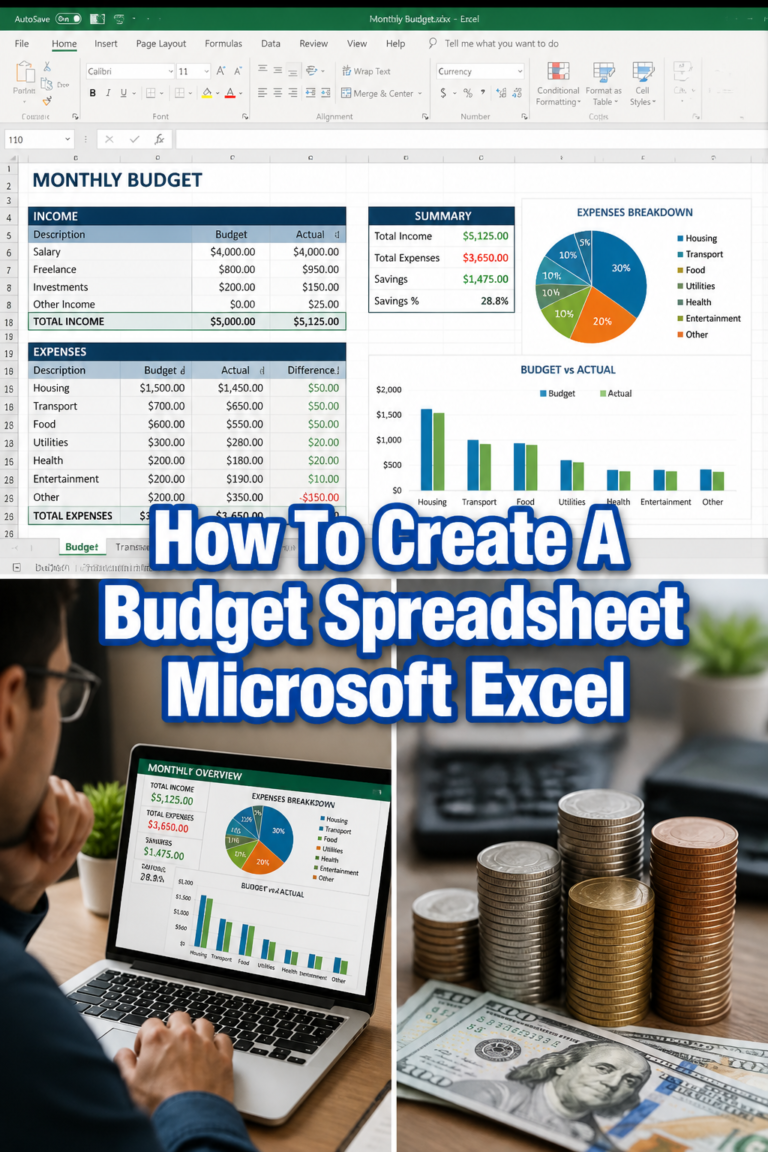
- Digital Method: Use budgeting apps (Mint, YNAB, Personal Capital), spreadsheet software (Excel, Google Sheets), or simply review your bank and credit card statements at the end of each week.
Categorize your spending (e.g., housing, food, transportation, entertainment, subscriptions). You’ll likely be surprised by how much you spend in certain areas, especially on “discretionary” items like dining out or impulse buys. This insight is gold, as it highlights areas where you can realistically cut back.
Pro tip: Don’t forget those small, recurring expenses like streaming services or app subscriptions. They might seem insignificant individually, but they add up quickly and are often overlooked.
Step 3: Create a Realistic Budget – Your Financial Roadmap
Once you know where your money is going, it’s time to tell it where to go. A budget isn’t a straitjacket; it’s a plan that gives you control and permission to spend within limits. A popular and effective budgeting framework is the 50/30/20 Rule:
- 50% for Needs: Essential expenses like housing (rent/mortgage), utilities, groceries, transportation, insurance, minimum debt payments, and healthcare.
- 30% for Wants: Discretionary spending that improves your quality of life but isn’t strictly necessary. This includes dining out, entertainment, hobbies, shopping, vacations, and subscriptions beyond the essentials.
- 20% for Savings & Debt Repayment: This is your dedicated saving fund (emergency fund, retirement, specific goals) and any extra payments towards high-interest debt (like credit cards).
Adjust these percentages to fit your unique situation, but use them as a starting point. If your needs are currently above 50%, look for ways to reduce them, or focus on increasing your income. If you have significant high-interest debt, you might temporarily shift more towards debt repayment. The key is balance and sustainability.
Pro tip: Start with a “zero-based budget” once a month. This means assigning every dollar of your income a job (saving, spending, debt repayment) until your income minus your expenses equals zero. This ensures no money is left unaccounted for.
Step 4: Automate Your Savings – Pay Yourself First
This is arguably the most powerful saving strategy. Once you’ve set your budget and identified how much you want to save each month, make it automatic. Treat your savings like a non-negotiable bill.
Set up an automatic transfer from your checking account to a separate savings account (ideally one with a higher interest rate, like a high-yield savings account) on your payday. Even better, if your employer offers it, direct a portion of your paycheck directly into your savings account before it even hits your checking account.
Why this works:
- Removes Friction: You don’t have to remember to save; it just happens.
- Reduces Temptation: The money is out of sight, out of mind, making it harder to spend.
- Builds Discipline: Over time, it becomes a habit you don’t even think about.
Pro tip: Open a savings account at a different bank than your primary checking account. This psychological barrier makes it less convenient to transfer money back to checking for impulse purchases.
Step 5: Ruthlessly Cut Unnecessary Expenses – Declutter Your Spending
With your budget in hand, it’s time to get surgical. Go through your “wants” and even some “needs” categories to find areas where you can reduce spending. Ask yourself:
- Can I live without this? (e.g., that extra streaming service, daily fancy coffee)
- Is there a cheaper alternative? (e.g., cooking at home instead of dining out, generic brands, public transport instead of ride-shares)
- Am I getting value from this? (e.g., gym membership you rarely use, subscriptions you’ve forgotten about)
Small cuts add up. Eliminating a $5 daily coffee habit saves $150 a month, or $1,800 a year! Review your subscriptions, negotiate bills (internet, cable, insurance), and plan meals to reduce grocery waste and impulse buys.
Pro tip: Implement “no-spend days” or even “no-spend weeks.” Challenge yourself to spend absolutely nothing on non-essentials for a set period. This helps reset your spending habits and highlights how much you truly need.
Step 6: Increase Your Income – More In, More to Save
While cutting expenses is crucial, there’s a limit to how much you can cut. There’s no limit to how much you can earn. Exploring ways to increase your income can significantly accelerate your savings goals.
- Negotiate Your Salary: Research industry averages and confidently ask for a raise at your current job.
- Side Hustles: Turn a hobby into income (freelancing, dog walking, tutoring, selling crafts online), drive for a ride-share service, or deliver food.
- Sell Unused Items: Declutter your home and sell clothes, electronics, furniture, or collectibles on platforms like eBay, Facebook Marketplace, or local consignment shops.
- Passive Income Streams: Explore options like dividend stocks, high-yield savings accounts, or even renting out a spare room (if applicable).
Even an extra $100-$200 a month from a side hustle can make a huge difference, especially if you dedicate 100% of that extra income to savings.
Pro tip: Treat any extra income (bonuses, tax refunds, gifts) as “found money” and immediately direct a significant portion (or all) of it to your savings goals. Avoid the temptation to spend it all.
Step 7: Prioritize Debt Repayment – Especially High-Interest Debt
While saving is vital, carrying high-interest debt (like credit card debt or payday loans) can undermine your efforts. The interest you pay on these debts often far outweighs any interest you earn on your savings.
Make a plan to tackle high-interest debt aggressively. Two popular methods are:
- Debt Snowball: Pay off your smallest debt first for psychological wins, then roll that payment into the next smallest.
- Debt Avalanche: Pay off the debt with the highest interest rate first, saving you the most money in the long run.
Allocate a portion of your 20% savings/debt repayment budget to this. Once high-interest debt is gone, you’ll have more money freed up to save and invest.
Pro tip: Consider consolidating high-interest debt into a lower-interest personal loan or a balance transfer credit card (if you can pay it off before the promotional period ends). This can reduce your monthly payments and save you money on interest.
Step 8: Review and Adjust Regularly – Stay Flexible
Your financial situation and goals aren’t static. Life happens! Review your budget and savings plan at least once a month, or whenever there’s a significant life event (new job, new baby, moving). Are your goals still relevant? Is your budget working for you? Are there new opportunities to save or earn?
Don’t be afraid to adjust. If you consistently overspend in one category, either find ways to cut back or increase that category’s allocation and find cuts elsewhere. The goal is to create a sustainable plan, not a perfect one from day one.
Celebrate your milestones! Acknowledging progress, no matter how small, keeps you motivated. Hit your first $1,000 in savings? Treat yourself to a modest, pre-budgeted reward.
Pro tip: Use a quarterly financial review to take a deeper dive. Look at your net worth, investment performance (if applicable), and major financial goals. This broader perspective helps you stay on track for long-term success.
Common Mistakes to Avoid
-
Not Having a Clear Goal:
Why it’s problematic: Without a specific “why,” saving feels like deprivation rather than progress. You’ll lack the motivation to stick with it when challenges arise, making it easy to give up.
Correct approach: Define clear, inspiring, and measurable SMART goals. Write them down and keep them visible. This gives your money a purpose and makes saving an exciting journey, not a chore.
-
Trying to Save Too Much Too Fast:
Why it’s problematic: Going from zero savings to an extreme budget overnight is unsustainable. You’ll feel deprived, frustrated, and quickly burn out, leading to giving up entirely or binge spending.
Correct approach: Start small and build momentum. Even saving $50 or $100 a month is a victory. Once you get comfortable, gradually increase your savings rate. Consistency over intensity is key.
-
Not Tracking Spending (or Ignoring the Data):
Why it’s problematic: If you don’t know where your money is going, you can’t possibly control it. Many people create a budget but then fail to track their actual spending, making the budget useless.
Correct approach: Commit to tracking every expense for at least a month. Use apps, spreadsheets, or manual methods. More importantly, review the data regularly to identify spending patterns and areas for improvement. This awareness is your superpower.
-
Failing to Automate Savings:
Why it’s problematic: Relying on willpower alone to save is a recipe for failure. Life gets busy, and if you wait until the end of the month to save what’s left, there’s often nothing left.
Correct approach: Implement “pay yourself first” by setting up automatic transfers to a separate savings account on payday. Make saving a non-negotiable expense, just like rent or a mortgage. Out of sight, out of mind, in your account!
Troubleshooting
Issue 1: “I genuinely don’t have enough money to save anything.”
- Solution: Start smaller. Even $5 or $10 a week is a start. Focus on finding tiny cuts (e.g., bringing coffee from home, packing lunch) or generating a small amount of extra income (e.g., selling one unused item). The habit is more important than the amount initially. Simultaneously, focus on Step 6: increasing your income.
Issue 2: “I keep overspending my budget, especially on ‘wants’.”
- Solution: Re-evaluate your budget. Is it too restrictive? Perhaps your “wants” category needs a slightly higher allocation, or your “needs” are higher than you thought. Try using cash for your discretionary spending categories; once the cash is gone, it’s gone. Also, identify your triggers for impulse spending and try to avoid those situations.
Issue 3: “I feel deprived and saving feels like a punishment.”
- Solution: Your budget should include a small amount for “fun money” or guilt-free spending. Saving doesn’t mean never enjoying life. If you feel deprived, you’ll likely give up. Revisit your “why” (Step 1) and remember what you’re working towards. Sometimes a small, pre-budgeted treat can keep you motivated without derailing your progress.
Key Takeaways
- Motivation is Key: Define your “why” to power your saving journey.
- Awareness is Power: Track every penny to understand your spending habits.
- Budget for Success: Create a realistic budget (like the 50/30/20 rule) and stick to it.
- Automate Everything: Pay yourself first by setting up automatic transfers to savings.
- Cut Smart: Ruthlessly eliminate unnecessary expenses, big and small.
- Boost Income: Explore ways to earn more money to accelerate your savings.
- Tackle Debt: Prioritize high-interest debt repayment to free up more money for savings.
- Review & Adjust: Regularly check your progress and adapt your plan as life changes.
- Patience & Consistency: Saving is a marathon, not a sprint. Small, consistent actions lead to big results.
Frequently Asked Questions
Q: How much should I save from each paycheck?
A: A common guideline is to aim for at least 20% of your income towards savings and debt repayment, as per the 50/30/20 rule. However, start with what you can manage and gradually increase it. Even 1% is better than nothing.
Q: Where should I keep my savings?
A: For short-term goals (emergency fund, down payment), a high-yield savings account (HYSA) is ideal. It offers better interest rates than traditional banks and keeps your money liquid and safe. For long-term goals (retirement), consider investment accounts like a 401(k) or IRA.
Q: Is it ever too late to start saving?
A: Absolutely not! The best time to start saving was yesterday; the second best time is today. Compounding interest works wonders over time, but every dollar you save now will benefit your future self.
Q: What about saving while having debt?
A: It’s generally recommended to build a small emergency fund (e.g., $1,000) first. This prevents new debt if an unexpected expense arises. After that, prioritize paying down high-interest debt (like credit cards) while still contributing a small amount to savings. Once high-interest debt is gone, you can significantly increase your savings contributions.
What’s Next?
You’ve taken the crucial first step by reading this guide. Now, it’s time to act! Don’t let this knowledge sit idle. Start today:
- Grab a pen and paper or open a spreadsheet.
- Write down your top saving goal (your “why”).
- Review your last month’s bank statement to begin tracking your spending.
As you build your emergency fund and achieve your initial saving goals, consider exploring the world of investing. Learning about compound interest, different investment vehicles (stocks, bonds, mutual funds), and long-term financial planning can supercharge your wealth-building journey. Remember, financial freedom is a journey, not a destination, and every step you take brings you closer to your dreams.