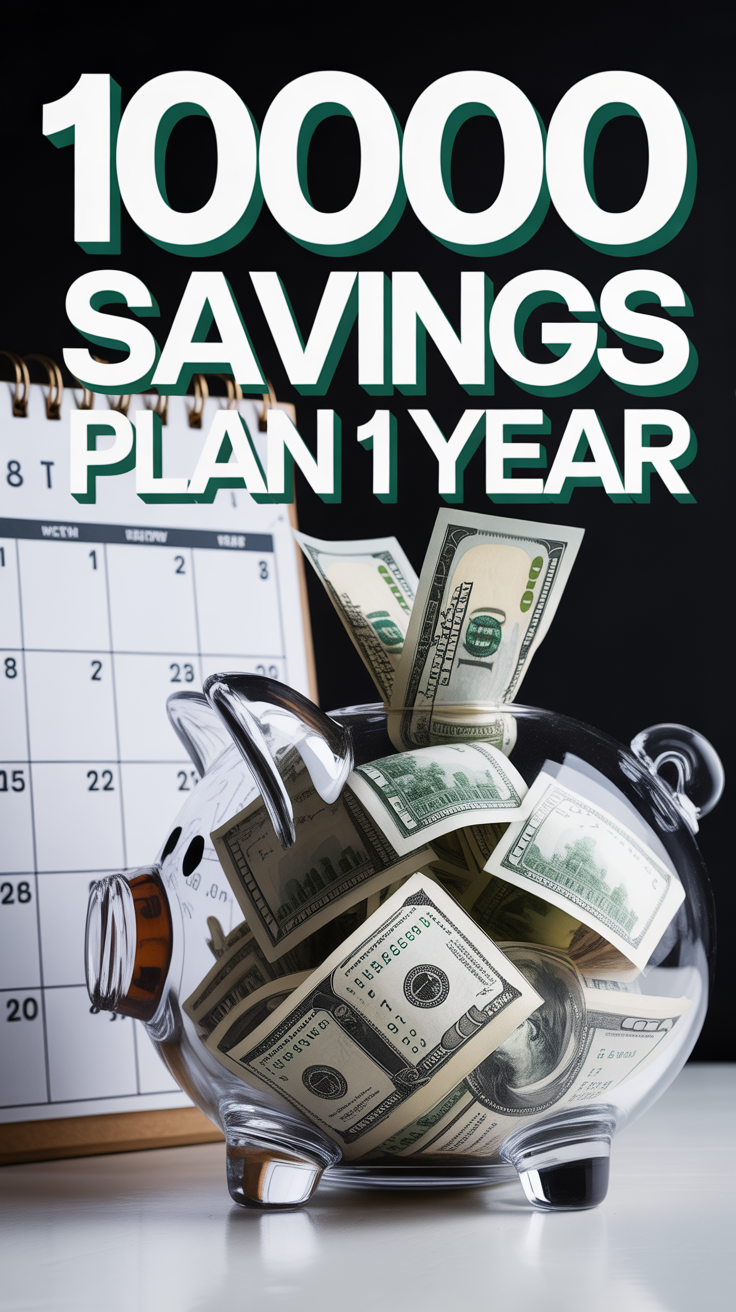
💰 10000 Savings Plan 1 Year
Imagine having an extra $10,000 in your bank account just one year from now. What would that feel like? What could you do with it? Pay off a chunk of debt? Fund a dream vacation? Build a robust emergency fund? Make a significant down payment on a home? For many, saving such a substantial amount might seem like a distant dream, an intimidating goal reserved for those with sky-high incomes. But what if we told you it’s not only possible but entirely achievable with the right strategy, a dash of discipline, and a positive mindset?
Welcome to the world of the 10000 Savings Plan 1 Year. This isn’t just about stashing away cash; it’s a transformative journey designed to reshape your financial habits, empower you with knowledge, and prove to yourself that you are capable of achieving ambitious money goals. It’s a popular challenge because it’s tangible, time-bound, and delivers a significant reward, laying a solid foundation for your long-term financial well-being. Ready to unlock your saving potential? Let’s dive in!
What is 10000 Savings Plan 1 Year?
At its core, the 10000 Savings Plan 1 Year is a straightforward yet powerful financial challenge: to accumulate $10,000 in savings within a 12-month period. It’s a clear, measurable goal that breaks down a seemingly large sum into manageable, actionable steps, making it accessible to a wide range of individuals, regardless of their current income level.
Let’s do the math to demystify it:
- Monthly Savings Target: To save $10,000 in 12 months, you would need to save approximately $833.33 per month ($10,000 / 12 months).
- Weekly Savings Target: Breaking it down further, this equates to roughly $192.31 per week ($10,000 / 52 weeks).
- Daily Savings Target: If you prefer a daily perspective, it’s about $27.40 per day ($10,000 / 365 days).
While these numbers might still seem substantial, especially the daily or weekly figures, the plan isn’t about finding an extra $27 under your couch cushions every single day. Instead, it’s about a holistic approach to your finances: understanding your income, meticulously tracking your expenses, identifying areas to cut back, and exploring opportunities to boost your earnings. It’s a challenge that encourages financial mindfulness, turning abstract financial goals into concrete, daily actions. More than just the money, this plan cultivates invaluable habits like consistent saving, smart budgeting, and a proactive approach to your financial future.
Key Features
The 10000 Savings Plan 1 Year isn’t just a number; it’s a structured approach with several inherent features that make it incredibly effective and popular:
- Crystal-Clear Goal: Unlike vague intentions to “save more,” this plan provides an exact target – $10,000 – and a specific timeframe – 12 months. This clarity eliminates guesswork and provides a powerful motivational beacon. You know precisely what you’re working towards.
- Time-Bound Urgency: The 12-month deadline creates a sense of urgency without being overly stressful. It’s long enough to allow for adjustments and learning but short enough to keep you focused and prevent procrastination. This fixed timeline helps in planning and tracking progress effectively.
- Actionable & Measurable: The plan breaks down a large sum into smaller, more manageable daily, weekly, or monthly contributions. This makes the goal feel less daunting and more achievable, providing clear benchmarks to track your progress and celebrate milestones along the way.
- Habit-Forming Power: Consistently working towards a savings goal over a year embeds crucial financial habits. You’ll naturally become more conscious of your spending, better at budgeting, and more disciplined with your money. These habits extend far beyond the challenge itself, contributing to long-term financial health.
- Financial Empowerment: Successfully completing this challenge is a massive confidence booster. It proves that you have the discipline and capability to set and achieve significant financial goals, paving the way for even bigger aspirations like buying a home, investing, or achieving early retirement.
- Foundation for Future Wealth: Whether it becomes your emergency fund, a down payment, or seed money for an investment, $10,000 is a substantial sum that can act as a springboard for further wealth building. It provides a cushion and opens up new financial opportunities that might have seemed out of reach before.
How to Get Started
Embarking on your 10000 Savings Plan 1 Year journey requires a strategic approach. Here’s a step-by-step guide to help you kick things off on the right foot:
- Define Your “Why”: Before you even look at your bank balance, identify your core motivation. Why do you want to save $10,000? Is it for a down payment, an emergency fund, a dream trip, or to pay off high-interest debt? Your “why” will be your fuel when motivation wanes. Write it down and keep it visible.
-
Assess Your Current Financial Picture (The Budgeting Blueprint): You can’t reach a destination if you don’t know where you’re starting from.
- Track Income: List all your sources of income.
- Track Expenses: For at least a month, meticulously track every single dollar you spend. Use a spreadsheet, a budgeting app (like Mint, YNAB, or EveryDollar), or even a simple notebook. Categorize your spending (housing, food, transport, entertainment, etc.). This step is crucial for identifying “money leaks.”
- Calculate Net Worth: Briefly understand your assets (what you own) versus liabilities (what you owe). This gives you a baseline.
-
Create a Realistic & Aggressive Budget: Based on your assessment, design a budget that prioritizes your $10,000 savings goal.
- The 50/30/20 Rule: A popular guideline suggests 50% of your income for Needs, 30% for Wants, and 20% for Savings & Debt Repayment. While a good starting point, for this challenge, you might need to push your “Savings” percentage higher, perhaps even into your “Wants” category.
- Identify Cuts: Look for non-essential expenses you can reduce or eliminate. Can you cancel unused subscriptions? Cook more at home? Reduce impulse buys?
- Allocate Savings: Explicitly budget for your monthly savings target of $833.33. This isn’t an “if there’s money left over” item; it’s a fixed expense.
- Automate Your Savings (“Pay Yourself First”): This is arguably the most critical step. Set up an automatic transfer from your checking account to a dedicated high-yield savings account (HYSA) on your payday. If you aim for $833.33/month, set it to transfer on the 1st or 15th of the month. Automation removes the need for willpower and ensures consistency.
-
Boost Your Income (The Accelerator): If cutting expenses isn’t enough, or you want to reach your goal faster, explore ways to earn more.
- Side Hustles: Freelance writing, graphic design, dog walking, tutoring, delivery services, selling crafts online.
- Sell Unused Items: Declutter your home and sell clothes, electronics, furniture, or collectibles on platforms like eBay, Facebook Marketplace, or local consignment shops.
- Ask for a Raise: If applicable, prepare a case for why you deserve a raise at your current job.
-
Choose Your Savings Strategy:
- Consistent Amount: Transfer $833.33 every month. Simple and predictable.
- Incremental Savings: Some prefer to start small and increase. For example, save $100 in week 1, $110 in week 2, and so on. This can be motivating but requires more tracking.
- Irregular Income: If your income varies, commit to saving a fixed percentage (e.g., 20-30%) of every paycheck or windfall.
Tips for Success
Staying on track for 12 months requires more than just initial enthusiasm. These pro tips will help you navigate challenges and maintain momentum:
- Track Your Progress Relentlessly: Seeing your savings grow is incredibly motivating. Use a visual tracker (like a thermometer chart), a spreadsheet, or a savings app. Update it regularly. Celebrate every milestone, no matter how small, to reinforce positive behavior.
-
Find Creative Ways to Cut Expenses: Don’t just cut; innovate!
- Meal Prep Like a Pro: Plan your meals for the week, buy in bulk, and cook at home. This drastically reduces food costs.
- “No-Spend” Challenges: Designate “no-spend” days, weekends, or even weeks where you only pay for absolute necessities. It forces creativity and highlights unnecessary spending.
- Negotiate Everything: Call your internet, cable, and insurance providers. Often, you can negotiate better rates. Shop around for cheaper alternatives.
- DIY Mentality: Can you fix it instead of buying new? Can you make your coffee instead of buying it? Every small saving adds up.
- Embrace the “Side Hustle” Mentality: Think beyond your primary job. Even an extra $50-$100 a week from a side gig can significantly accelerate your progress. Offer services based on your skills (writing, tutoring, pet care, virtual assistant) or explore online opportunities. Every extra dollar earned goes straight to your savings goal.
- Reward Yourself (Wisely): Achieving a significant milestone (e.g., reaching $2,500, $5,000, or $7,500) deserves recognition. Plan small, non-financial rewards to keep your motivation high. Maybe it’s a guilt-free movie night at home, a long bath, or an hour dedicated to a hobby you love. Avoid rewards that derail your financial progress.
- Get an Accountability Partner: Share your goal with a trusted friend, family member, or partner. Having someone to check in with, share successes with, and offer encouragement can make a huge difference. You’re less likely to give up when someone else is rooting for you.
Common Mistakes to Avoid
Even with the best intentions, pitfalls can emerge. Being aware of these common mistakes can help you steer clear of them:
- Not Having a Clear “Why”: Without a compelling reason for saving, it’s easy to lose motivation when the going gets tough. Random saving rarely sticks. Revisit your “why” regularly.
- Unrealistic Budgeting: Cutting too much too fast can lead to burnout and feeling deprived, making you more likely to give up. Be aggressive but realistic. Allow for small indulgences if they prevent you from completely abandoning the plan.
- Ignoring Small Expenses (The “Latte Factor”): While a daily coffee might seem insignificant, those small, habitual purchases add up quickly. $5 a day is $150 a month, or $1,800 a year! Don’t overlook these “money leaks.”
- Not Automating Savings: Relying solely on willpower to transfer money each month is a recipe for inconsistency. Life gets busy, and it’s easy to forget or justify not saving “just this once.” Automation removes the decision-making and ensures consistency.
- Giving Up After a Setback: You might have an unexpected expense, an off-month, or simply overspend. Don’t let one slip-up derail your entire plan. Acknowledge it, learn from it, adjust your strategy, and get back on track. Progress, not perfection, is the goal.
- Not Tracking Progress: If you don’t know how much you’ve saved, it’s hard to stay motivated. Lack of visibility can make the goal feel distant and unachievable. Consistent tracking is a powerful motivator.
- Not Separating Savings: Keeping your $10,000 savings in the same account as your checking makes it too easy to dip into it for non-savings related expenses. A dedicated, separate high-yield savings account is crucial.
FAQ
Here are some frequently asked questions about the 10000 Savings Plan 1 Year:
Q1: Is $10,000 in one year realistic for everyone?
A: While challenging, it is realistic for many with commitment and strategic planning. It requires a clear understanding of your income and expenses, willingness to make sacrifices, and potentially exploring ways to increase your income. It might not be easy, but it is certainly achievable for most who are determined to make it happen.
Q2: Where should I put my savings during this year?
A: A High-Yield Savings Account (HYSA) is typically the best option. It keeps your money separate from your everyday spending, offers better interest rates than traditional savings accounts (helping your money grow slightly faster), and provides easy access if an actual emergency arises. Ensure the account is FDIC-insured.
Q3: What if I fall behind on my monthly target?
A: Don’t panic! Financial journeys are rarely linear. If you miss a target, take a deep breath. Re-evaluate your budget for the following month, look for additional areas to cut expenses, or consider an extra side hustle to make up the difference. The key is to acknowledge the setback, adjust your strategy, and recommit to your goal.
Q4: What should I do after successfully saving $10,000?
A: Congratulations! This is a significant achievement. Your next steps depend on your overall financial goals. Common next steps include:
- Building a Larger Emergency Fund: Many financial experts recommend 3-6 months of living expenses.
- Paying Down High-Interest Debt: Tackle credit card debt or personal loans with your new savings.
- Investing: Start or increase contributions to a retirement account (401k, IRA) or a brokerage account.
- Saving for a Specific Goal: A down payment on a home, education, or a significant purchase.
The habits you’ve built will serve you well for any future financial endeavor.
Conclusion
The 10000 Savings Plan 1 Year is more than just a financial goal; it’s a testament to your discipline, resilience, and commitment to a brighter financial future. In just 12 months, you have the power to transform not only your bank balance but also your entire relationship with money. You’ll gain invaluable budgeting skills, discover newfound income streams, and develop a wealth-building mindset that will serve you for years to come.
This journey won’t always be easy, but it will be incredibly rewarding. Each dollar saved, each expense cut, and each extra hour worked brings you closer to that $10,000 milestone. Imagine the pride and confidence you’ll feel when you see that number in your account, knowing you made it happen. So, what are you waiting for? Your future self is already thanking you. Start your 10000 Savings Plan 1 Year today, and unlock the financial freedom you deserve!