
🏡 How To Stage Your House To Sell
Selling your home is more than just listing it; it’s a strategic financial move, perhaps one of the biggest you’ll make this decade. Think of your house not just as a beloved dwelling, but as a valuable asset, and staging it is your savvy investment to maximize its return. This guide will empower you to transform your home into a buyer’s dream, ensuring you don’t leave a single dollar on the table and instead, build a stronger foundation for your next wealth-building chapter.

Quick Overview
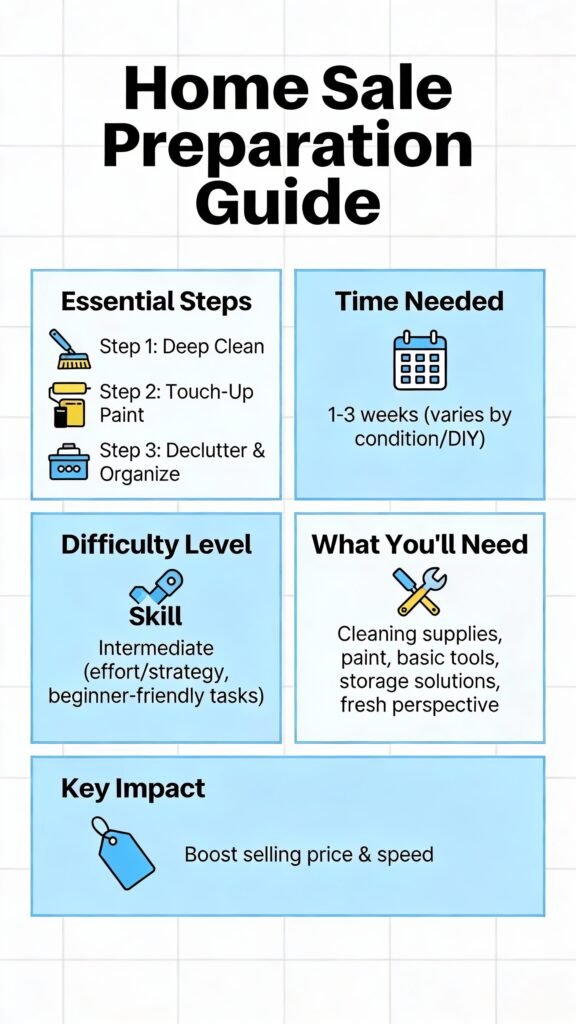
This guide will walk you through the essential steps to prepare your home for sale, turning potential buyers into eager bidders. You’ll learn how to present your property in its best light, making smart, budget-friendly choices that significantly impact your selling price and speed.
- Time needed: 1-3 weeks (depending on current condition and DIY commitment)
- Difficulty: Intermediate (requires effort and strategic thinking, but most tasks are beginner-friendly)
- What you’ll need: Cleaning supplies, paint, basic tools, storage solutions, and a fresh perspective.
Step-by-Step Instructions
Step 1: Declutter Like a Wealth Manager
Think of clutter as hidden equity. Every item you remove makes your space feel larger, cleaner, and more valuable. This isn’t just about aesthetics; it’s a financial strategy. When buyers see clutter, they don’t see your memories; they see less space, more work, and potential hidden problems, which directly translates to lower offers.
Start with a ruthless three-box system: Keep, Donate/Sell, Discard. Tackle one room at a time. Be honest with yourself about what you truly need versus what’s just occupying valuable real estate. Consider renting a storage unit for personal items, excess furniture, or seasonal decor. The cost of a storage unit is a small investment compared to the potential thousands you could lose from a cluttered home.
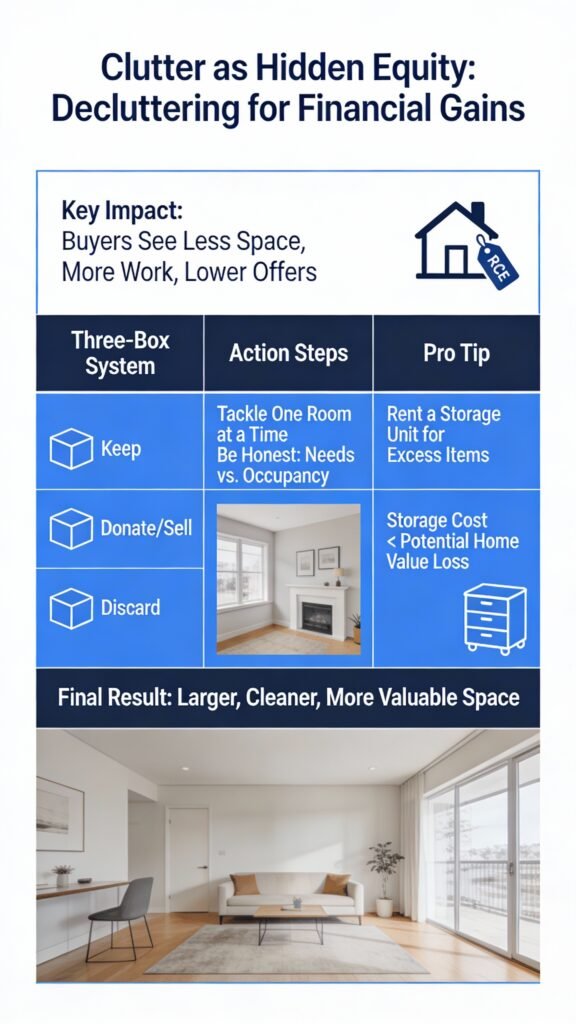
Pro tip: When you declutter, you’re not just clearing space; you’re also identifying items you can sell. List quality items on online marketplaces or hold a garage sale. This isn’t just about clearing space; it’s a mini income stream that can fund your staging efforts, turning potential waste into working capital for your home sale.
Step 2: Depersonalize for Universal Appeal
Your home tells your story, but for a buyer, it needs to tell their story. Remove family photos, unique art, religious items, and anything that strongly reflects your personal taste. The goal is for buyers to envision themselves, their furniture, and their lives in the space, not yours. This creates a blank canvas, allowing them to form an emotional connection without feeling like they’re intruding.
This step is crucial for financial reasons: a personalized home can alienate a segment of buyers, narrowing your market and potentially reducing competitive offers. By depersonalizing, you broaden your home’s appeal, increasing the pool of potential buyers and driving up demand – a fundamental principle of market economics.
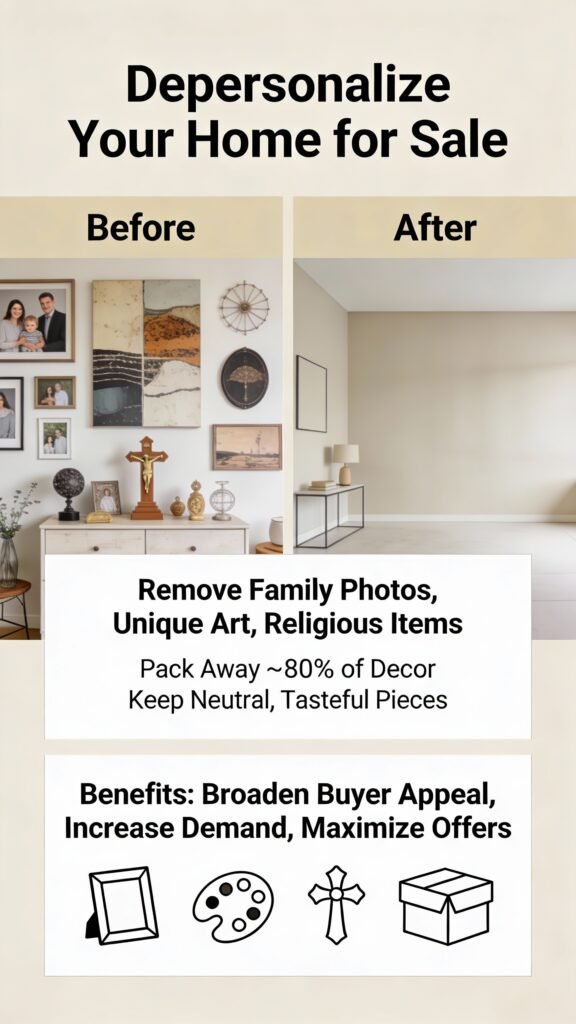
Pro tip: Pack away about 80% of your decor. Keep a few neutral, tasteful pieces that add warmth without identity. This minimalist approach is a budgeting hack; you don’t need to buy new decor if you strategically use what you already have or borrow from friends.
Step 3: Deep Clean & Repair Like a Pro Inspector
This is where the rubber meets the road, and where a small investment of time and elbow grease yields massive returns. A sparkling clean home signals to buyers that the property has been well-maintained and cared for. Conversely, dirt, grime, and minor repairs suggest neglect, leading buyers to assume there are bigger, more costly problems lurking beneath the surface. This perception can lead to lowball offers or even deter buyers entirely.
Scrub every surface: floors, walls, baseboards, windows, appliances, and fixtures. Don’t forget often-overlooked areas like grout, ceiling fans, and inside cabinets. Address all minor repairs: leaky faucets, loose doorknobs, cracked tiles, chipped paint, and non-working lightbulbs. These seemingly small issues can accumulate in a buyer’s mind and become leverage for price negotiation.
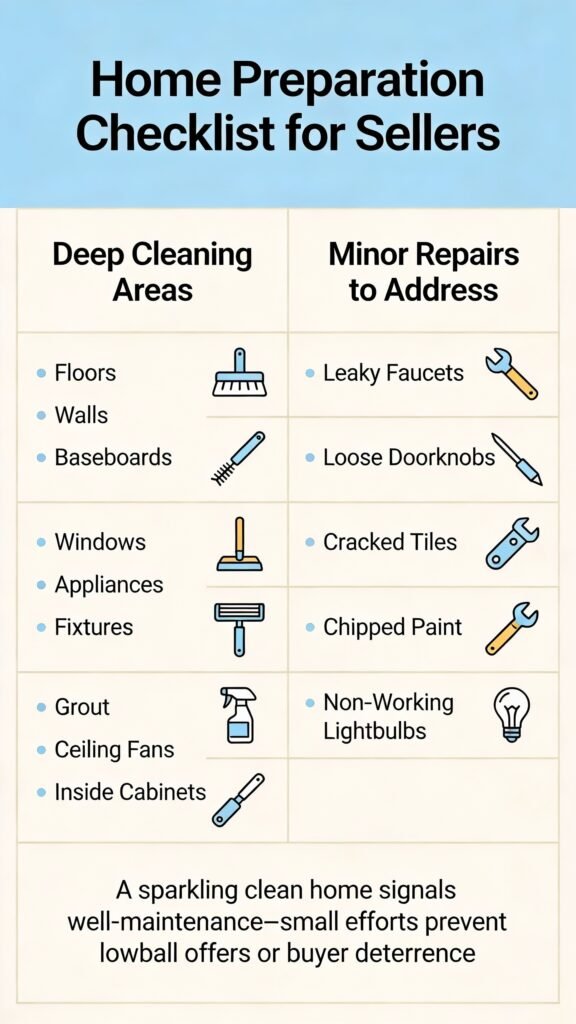
Pro tip: Calculate the ROI on small repairs. Replacing a $10 light switch cover or fixing a $20 leaky faucet could prevent a buyer from asking for a $500 credit or dropping their offer by $1,000. These are high-yield investments in your home’s perceived value. Consider hiring professional cleaners for a deep clean if your budget allows; it’s a smart investment in time and ensures a flawless finish.
Step 4: Neutralize & Refresh with Strategic Color
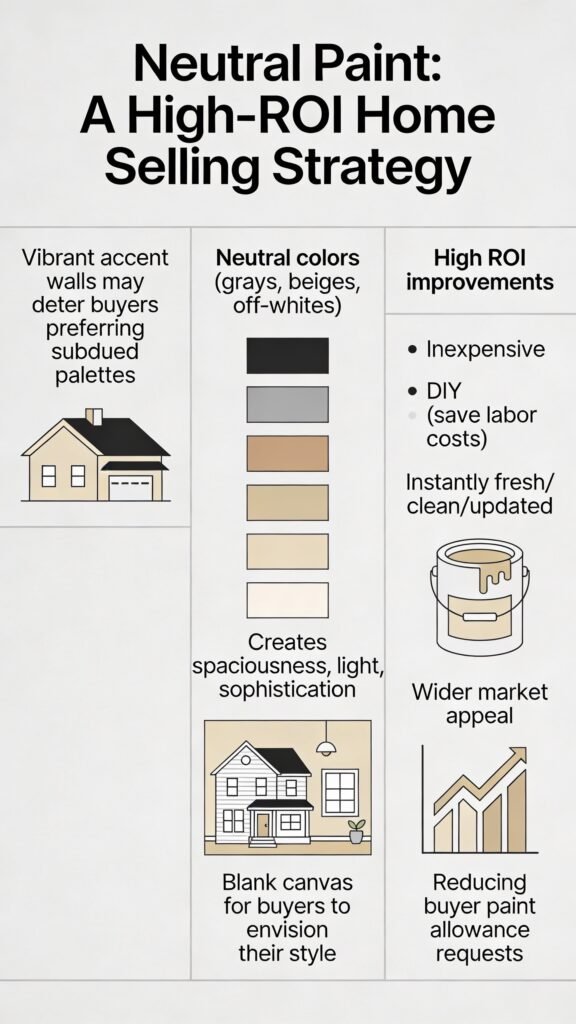
Color has a profound psychological impact. While you might love your vibrant accent wall, it could be a deal-breaker for a buyer who prefers a more subdued palette. Neutral colors – think grays, beiges, and off-whites – create a sense of spaciousness, light, and sophistication. They also provide that “blank canvas” we talked about, allowing buyers to easily envision their own style.
A fresh coat of neutral paint is one of the highest ROI improvements you can make. It’s relatively inexpensive, can be a DIY project (saving you labor costs), and instantly makes a home feel fresh, clean, and updated. It’s like giving your house a facelift that appeals to the widest possible audience, directly expanding your market and reducing the chances of buyers asking for a “paint allowance” in their offer.
Pro tip: Don’t just paint the walls. Consider painting trim, doors, and even outdated kitchen cabinets if they’re structurally sound but visually tired. This is a powerful budgeting hack: a few gallons of paint can transform a kitchen for hundreds, rather than tens of thousands for a full renovation.
Step 5: Optimize Lighting & Flow for Perceived Value
Light equals money in real estate. Bright, well-lit spaces feel larger, more inviting, and more cheerful. Open blinds and curtains, clean windows, and add lamps to dimly lit areas. Ensure all light fixtures have working bulbs of consistent color temperature (warm white is generally preferred for homes).
Consider the flow of your home. Can someone easily walk from room to room without bumping into furniture? Arrange furniture to highlight pathways and create natural conversation areas. This visual ‘flow’ directly impacts a buyer’s perception of space and functionality, which are key drivers of value. A home that feels cramped or awkward to navigate suggests less usable square footage, even if the actual dimensions are generous.
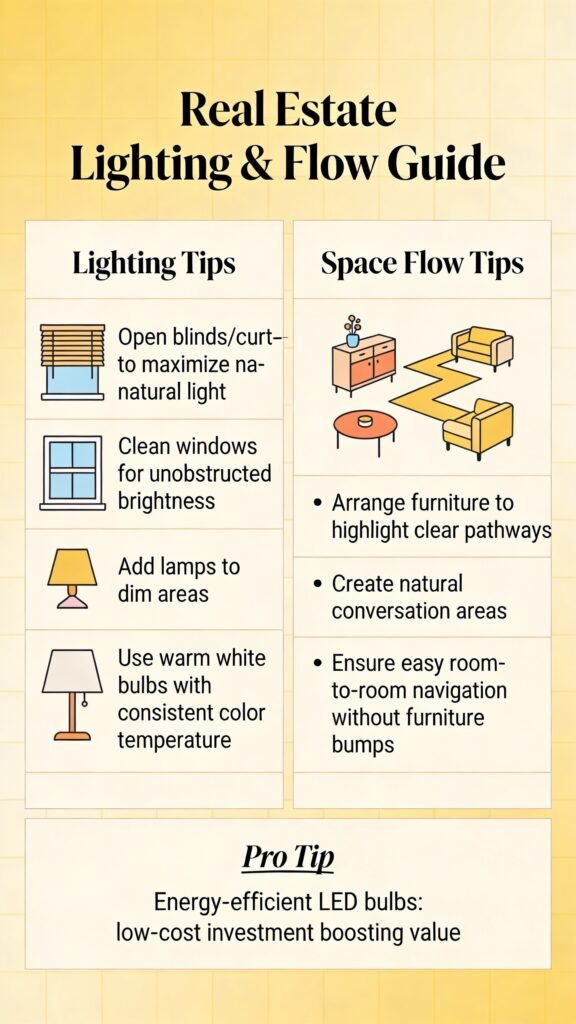
Pro tip: Energy-efficient LED bulbs are a smart, low-cost investment. They last longer and use less power, subtly communicating to buyers that your home is modern and cost-effective to maintain. This small detail contributes to the overall narrative of a smart, well-cared-for home.
Step 6: Enhance Curb Appeal: Your First Financial Impression
The exterior of your home is the first thing buyers see, both online and in person. It sets the tone for the entire showing and can be the difference between a buyer driving away or stepping inside. This is your home’s “first impression,” and just like a good resume, it needs to grab attention and project value.
Mow the lawn, trim bushes, weed flowerbeds, and add fresh mulch. Consider planting a few colorful flowers near the entrance. Power wash the exterior, driveway, and walkways. Clean gutters and repair any visible exterior damage. Ensure your front door is inviting – a fresh coat of paint, polished hardware, or a welcoming wreath can make a significant difference. Your house numbers should be clearly visible and appealing.
Pro tip: Think of curb appeal as “instant equity.” A well-maintained exterior suggests a well-maintained interior. The investment of a few hundred dollars in landscaping and exterior cleaning can yield thousands in a higher selling price, especially if it helps your home stand out in online listings and encourages more showings.
Step 7: Arrange Furniture Strategically for Space Perception
The way furniture is arranged can dramatically alter a room’s perceived size and function. The goal is to make each room feel spacious, purposeful, and inviting. Less is often more when staging. Remove any oversized or unnecessary furniture that makes a room feel cramped.
Pull furniture slightly away from walls to create a more open feel. Arrange pieces in conversational groupings to define living areas. In bedrooms, ensure beds are neatly made with fresh, neutral linens. In dining rooms, set the table simply to show its potential. If a room has an awkward layout, use furniture to define its purpose clearly (e.g., a small desk and chair can turn a nook into a home office).
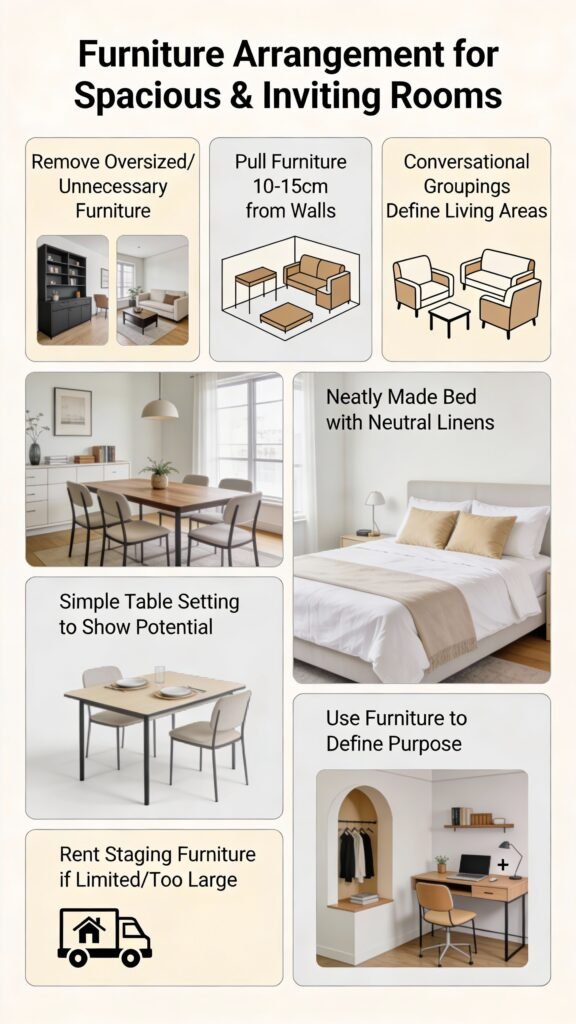
Pro tip: If you have limited furniture or pieces that are too large, consider renting staging furniture. While an upfront cost, professional staging often pays for itself many times over by increasing the perceived value and attracting higher offers. It’s a strategic investment in maximizing your asset’s market potential.
Step 8: Accessorize Thoughtfully for Emotional Connection
Once the big pieces are in place, thoughtful accessorizing adds warmth and personality without depersonalizing the space. This is about creating an aspirational lifestyle that buyers can connect with emotionally.
Use neutral textiles like throw pillows and blankets to add texture and color. Place a few well-chosen pieces of art on the walls (abstract or landscape works best). Add fresh flowers or a bowl of fruit to the kitchen counter. Arrange books neatly on a shelf. The key is subtlety and intention; every accessory should serve a purpose in enhancing the room’s appeal, not cluttering it.
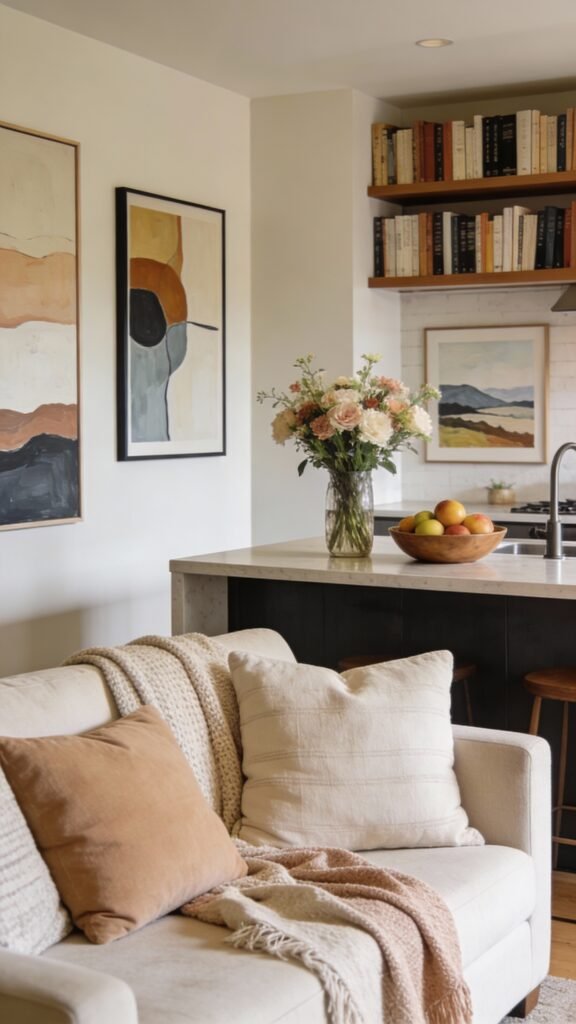
Pro tip: Focus on high-impact, low-cost accessories. Thrift stores, discount retailers, or even borrowing from friends can provide stylish items without breaking your budget. This is a savvy budgeting hack for creating a high-end look on a shoestring. Remember, you’re selling a lifestyle, not just four walls.
Step 9: Create a Spa-Like Bathroom Retreat
Bathrooms are critical decision points for buyers. They want to see a clean, functional, and ideally, luxurious space. This doesn’t mean a full renovation; it means creating a tranquil retreat with minimal effort and cost.
Ensure all surfaces are spotless. Replace old, worn shower curtains with fresh, neutral ones. Hang new, fluffy white towels. Add a few simple, spa-like touches: a small plant, a scented candle (unlit), and perhaps some decorative soaps. Ensure all fixtures are sparkling clean and free of water spots or grime. The goal is to evoke a sense of calm and cleanliness.
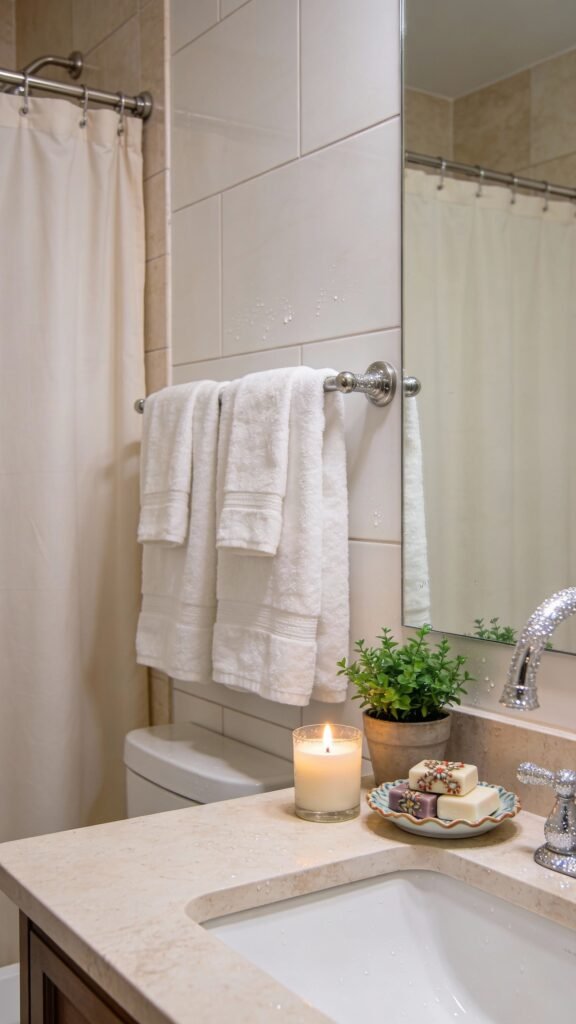
Pro tip: This is an excellent area for a high-ROI mini-makeover. Replacing an old showerhead with a new, stylish one for $50-100 can give the entire bathroom an updated feel. New cabinet pulls for $20-30 can transform an outdated vanity. These small investments project a higher perceived value without significant financial outlay.
Step 10: Engage the Senses and Set the Scene
Finally, appeal to all five senses (except taste, unless you’re offering cookies at an open house!). A home that smells good, sounds pleasant, and feels comfortable leaves a lasting positive impression.
Eliminate pet odors, cooking smells, and stale air. Use subtle, fresh scents from diffusers, unlit candles, or baked goods (a classic trick!). Play soft, calming background music. Ensure the temperature is comfortable. Open windows briefly before showings to air out the house. These subtle details create an inviting atmosphere that makes buyers feel at home – and more likely to make an offer.

Pro tip: This step costs virtually nothing but can dramatically enhance the buyer experience. A pleasant aroma can trigger positive emotions and create a memorable showing. It’s a powerful psychological tool that can subtly influence a buyer’s perception of your home’s overall value and desirability.
Common Mistakes to Avoid
-
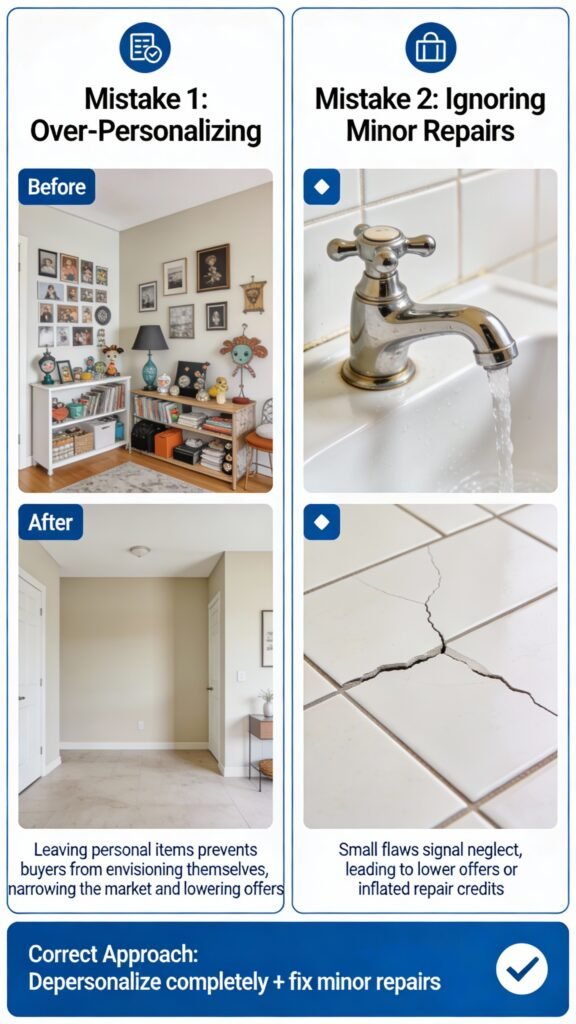
Over-Personalizing: Many sellers struggle to detach emotionally from their home. They leave out personal photos, collections, or quirky decor, thinking it adds character. However, this prevents buyers from envisioning themselves in the space, narrowing your market and potentially leading to lower offers. The correct approach is to depersonalize completely, creating a neutral canvas that appeals to the broadest audience, maximizing your potential buyer pool and competitive bids.
-
Ignoring Minor Repairs: “It’s just a leaky faucet,” or “The buyers will want to renovate anyway.” This mindset is a significant financial pitfall. Buyers see every small flaw as a sign of neglect and will either demand a credit for repairs (often inflated) or factor it into a lower offer. A few minor repairs costing a couple hundred dollars can save you thousands in negotiation. Address all visible imperfections proactively to present a move-in-ready home.
-
Clutter and Over-Staging: While decluttering is essential, some sellers go too far, leaving rooms bare and cold, or conversely, pack too many “staging” items. Both extremes are problematic. A cluttered home feels small and unkempt, while an empty home lacks warmth and makes it hard to gauge scale. The correct approach is strategic minimalism: declutter ruthlessly, but then add a few carefully chosen, neutral accessories to create warmth and define purpose without overwhelming the space.
-
Neglecting Curb Appeal: Many sellers focus solely on the interior, forgetting that the exterior is the first impression. A shabby exterior can deter buyers from even stepping inside, meaning all your interior staging efforts are wasted. This is a lost opportunity to make a strong financial first impression. Invest in basic landscaping, a clean exterior, and a welcoming front door; it’s a high-ROI effort that grabs attention and invites buyers in.
-
Bad Photography: In today’s digital age, online photos are your home’s most important marketing tool. Poorly lit, blurry, or un-staged photos will generate fewer clicks and fewer showings, directly impacting your sale price and time on the market. This is a critical financial mistake. Invest in professional photography; it’s a small cost that can significantly boost interest and ultimately, your selling price. Think of it as marketing your most valuable asset effectively.
Troubleshooting
Issue 1: My House Isn’t Selling, Even After Staging.
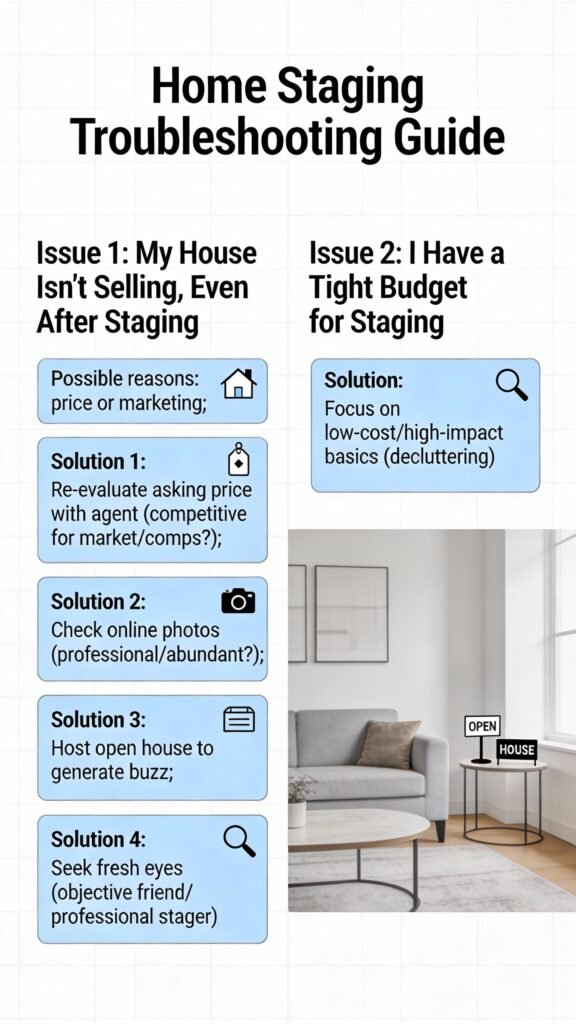
Solution: If you’ve staged your home beautifully but it’s still sitting on the market, the issue likely isn’t the staging itself, but rather the price or the marketing. Re-evaluate your asking price with your real estate agent – is it competitive for your market and comparable homes? Are your online photos professional and abundant? Consider an open house to generate buzz. Sometimes, a fresh set of eyes from an objective friend or even a professional stager can spot something you missed. Remember, time on the market costs you money in carrying costs, so address this swiftly.
Issue 2: I Have a Tight Budget for Staging.
Solution: Don’t despair! Many high-impact staging techniques are low-cost or free. Focus on the basics: decluttering, deep cleaning, and depersonalizing. These cost only time and effort. For improvements, prioritize high-ROI items like fresh neutral paint (DIY to save labor), new lightbulbs, and basic landscaping. Repurpose items you already own, borrow from friends, or scour thrift stores for neutral decor. Think of it as a budgeting hack for home improvement – maximum impact for minimal outlay. Every dollar saved on staging is a dollar more in your pocket from the sale.
Issue 3: I’m Overwhelmed and Don’t Know Where to Start.
Solution: Break the process down into smaller, manageable tasks. Start with Step 1: Declutter. Tackle one room or even one closet at a time. Create a checklist and set realistic daily goals. Enlist help from friends or family; offer to return the favor. Remember your “why”: you’re doing this to maximize your home’s value and build your financial future. Focusing on the end goal can provide the motivation needed to overcome the initial overwhelm.
Key Takeaways
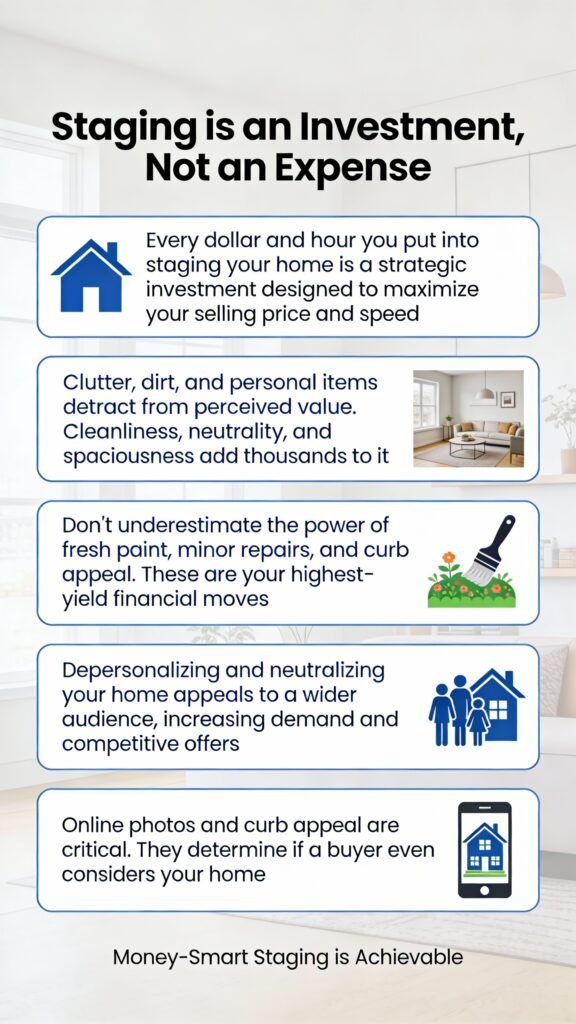
- Staging is an Investment, Not an Expense: Every dollar and hour you put into staging your home is a strategic investment designed to maximize your selling price and speed.
- Maximize Perceived Value: Clutter, dirt, and personal items detract from perceived value. Cleanliness, neutrality, and spaciousness add thousands to it.
- High ROI in Small Fixes: Don’t underestimate the power of fresh paint, minor repairs, and curb appeal. These are your highest-yield financial moves.
- Broaden Your Buyer Pool: Depersonalizing and neutralizing your home appeals to a wider audience, increasing demand and competitive offers.
- Master the First Impression: Online photos and curb appeal are critical. They determine if a buyer even considers your home.
- Money-Smart Staging is Achievable: Many effective staging techniques are low-cost or free, requiring only time and effort. Prioritize wisely.
Frequently Asked Questions
Q: Do I really need to move out all my personal items?
A: Yes, absolutely. While it might feel inconvenient, removing personal photos, memorabilia, and unique decor is crucial. It allows buyers to mentally move their own lives into the space, rather than feeling like guests in yours. This emotional connection is key to a faster, more profitable sale.
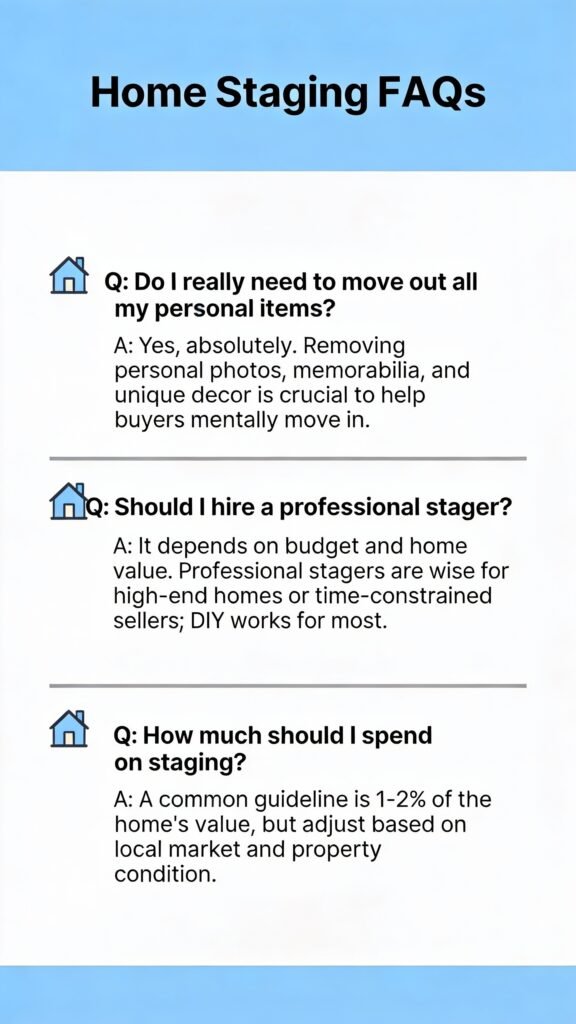
Q: Should I hire a professional stager?
A: It depends on your budget and the value of your home. For higher-end homes or if you’re short on time and expertise, a professional stager can be a wise investment, often paying for themselves through a higher sale price. However, for most homes, following this guide’s DIY steps will yield excellent results, especially if you’re budget-conscious.
Q: How much should I spend on staging?
A: A common guideline is to spend 1-3% of your home’s asking price on staging. However, this is flexible. Focus on high-impact, low-cost improvements first. Prioritize decluttering, cleaning, and painting, as these offer the highest ROI. If your budget is tight, focus your spending on areas buyers scrutinize most: kitchen, bathrooms, and curb appeal.
Q: What if I have pets? How do I manage pet odors?
A: Pet odors are a significant turn-off for buyers. Deep clean carpets, upholstery, and drapes. Use enzymatic cleaners to eliminate odors at their source, rather than just masking them. Air out the house regularly. For showings, remove pet bowls, litter boxes, and toys. If possible, have pets stay elsewhere during showings to prevent allergic reactions or distractions.
What’s Next?
You’ve put in the work, made smart financial decisions, and transformed your house into a buyer magnet. Now, it’s time to leverage that effort!
Connect with a Top Real Estate Agent: Your staged home is ready for its close-up. Work with an agent who understands the value you’ve created and can market your property effectively, especially online. Ensure they use professional photography to showcase your hard work.

Plan Your Next Financial Move: With your home sale maximized, you’re in a strong position for your next wealth-building step. Whether it’s investing in your next home, building your savings, or exploring other investment opportunities, you’ve set yourself up for financial success.
Don’t wait! Start decluttering today. Even a small step like clearing one counter or organizing a closet can build momentum and bring you closer to a profitable sale and a stronger financial future.