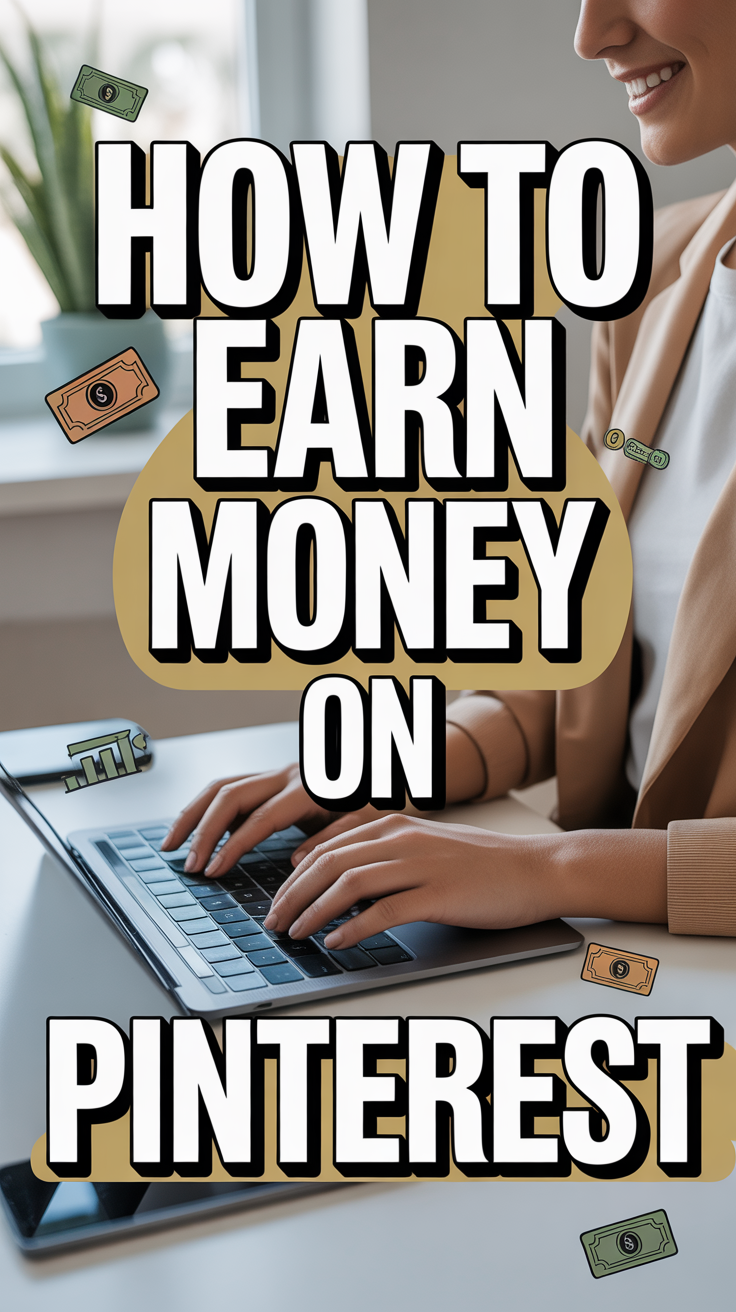
💰 How To Earn Money On Pinterest
Ever dreamed of a side hustle that feels less like work and more like creative expression? What if I told you that the platform you already use for home decor inspiration and recipe hunting could actually be a powerful engine for building your financial freedom? Pinterest isn’t just a visual search engine; it’s a goldmine waiting to be tapped, a dynamic platform where your passion can translate directly into profit.
Quick Overview
This guide will demystify the process of monetizing Pinterest, transforming your scrolls into dollars. We’ll equip you with actionable strategies to turn your visual content into a consistent income stream, helping you build a smarter financial future, one pin at a time.
- Time needed: Initially 10-15 hours for setup and strategy development, then 3-5 hours weekly for consistent pinning and engagement. Expect results to build over 3-6 months.
- Difficulty: Intermediate (Requires strategic thinking and consistent effort, but the tools are beginner-friendly).
- What you’ll need: A Pinterest Business Account, a clear niche/passion, something to sell or promote (products, services, blog), basic graphic design skills (Canva is perfect!), and a willingness to learn and adapt.
Step-by-Step Instructions
Step 1: Lay the Foundation – Optimize Your Pinterest Business Profile
Before you even think about earning, you need a professional storefront. A Pinterest Business Account unlocks analytics, rich pins, and advertising options – all crucial for making money. Convert your personal account or create a new one. Your profile is your brand’s first impression, so make it count.
- Profile Picture: Use a clear, professional headshot or your brand logo. Consistency builds trust.
- Display Name: Include your brand name and relevant keywords (e.g., “Savvy Spender | Budgeting Tips & Financial Freedom”). This helps people find you.
- Bio: Craft a compelling bio that clearly states what you do, who you help, and what value you offer. Include relevant keywords and a call to action. Think about the financial problem you solve or the money-saving solution you provide.
- Website Link: Crucial! Link to your main website, blog, or even a link-in-bio tool if you have multiple destinations. This is your primary exit ramp for traffic.
- Claim Your Website/Blog: This verifies your site, gives you access to analytics for your content, and ensures your pins get attributed correctly.
Pro tip: Treat your Pinterest profile like a mini-resume for your business. Every element should communicate value and encourage a click, moving users closer to your money-making content.
Step 2: Pinpoint Your Niche and Audience – Who Are You Helping to Get Richer?
To make money, you need to solve a problem or fulfill a desire. On Pinterest, this means identifying a specific niche and understanding your target audience’s financial aspirations and pain points. Are you helping young professionals save for their first home? Busy parents create a budget? Entrepreneurs find passive income streams? The more specific, the better.
- Brainstorm Your Passions: What are you genuinely interested in that also has a financial angle? Budgeting, investing, side hustles, frugal living, debt repayment, real estate, personal finance tools, financial independence (FIRE)?
- Research Demand: Use Pinterest’s search bar and Pinterest Trends to see what topics are popular within your chosen niche. Look at competitors – what are they doing well? What gaps can you fill?
- Define Your Ideal Pinner: Who are they? What are their demographics, interests, and most importantly, their financial goals and struggles? What kind of money-smart content are they searching for?
Pro tip: Your niche isn’t just about what you sell, but the financial transformation you offer. Focus on the benefits: “Achieve financial freedom,” “Save $500 a month,” “Start investing with ease.”
Step 3: Choose Your Monetization Strategy – How Will Pinterest Fill Your Piggy Bank?
This is where your financial strategy comes into play. Pinterest offers several avenues to earn. Pick one or two that align with your niche and resources.
- Affiliate Marketing: Promote other companies’ products or services and earn a commission on sales. This is a fantastic entry point for beginners. Think financial planning tools, budgeting apps, online courses, money-saving products, books on investing.
- Money-Smart Angle: Choose products you genuinely believe will help your audience save money, make money, or manage their finances better. Transparency is key.
- Selling Your Own Products (Digital or Physical): Create and sell e-books, printables (budget planners, savings trackers), online courses, templates, services (financial coaching), or physical products related to your niche.
- Wealth-Building Mindset: This gives you maximum control over profit margins and builds a valuable asset. Consider how your product helps users build wealth or manage their money more effectively.
- Driving Traffic to a Blog/Website with Ads: If you have a blog, Pinterest can be a massive traffic driver. More traffic means more ad revenue, more affiliate sales, and more opportunities to convert readers into customers for your own products/services.
- Savings Strategy: A successful blog can generate passive income, which you can then allocate directly to savings goals or debt repayment.
- Service-Based Businesses: Use Pinterest to showcase your expertise and attract clients for financial coaching, bookkeeping, virtual assistant services for finance pros, or other related services.
Pro tip: Start with one strategy, master it, and then consider diversifying. For beginners, affiliate marketing combined with driving traffic to a blog (even a simple one) is often the most accessible and scalable path to initial earnings.
Step 4: Craft Irresistible Pins That Convert – Your Visual Financial Storytellers
Pinterest is visual first. Your pins need to stop the scroll and compel users to click. Think of each pin as a mini-advertisement for your money-making content.
- Stunning Visuals: Use high-quality images or videos. Stock photos are fine, but unique, branded visuals stand out. Pinterest users love infographics, charts, and aesthetically pleasing layouts, especially for financial topics.
- Compelling Text Overlays: Add clear, concise text that highlights the benefit or solution. Use action verbs and powerful numbers (e.g., “Save $1000 This Month,” “Budgeting Hacks for Beginners,” “Invest Like a Pro”).
- Strong Call to Action (CTA): Tell people what to do next: “Click to Learn More,” “Get the Free Template,” “Shop Now.”
- Keyword-Rich Descriptions: Don’t just describe the image. Use relevant keywords that your audience is searching for. Think like a search engine! Include 2-3 sentences.
- Proper Linking: Ensure your pin links directly to the relevant page on your website, affiliate product, or landing page. Double-check links frequently.
Pro tip: Use a tool like Canva to create professional-looking pins quickly. Stick to a consistent brand aesthetic (colors, fonts) to build recognition and trust – vital for financial advice!
Step 5: Master Pinterest SEO & Keywords – Get Discovered by Money-Minded Pinners
Pinterest is a visual search engine. Just like Google, it uses keywords to match users with relevant content. Mastering Pinterest SEO is non-negotiable for consistent traffic and earnings.
- Keyword Research: Use the Pinterest search bar’s autocomplete suggestions, Pinterest Trends, and even Google Keyword Planner. Look for long-tail keywords (e.g., “how to save money on groceries for a family of four”) as they often have less competition.
- Optimize Everywhere:
- Profile Name & Bio: Include primary keywords.
- Board Titles & Descriptions: Create keyword-rich board titles (e.g., “Budgeting Tips & Tricks,” “Passive Income Ideas,” “Frugal Living Hacks”) and write detailed descriptions using those keywords.
- Pin Titles & Descriptions: Every pin should have a keyword-rich title and a description (100-200 characters is ideal) that includes 3-5 relevant keywords.
- Image Alt Text: Although less visible, Pinterest uses this to understand your image.
- Hashtags: Use 3-5 relevant hashtags per pin, mixing broad and niche-specific ones (e.g., #budgeting #moneytips #debtfreejourney).
Pro tip: Think like your audience. What would they type into the search bar if they were looking for solutions to their financial problems or ways to save money? Use those exact phrases.
Step 6: Build High-Quality Boards – Your Curated Financial Libraries
Boards are how you organize your pins and signal to Pinterest what your account is about. Well-organized, keyword-rich boards are crucial for discoverability and user experience.
- Create Niche-Specific Boards: Don’t just have one “Money” board. Break it down: “Budgeting for Beginners,” “Investing for Millennials,” “Side Hustle Ideas,” “Saving for Retirement,” “Debt Repayment Strategies.”
- Keyword-Rich Board Titles & Descriptions: As mentioned in Step 5, ensure your board titles and descriptions are packed with relevant keywords.
- Pin Regularly to Relevant Boards: Consistently add new pins (both yours and relevant pins from others) to your boards. This signals activity and relevance to Pinterest.
- Cover Images: Use attractive, branded cover images for your boards to make your profile visually appealing.
Pro tip: Treat each board as a mini-resource library for a specific financial topic. This makes it easy for users to find exactly what they’re looking for, increasing engagement and potential clicks to your money-making content.
Step 7: Drive Traffic & Conversions – Turning Views into Value
Getting eyes on your pins is great, but getting clicks to your money-making destination is the goal. This requires consistent effort and a clear path for your audience.
- Consistent Pinning Schedule: Pinterest rewards consistency. Use a scheduler like Tailwind or Pinterest’s native scheduler to pin 5-10 times a day, every day. Mix new pins, repins of your old content, and relevant pins from others.
- Fresh Content: Regularly create new pins for your existing blog posts, products, or affiliate offers. Even an old blog post can get new life with 5-10 fresh pin designs.
- Utilize Idea Pins (Video Pins): These are great for engagement and showcasing your personality. While they don’t directly link out, you can use them to build an audience and direct them to your profile for link clicks. Share quick money tips, budgeting hacks, or a “day in the life of a saver.”
- Engagement: Respond to comments, follow relevant accounts, and engage with content in your niche. Building a community fosters trust.
Pro tip: Think of your Pinterest strategy as a funnel. The pin is the hook, your board is the organization, and your linked content (blog, product page, affiliate link) is the conversion point. Ensure a smooth, logical journey for the user.
Step 8: Analyze & Optimize – Your Financial Report Card
You wouldn’t run a business without checking your numbers, right? Pinterest Analytics is your best friend for understanding what’s working and what’s not. This is crucial for maximizing your money-making efforts.
- Review Key Metrics:
- Impressions: How many times your pins were seen.
- Engagements: Saves and close-ups.
- Outbound Clicks: The most important metric for earnings! How many times users clicked through to your linked content.
- Top Pins & Boards: Identify your best-performing content.
- Identify Trends: What types of pins, visuals, or topics are driving the most clicks? Double down on those.
- A/B Test: Try different pin designs, headlines, or CTAs for the same piece of content to see which performs better.
- Adjust Your Strategy: If certain monetization strategies aren’t yielding results, pivot. If a particular type of money-saving advice is a hit, create more of it.
Pro tip: Connect your Pinterest earnings to your overall budgeting. Track how much income Pinterest generates and allocate a portion to reinvestment (e.g., better design tools, Pinterest ads) and a portion to your savings goals. This reinforces the wealth-building mindset.
Step 9: Scale Your Earnings & Diversify – Build a Financial Empire
Once you have a consistent income stream from Pinterest, it’s time to think bigger. How can you scale your efforts and build more financial resilience?
- Repurpose Content: Turn your best-performing blog posts into multiple pins, infographics, or even short video idea pins. Maximise the value of every piece of content.
- Pinterest Ads: If you have a product or service with a good conversion rate, consider investing in Pinterest Ads to amplify your reach and sales. Treat it as an investment with a clear ROI goal.
- Diversify Monetization: If you started with affiliate marketing, consider creating your own digital product (e.g., a budgeting template, an e-book on investing for beginners). This increases your profit margins.
- Build an Email List: Offer a freebie (a money-saving checklist, a budgeting spreadsheet) in exchange for an email address. Your email list is a direct line to your audience, independent of any platform, and a powerful asset for long-term wealth building.
- Delegate or Automate: As your income grows, consider outsourcing pin creation or scheduling to a virtual assistant, freeing up your time for higher-value tasks.
Pro tip: View your Pinterest income not just as extra cash, but as capital for your financial growth. Can it fund your emergency savings? Pay down debt faster? Invest in a Roth IRA? Every dollar earned on Pinterest can be a step towards your bigger financial goals.
Common Mistakes to Avoid
-
Ignoring Pinterest SEO: Many treat Pinterest purely as a social media platform. It’s a search engine! Without keywords in your profile, board titles, and pin descriptions, your content won’t be discovered.
Correct Approach: Conduct thorough keyword research and strategically embed keywords everywhere, from your profile to every single pin you create.
-
Inconsistent Pinning: Sporadic activity tells Pinterest your account isn’t active or relevant, leading to lower distribution.
Correct Approach: Aim for daily pinning (5-10 pins) using a scheduler. Mix new pins, fresh designs for old content, and relevant third-party content.
-
Directly Spamming Affiliate Links: While Pinterest allows direct affiliate links, overdoing it or linking to low-quality products can get your account flagged or suspended. It also looks unprofessional.
Correct Approach: Link to a blog post review of the product, a comparison guide, or a resource page on your website that then includes the affiliate links. This adds value and builds trust.
-
Poor Quality Visuals & Weak CTAs: Blurry images, tiny text, or no clear call to action means users scroll past your money-making potential.
Correct Approach: Invest time in creating high-quality, branded pins with clear, benefit-driven text overlays and strong, explicit calls to action. Use tools like Canva.
-
Not Analyzing Your Data: Guessing what works is a recipe for wasted effort and lost income.
Correct Approach: Regularly check Pinterest Analytics to see which pins and strategies are driving clicks and conversions. Adjust your strategy based on data, not assumptions.
Troubleshooting
-
“My Pins Aren’t Getting Any Views/Impressions!”
Solution: Revisit your Pinterest SEO. Are your board titles, pin titles, and descriptions keyword-rich? Are you using relevant hashtags? Are you pinning consistently? Ensure your pins are high quality and visually appealing. Sometimes, it takes time for Pinterest to pick up new accounts, so be patient and consistent. -
“I Get Impressions, But No Clicks to My Website!”
Solution: This indicates your pins are being seen, but they’re not compelling enough for users to click. Focus on improving your pin design: stronger headlines, clearer text overlays, more intriguing visuals, and a more explicit call to action. Ensure the content you’re linking to is exactly what the pin promises. -
“My Account Was Suspended or My Pins Were Removed.”
Solution: This usually happens due to violating Pinterest’s Community Guidelines. Common culprits include excessive spamming of direct affiliate links, promoting low-quality content, or using misleading images/text. Review the guidelines. If you believe it was a mistake, contact Pinterest support. Focus on providing genuine value and being transparent with disclosures.
Key Takeaways
- Pinterest is a powerful visual search engine and a legitimate platform for earning money online.
- Treat your Pinterest account like a business: optimize your profile, understand your audience, and track your financial results.
- Consistent, high-quality, keyword-rich pins are essential for discoverability and driving traffic.
- Choose a monetization strategy that aligns with your niche and provides value to your audience (affiliate marketing, selling products, driving blog traffic).
- Always analyze your Pinterest Analytics to understand what’s working and optimize your strategy for maximum income.
- Integrate your Pinterest earnings into your broader financial plan: use it for saving, debt repayment, or reinvestment to build wealth.
Frequently Asked Questions
Q: Do I need a website or blog to earn money on Pinterest?
A: While not strictly mandatory for direct affiliate links, having a website or blog is highly recommended. It provides a stable home for your content, allows for multiple monetization methods (ads, your own products), builds authority, and protects you from platform changes. It’s a long-term asset for wealth building.
Q: How long does it take to start seeing results and earning money?
A: Pinterest is a long-game strategy, not a get-rich-quick scheme. Most users start seeing consistent traffic and initial earnings within 3-6 months of consistent effort. Significant income can take 6-12 months or more, depending on your niche, content quality, and consistency.
Q: Can I use a personal Pinterest account to make money?
A: Technically, you could, but it’s strongly advised to use a Pinterest Business Account. It’s free to convert or create, and it gives you access to crucial analytics, rich pins, and advertising options, which are vital for understanding your audience and growing your income.
Q: What’s the best monetization method for beginners?
A: Affiliate marketing is often the easiest entry point as it doesn’t require creating your own products. However, pairing it with a simple blog where you review or recommend products adds value and makes your approach more sustainable and professional, leading to better long-term earnings.
What’s Next?
You’ve got the roadmap, now it’s time to hit the road! Don’t let this knowledge sit idle. The first step towards earning money on Pinterest is taking action.
- Set up your Pinterest Business Account today.
- Start brainstorming your niche and how you can help others with their money-smart goals.
- Create your first set of 5-10 pins using Canva.
Remember, every dollar you earn on Pinterest can be a building block for your financial freedom. It’s not just about the extra cash; it’s about cultivating a money-smart mindset, taking control of your income, and actively working towards your wealth-building goals. Your journey to earning on Pinterest starts now!