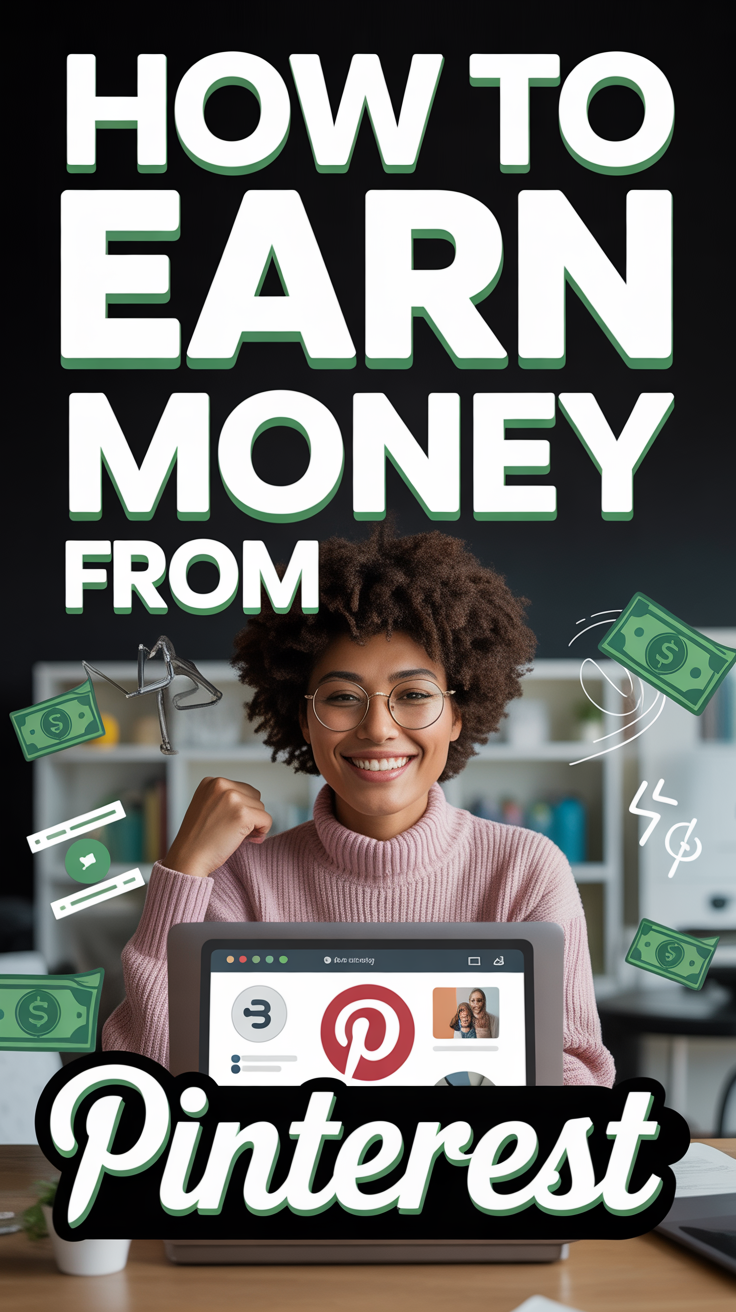
💡 How To Earn Money From Pinterest
Ever dreamed of a side hustle that feels less like work and more like creative exploration? A way to turn your passions and knowledge into a steady stream of income, right from the comfort of your home? Welcome to the world of earning money from Pinterest! This visual search engine isn’t just for planning dream weddings or finding dinner recipes; it’s a powerful, often underestimated, platform for building a thriving online business and achieving financial freedom. Get ready to unlock its money-making potential and transform your financial future, one beautiful pin at a time.
Quick Overview
In this guide, you’ll learn the exact blueprint to leverage Pinterest for income, turning your online activity into a tangible asset. We’ll cover everything from setting up your profile to advanced monetization strategies, ensuring you have a clear path to financial growth.
- Time needed: A few dedicated hours for initial setup and strategy, then consistent weekly effort (3-5 hours) for ongoing growth. Results typically start appearing within 3-6 months with consistent application.
- Difficulty: Beginner to Intermediate. While the concepts are straightforward, consistent effort and a willingness to learn are crucial.
- What you’ll need: A Pinterest account (free!), a clear niche idea, basic content creation tools (Canva is excellent and has a free version), and a willingness to learn and adapt.
Step-by-Step Instructions
Step 1: Define Your Niche & Understand Your Audience (The Money-Smart Foundation)
Before you even think about creating your first pin, you need a clear vision of who you’re serving and what value you’re offering. This isn’t just about picking a topic; it’s about identifying a profitable market segment where your unique skills and interests can genuinely solve problems or fulfill desires.
Think “money-smart” from the get-go. Instead of just “recipes,” consider “budget-friendly meal prep for busy families” or “healthy plant-based recipes for weight loss.” These niches are specific, target a particular pain point, and often have a built-in audience actively searching for solutions.
Actionable Advice:
- Brainstorm Your Passions & Expertise: What do you love talking about? What are you good at? What problems do you naturally solve for friends and family?
- Research Market Demand: Use Pinterest’s search bar, Google Trends, and even Amazon bestseller lists to see what people are actively searching for and buying in your potential niches. Look for evergreen topics (always relevant) rather than fleeting trends.
- Identify Your Ideal Pinner: Who are they? What are their demographics (age, income, location)? What are their goals, struggles, and aspirations? The more specific you are, the easier it will be to create content that resonates and ultimately leads to sales.
- Check for Monetization Potential: Can you realistically sell products, services, or affiliate offers within this niche? For instance, a “minimalist living” niche might lead to affiliate links for decluttering books, courses on organizing, or even selling your own digital guides.
Pro tip: Don’t try to appeal to everyone. Niche down until it feels almost too specific. This focus will make your content more targeted, attract a loyal audience, and make your marketing efforts far more effective, saving you time and money in the long run.
Step 2: Optimize Your Pinterest Profile for Business (Your Digital Storefront)
Your Pinterest profile is your digital storefront. It needs to be professional, inviting, and clearly communicate what you offer. A business account is crucial here, as it unlocks analytics and advanced features vital for tracking your financial success.
Actionable Advice:
- Switch to a Business Account: It’s free and takes minutes. Go to pinterest.com/business/create/ or convert your personal account in settings.
- Craft a Keyword-Rich Profile Name: Instead of just “Sarah J.”, use “Sarah J | Budget Travel Tips & Guides” or “Eco-Friendly Home Decor | Sustainable Living.” Include keywords your ideal audience would search for.
- Write an Engaging Bio: Clearly state who you help and how. Use keywords naturally. Example: “Helping busy moms save money on groceries with easy, healthy meal plans. Learn budgeting hacks & quick recipes!” Include a call to action to your website or lead magnet.
- Upload a Professional Profile Picture: A clear headshot of you (if you’re the brand) or a recognizable logo. Consistency builds trust.
- Claim Your Website: This verifies your site, gives you access to rich pins, and tracks analytics for pins from your site. It’s a critical step for driving traffic and making sales.
- Create Relevant Boards: Organize your pins into boards that align with your niche. Optimize board titles and descriptions with keywords. For example, “Frugal Living Tips,” “DIY Home Decor on a Budget,” “Side Hustle Ideas for Stay-at-Home Parents.”
Pro tip: Think of your profile as a mini-landing page. Every element should guide a visitor towards understanding your value and wanting to learn more, ultimately leading them closer to becoming a customer. This is strategic branding that pays dividends.
Step 3: Create High-Quality, Engaging Pins (Your Visual Sales Tools)
Pins are the lifeblood of Pinterest. They need to be visually appealing, informative, and designed to stop the scroll. This is where your creativity meets your monetization strategy.
Actionable Advice:
- Design Eye-Catching Visuals:
- Vertical Format: Pinterest prefers vertical pins (e.g., 2:3 aspect ratio, like 1000×1500 pixels).
- High-Quality Images/Videos: Use clear, bright, relevant images or short video pins that grab attention. Stock photos are fine, but unique, branded images are better.
- Branding: Incorporate your brand colors, fonts, and logo subtly but consistently.
- Text Overlay: Use clear, readable fonts. Your text overlay should be a compelling headline or question that sparks curiosity and clearly states the benefit of clicking. Think like a copywriter!
- Craft Compelling Pin Titles & Descriptions:
- Keyword-Rich Title: Use your primary keywords in the pin title.
- Detailed Description: Write 2-3 sentences explaining what the user will find if they click. Sprinkle in more relevant keywords naturally. Pinterest uses these descriptions to understand your content and show it to the right people.
- Call to Action: Encourage users to “Click to learn more,” “Shop now,” or “Get the recipe.”
- Link to Valuable Content: Every pin should link to a valuable piece of content on your website, blog, online store, or a relevant affiliate product page. This content should deliver on the promise made by your pin.
Pro tip: Don’t just create one pin per piece of content. Create 5-10 different pins linking to the same blog post or product page, experimenting with different visuals, headlines, and descriptions. This increases your chances of a pin going viral and diversifies your traffic sources from Pinterest.
Step 4: Choose Your Monetization Strategy (Your Income Streams)
This is where your efforts translate into actual income. Pinterest offers several powerful ways to earn money. Think about what aligns best with your niche and your audience’s needs.
Actionable Advice:
- Affiliate Marketing: Promote products or services created by others and earn a commission on every sale made through your unique link.
- How to: Join affiliate programs (e.g., Amazon Associates, ShareASale, CJ Affiliate, individual brand programs). Create pins linking directly to the product page.
- Money-Smart Tip: Only promote products you genuinely use, trust, and believe will benefit your audience. Authenticity builds trust, which leads to long-term sales. Always disclose affiliate links (e.g., “#ad,” “#affiliatelink”).
- Selling Your Own Products: This could be physical products (e.g., handmade crafts, dropshipped items) or digital products (e.g., e-books, printables, templates, online courses, stock photos).
- How to: Create pins showcasing your products, linking directly to your shop (Etsy, Shopify, Gumroad, etc.). Use rich pins for product listings to display price and availability.
- Wealth-Building Mindset: Digital products are fantastic because they have high-profit margins and can be sold repeatedly without replenishing inventory – true passive income potential.
- Driving Traffic to Your Blog/Website: Monetize your site through ads, sponsored content, or by selling your own products/services there.
- How to: Create pins that pique curiosity and link to your blog posts. Once users are on your blog, they can see your ads, read your content, and be introduced to your offers.
- Budgeting Hack: Building an email list from your blog traffic is incredibly valuable. It gives you a direct line to your audience, independent of any platform algorithm, allowing you to promote new offers directly and build a loyal community.
- Offering Services: If you’re a coach, consultant, designer, writer, or virtual assistant, Pinterest can be a powerful lead generation tool.
- How to: Create pins offering tips, tutorials, or case studies related to your service, linking to your service page or a free consultation booking page.
- Money-Smart Tip: Showcase your expertise and build authority. Your pins should demonstrate your value and position you as an expert in your field.
Pro tip: Don’t limit yourself to just one strategy. A diversified income approach is always more resilient. Start with one, master it, then gradually layer in others.
Step 5: Master Pinterest SEO & Keywords (Be Found by Your Ideal Customer)
Pinterest is a visual search engine, which means keywords are paramount. If you want your pins to be discovered by people actively looking for what you offer, you need to speak Pinterest’s language.
Actionable Advice:
- Keyword Research on Pinterest:
- Pinterest Search Bar: Start typing a broad term related to your niche, and Pinterest will suggest long-tail keywords. These are gold!
- Guided Search: After searching, look at the colored tiles that appear below the search bar. These are related keywords and categories.
- Competitor Analysis: See what keywords successful pinners in your niche are using in their profiles, board titles, and pin descriptions.
- Strategic Keyword Placement:
- Profile Name & Bio: Include your main keywords here.
- Board Titles & Descriptions: Use relevant keywords for each board.
- Pin Titles & Descriptions: This is crucial. Naturally weave in your target keywords and related terms.
- Image File Names: Before uploading, rename your image files with keywords (e.g., “budget-meal-prep-plan.jpg” instead of “IMG_001.jpg”).
- Rich Pins: Ensure your website content (blog posts, product pages) is also optimized with keywords, as rich pins pull information directly from your site.
Pro tip: Don’t keyword stuff. Pinterest is smart enough to detect this and it can harm your visibility. Focus on natural language that incorporates your keywords seamlessly, providing value to both the algorithm and the user.
Step 6: Pin Consistently & Strategically (Building Momentum)
Consistency is key on Pinterest. The algorithm favors accounts that regularly publish fresh, high-quality content. This doesn’t mean spending all day on the platform; it means smart, scheduled pinning.
Actionable Advice:
- Create a Pinning Schedule: Aim for 5-10 new pins per day, mixing fresh pins (new images/descriptions for new or old content) with repins of your own high-performing content and relevant content from others in your niche.
- Utilize a Scheduler (e.g., Tailwind): Investing in a tool like Tailwind (or Pinterest’s native scheduler) is a game-changer. It allows you to schedule hundreds of pins in advance, saving you hours each week. Treat this as a smart business expense that frees up your time for other income-generating activities.
- Mix Content Types: Don’t just pin blog posts. Incorporate video pins, idea pins (multi-page visual stories), and product pins. Pinterest loves variety.
- Pin to Relevant Boards: Always ensure your pins are saved to the most relevant boards first. You can repin them to other relevant boards over time, but avoid spamming.
- Analyze Best Times: Use Pinterest Analytics to see when your audience is most active and schedule your pins accordingly for maximum visibility.
Pro tip: Focus on “fresh pins.” Pinterest defines a fresh pin as a new image/video for an existing URL. Creating multiple new pins for the same blog post or product page is far more effective than just repinning old content. This strategy keeps your content circulating and maximizes its potential reach.
Step 7: Analyze Your Performance & Adapt (The Smart Investor’s Approach)
Just like a savvy investor tracks their portfolio, you need to monitor your Pinterest performance. Analytics tell you what’s working, what’s not, and where to focus your efforts for maximum ROI.
Actionable Advice:
- Dive into Pinterest Analytics:
- Overview: Look at your impressions, saves, outbound clicks, and overall audience growth.
- Top Pins: Identify which pins are driving the most traffic and engagement. What makes them successful? Can you replicate their elements?
- Top Boards: Which boards are performing best?
- Audience Insights: Understand your audience’s demographics and interests.
- Track Your Conversions: If you’re linking to your website, use Google Analytics (or your e-commerce platform’s analytics) to see how much traffic Pinterest is sending, and more importantly, how much of that traffic is converting into sales, email sign-ups, or service inquiries.
- Test & Iterate: Based on your data, don’t be afraid to experiment. Try new pin designs, different headlines, varied calls to action, or even new content topics. A/B testing is a fundamental principle of smart marketing.
Pro tip: Don’t just look at vanity metrics like impressions. Focus on outbound clicks and conversions. These are the metrics that directly impact your bottom line. If a pin gets a lot of impressions but no clicks, it’s not effectively doing its job of driving traffic and potential income.
Common Mistakes to Avoid
- Treating Pinterest Like Instagram:
- Why it’s problematic: Instagram is a social network for real-time updates and direct interaction. Pinterest is a visual search engine for future planning and discovery. Short, square, personal photos with minimal text don’t perform well.
- Correct approach: Focus on vertical, keyword-optimized pins with clear text overlays that solve a problem or inspire. Think long-term searchability, not fleeting likes.
- Ignoring Keywords & Pinterest SEO:
- Why it’s problematic: If Pinterest doesn’t understand what your pin is about, it can’t show it to the right people. Your content will be invisible, and your monetization efforts will fall flat.
- Correct approach: Dedicate time to keyword research and strategically place keywords in your profile, board titles, pin titles, and descriptions.
- Inconsistent Pinning & Giving Up Too Soon:
- Why it’s problematic: Pinterest rewards consistency. Sporadic pinning means the algorithm won’t prioritize your content, and you won’t build momentum. Many give up before seeing results, missing out on potential income.
- Correct approach: Implement a consistent pinning schedule (daily is ideal) using a scheduler. Understand that Pinterest is a long-game strategy; expect to see significant results after 3-6 months of dedicated effort.
- Not Linking to Valuable Content (or Spamming Affiliate Links):
- Why it’s problematic: Pins that lead to dead ends, irrelevant content, or purely promotional, low-value affiliate pages frustrate users and can lead to account suspension.
- Correct approach: Every pin should link to a high-quality, relevant piece of content (your blog post, product page, lead magnet) that provides value. If using affiliate links, ensure they lead to a product that genuinely helps and always disclose the affiliation.
Troubleshooting
- Issue: Low Engagement/Traffic on Pins.
- Solution: Review your pin designs – are they eye-catching? Is the text overlay clear and compelling? Are you using strong keywords in your titles and descriptions? Test different visuals and headlines. Ensure your linked content is high-quality.
- Issue: Pins Are Getting Impressions but No Clicks.
- Solution: Your pin is being seen, but it’s not enticing enough to click. Focus on your call to action and the perceived value. Does your text overlay clearly state the benefit of clicking? Is there a sense of urgency or curiosity? Experiment with stronger, benefit-driven headlines.
- Issue: Account Suspension or Warnings.
- Solution: This often happens due to spammy behavior (e.g., rapid-fire pinning of identical pins, linking to low-quality sites, not disclosing affiliate links). Review Pinterest’s community guidelines. Appeal if you believe it’s a mistake, but primarily, adjust your strategy to focus on quality, value, and adherence to their rules.
Key Takeaways
- Pinterest is a Visual Search Engine: Treat it as such by prioritizing keywords and high-quality, problem-solving content.
- Niche Down for Success: A focused niche attracts a dedicated audience and makes monetization easier.
- Consistency is King: Regular, strategic pinning builds momentum and signals to the algorithm that you’re an active, valuable contributor.
- Value Drives Income: Always provide value to your audience, whether through free content, helpful products, or trusted recommendations.
- Diversify Your Monetization: Explore affiliate marketing, selling your own products, driving blog traffic, and offering services.
- Analytics are Your Compass: Use data to understand what works and adjust your strategy for maximum financial return.
- It’s a Long Game: Be patient, persistent, and adaptable. Financial success on Pinterest doesn’t happen overnight, but it’s incredibly rewarding.
Frequently Asked Questions
Q: How long does it take to start earning money from Pinterest?
A: While some see initial traction within a few weeks, consistent income typically starts appearing after 3-6 months of dedicated effort. It’s a marathon, not a sprint, but the long-term rewards are significant.
Q: Do I need a blog or website to earn money from Pinterest?
A: While not strictly mandatory (you can do direct affiliate linking or link to an Etsy shop), having your own website or blog gives you far more control, credibility, and monetization options (ads, email list building, selling your own products). It’s highly recommended for long-term wealth building.
Q: Can I start earning money on Pinterest with no upfront investment?
A: Absolutely! Pinterest itself is free, and tools like Canva have robust free versions. You can start by creating pins for affiliate products or promoting free resources that lead to paid offers. As you start earning, you can strategically reinvest a portion into tools like Tailwind or a website host to scale your efforts.
Q: Is it too late to start earning money from Pinterest?
A: Not at all! Pinterest continues to grow and evolve. Its focus on evergreen content means that pins you create today can continue to drive traffic and income for months, even years, to come. The best time to start was yesterday; the second best time is now!
What’s Next?
You’ve got the blueprint, now it’s time to build! Don’t let this knowledge sit idle. The path to earning money from Pinterest, and ultimately enhancing your financial well-being, begins with action.
- Set up your Pinterest Business Account: If you haven’t already, do it today.
- Define your niche: Get crystal clear on who you’re helping and how.
- Create your first 5-10 pins: Design them, optimize them, and link them to something valuable.
- Start pinning consistently: Even if it’s just a few pins a day, build that habit.
Remember, every financial journey starts with a single step. Pinterest offers a unique opportunity to build a flexible, scalable income stream that can support your budgeting goals, boost your savings, and contribute to your overall wealth-building strategy. Embrace the process, learn from your analytics, and watch your efforts transform into tangible financial results. Your future self will thank you!