💰 How To Budget For Beginners
Imagine a life where you feel completely in control of your money, where financial stress is a distant memory, and where your dreams – big or small – are within reach. Sound too good to be true? It’s not. It all starts with one powerful tool: a budget. This guide isn’t about restriction; it’s about freedom, clarity, and building the financial future you truly deserve.
Quick Overview
This guide will demystify budgeting, helping you understand where your money goes, how to make it work harder for you, and how to build a solid foundation for your financial goals. You’ll learn practical strategies to track spending, set realistic goals, and automate your path to financial success.
- Time needed: Initial setup: 1-2 hours. Ongoing maintenance: 15-30 minutes per week.
- Difficulty: Beginner
- What you’ll need: Your bank statements (last 1-3 months), credit card statements, pay stubs, a notebook and pen OR a spreadsheet (like Google Sheets/Excel) OR a budgeting app (like Mint, YNAB, Rocket Money), and an open mind!
Step-by-Step Instructions
Step 1: Gather Your Financial Intel (Track Income & Expenses)
Before you can tell your money where to go, you need to know where it’s been. This is often the most eye-opening step for beginners, and it’s absolutely crucial. Don’t worry, you’re not judging past decisions; you’re simply observing patterns.
Action:
- Identify All Income Sources: List every single source of money coming into your household. This includes your regular paycheck(s), freelance income, side hustle earnings, government benefits, child support, rental income, etc. Calculate your total net income (the money that actually hits your bank account after taxes and deductions) for a typical month. If your income varies, average it over the last few months or use your lowest income month for a conservative estimate.
- Uncover Your Spending: This is where the detective work begins! Gather bank statements and credit card statements for the last 1-3 months. Go through every single transaction. Yes, every single one.
- List Everything Out: As you review your statements, write down or log every expense. Don’t categorize yet, just list the amount and what it was for. This might feel tedious, but it’s the bedrock of your budget.
Pro tip: Many banks offer year-end summaries or categorize spending for you within their online portals, which can be a great starting point. If you use a budgeting app, connecting your accounts can automate this step, but still review the categorizations for accuracy.
Step 2: Categorize Your Spending (Needs, Wants, & Savings)
Now that you have a raw list of transactions, it’s time to organize them. This step helps you understand where your money is truly going and identify areas for potential adjustment. Think of your expenses in three broad categories:
- Needs (Essentials): These are the non-negotiable expenses required for survival and basic living.
- Housing (rent/mortgage, property taxes)
- Utilities (electricity, gas, water, internet – yes, internet is practically a need these days!)
- Food (groceries, not restaurant meals)
- Transportation (car payment, gas, public transit, essential repairs)
- Insurance (health, car, home)
- Minimum debt payments (student loans, credit cards – the minimum payment is a need; extra payments are a want/goal)
- Essential medical expenses
- Wants (Discretionary): These are the expenses that improve your quality of life but aren’t strictly necessary.
- Dining out, takeout, coffee shops
- Entertainment (movies, concerts, streaming services beyond one basic one)
- Hobbies and recreation
- Vacations and travel
- New clothes (beyond replacements for worn-out items)
- Subscriptions (gym memberships if not regularly used, non-essential apps)
- Premium cable or multiple streaming services
- Savings & Debt Repayment (Future You): This category is about paying your future self and getting rid of high-interest debt.
- Emergency fund contributions
- Retirement contributions (401k, IRA)
- Investment contributions
- Extra debt payments (beyond the minimums)
- Specific savings goals (down payment, car, vacation)
Action: Go through your list of transactions from Step 1 and assign each one to a category. Be honest with yourself. That daily latte? It’s a “want,” not a “need.”
Pro tip: Don’t try to be perfect. If you’re unsure, put it where it feels most appropriate. The goal is to get a clear picture, not to create an immaculate financial report.
Step 3: Create Your Budget Blueprint (Choose a Method)
Now that you know your income and where your money is currently going, it’s time to create a plan for where you want it to go. There isn’t one “right” way to budget; choose a method that resonates with you and your lifestyle.
Here are a few popular and beginner-friendly methods:
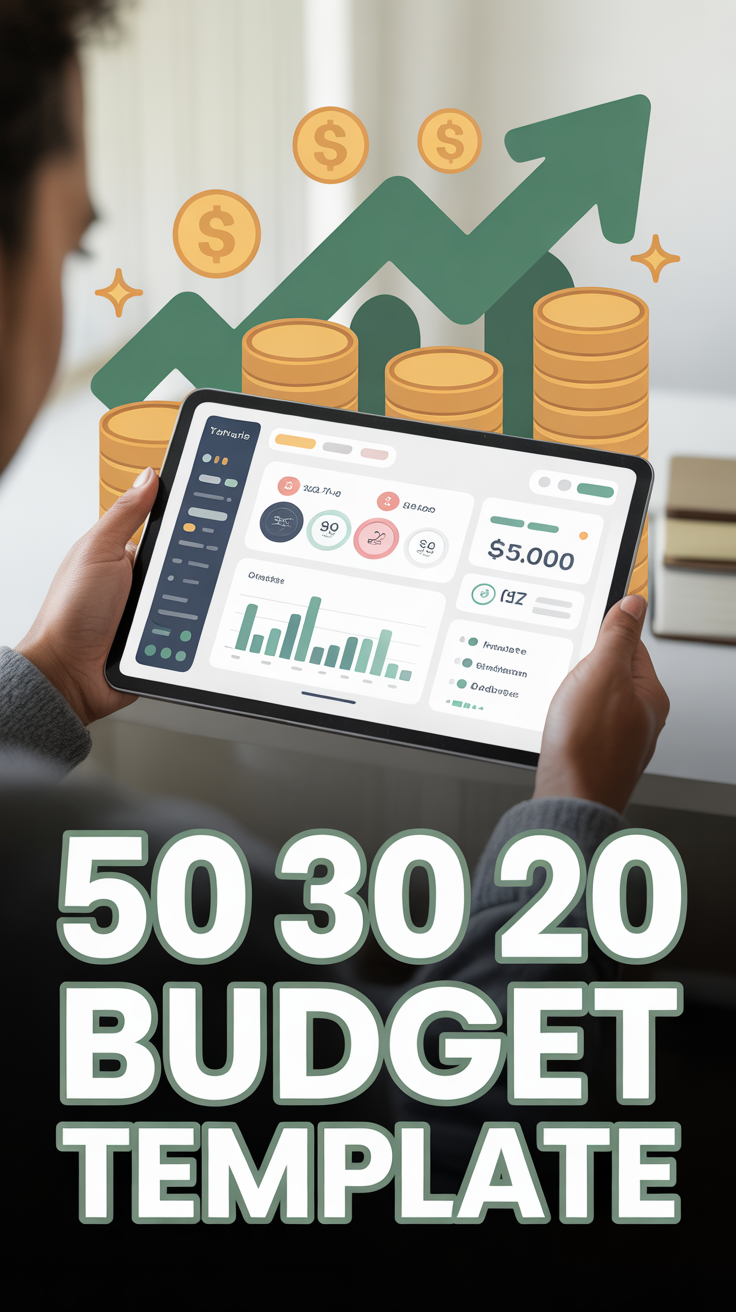
- The 50/30/20 Rule: This is a fantastic starting point for its simplicity.
- 50% of your after-tax income goes to Needs.
- 30% goes to Wants.
- 20% goes to Savings & Debt Repayment.
This rule provides a great framework. If your “needs” are currently eating up 70% of your income, it highlights an area to address (e.g., finding cheaper housing, reducing transportation costs).
- Zero-Based Budgeting: With this method, you assign every single dollar of your income a “job” until your income minus your expenses (including savings and debt repayment) equals zero.
- This doesn’t mean your bank account goes to zero, but that every dollar is accounted for on paper.
- It gives you maximum control and intentionality.
- Great for ensuring no money is “lost” or unaccounted for.
- The Envelope System: A classic, tangible method.
- You allocate cash into physical envelopes for specific spending categories (e.g., “Groceries,” “Dining Out,” “Entertainment”).
- Once the cash in an envelope is gone for the month, that’s it for that category until the next month.
- Excellent for categories where you tend to overspend, especially discretionary ones. You can adapt this digitally with apps that mimic envelopes.
Action: Based on your income and current spending patterns, choose one of these methods. Start by allocating amounts to each category. For example, if you choose the 50/30/20 rule, calculate 50% of your income for needs, 30% for wants, and 20% for savings/debt. Then, fit your specific expenses into those percentages.
Pro tip: Don’t try to drastically cut everything at once. Start with realistic numbers based on your current spending, then look for small adjustments. It’s a marathon, not a sprint.
Step 4: Set SMART Financial Goals (Your “Why”)
Budgeting without goals is like driving without a destination. Your goals are the fuel for your motivation and give purpose to every dollar you save. Make your goals SMART:
- Specific: What exactly do you want to achieve? (e.g., “Save for a down payment” vs. “Save $10,000 for a down payment.”)
- Measurable: How will you know when you’ve reached it? (e.g., “Save $10,000” vs. “Save some money.”)
- Achievable: Is it realistic given your income and current expenses?
- Relevant: Is it important to you? Does it align with your values?
- Time-bound: When do you want to achieve it by? (e.g., “by December 31st next year.”)
Action:
- Brainstorm: What do you want your money to do for you? Think short-term (1-12 months), mid-term (1-5 years), and long-term (5+ years).
- Short-term: Build a $1,000 emergency fund, pay off a small credit card, save for a new phone, weekend trip.
- Mid-term: Save for a car down payment, pay off student loans, save for a large vacation, build a 3-6 month emergency fund.
- Long-term: Save for a house down payment, retirement, child’s education.
- Select 1-3 SMART Goals: Choose a couple of short-term goals and one mid-to-long-term goal to focus on initially. Write them down clearly.
- Allocate Funds: Now, integrate these goals into your budget. For example, if you want to save $1,000 for an emergency fund in 10 months, you need to set aside $100 per month. This becomes a line item in your “Savings & Debt Repayment” category.
Pro tip: Make your goals visible! Write them on a whiteboard, set them as your phone background, or use a visual tracker. Seeing them regularly reinforces your commitment.
Step 5: Make Adjustments and Find Savings (Trim the Fat)
With your budget blueprint and goals in place, it’s time to fine-tune. This step is about finding opportunities to free up more money to align with your goals.
Action:
- Review Your “Wants”: This is often the easiest place to start. Can you reduce dining out by cooking more at home? Do you really need all those streaming services? Can you swap an expensive hobby for a cheaper one, even temporarily? Small cuts here can add up significantly.
- Evaluate Your “Needs”: While harder to change, don’t overlook your needs. Can you negotiate your internet bill? Shop around for cheaper car insurance? Look for ways to reduce your grocery bill (meal planning, buying generic brands)? Even seemingly fixed costs can sometimes be adjusted.
- Look for “Subscription Creep”: Many services offer free trials that roll into paid subscriptions. Audit all your recurring payments. Cancel anything you don’t actively use or truly value.
- Identify “Money Leaks”: These are small, impulsive purchases that don’t bring much joy but drain your wallet (e.g., daily coffee, vending machine snacks, impulse buys at the checkout).
Pro tip: Focus on finding just 2-3 areas where you can comfortably cut back. Sustainable changes are more effective than drastic, temporary ones. Remember, every dollar saved is a dollar you can put towards your goals!
Step 6: Automate Your Savings and Payments (Set It & Forget It)
This is arguably the most powerful budgeting hack. Automation takes the willpower out of saving and ensures you consistently make progress towards your goals.
Action:
- “Pay Yourself First”: Set up an automatic transfer from your checking account to your savings account (or investment account) for the amount you’ve allocated to savings/debt repayment in your budget. Schedule this transfer to happen on or shortly after your payday. Treat this transfer like any other bill – it’s non-negotiable.
- Automate Bill Payments: Set up automatic payments for all your fixed bills (rent/mortgage, utilities, loan payments, insurance premiums). This prevents late fees, missed payments, and stress. Just make sure you always have enough money in your account to cover them!
- Separate Savings Accounts: Consider opening separate savings accounts for different goals (e.g., “Emergency Fund,” “Vacation Fund,” “Down Payment Fund”). Many banks allow you to do this easily, and it helps you visualize your progress.
Pro tip: Start small with automation if you’re nervous. Even $25 or $50 transferred automatically each payday is better than nothing and builds a powerful habit.
Step 7: Review, Adjust, and Celebrate (Budgeting is a Journey)
Budgeting isn’t a one-time event; it’s an ongoing process. Life changes, income fluctuates, and expenses pop up. Your budget needs to be a living document that adapts with you.
Action:
- Schedule Regular Check-ins:
- Weekly Quick Check (10-15 minutes): Briefly review your spending for the past week. Are you on track in your categories? Do you need to make any small adjustments for the rest of the month?
- Monthly Deep Dive (30-60 minutes): At the end of each month, compare your actual spending to your budgeted amounts. Where did you overspend? Where did you underspend? Why? What lessons can you learn for the next month? Adjust your categories and allocations as needed.
- Be Flexible: Don’t be afraid to adjust your budget. If you consistently overspend in one category (e.g., groceries), perhaps your initial allocation was unrealistic. Adjust it, and find another category to trim slightly to compensate.
- Celebrate Milestones: Did you hit your first $1,000 in your emergency fund? Did you pay off a credit card? Celebrate these wins! Acknowledge your hard work and progress, perhaps with a small, budgeted treat that doesn’t derail your efforts. Positive reinforcement keeps you motivated.
Pro tip: Don’t beat yourself up if you “mess up” or go over budget in a category. Financial setbacks happen. The key is to learn from them, adjust, and get back on track. Consistency over perfection!
Common Mistakes to Avoid
-
Being Too Restrictive: Trying to cut every single “want” from your budget is a recipe for burnout. A sustainable budget includes some fun money and allows for occasional treats. If your budget is too strict, you’ll feel deprived and be more likely to abandon it entirely.
Correct Approach: Build in a “fun money” or “personal spending” category. Start with realistic cuts, not extreme ones. Allow yourself small, budgeted pleasures.
-
Not Tracking Consistently: Skipping a week or two of tracking can quickly lead to your budget going off the rails. The power of budgeting comes from consistent monitoring.
Correct Approach: Make tracking a regular habit. Schedule it into your calendar. Use an app that automates much of the process for you. Even a quick 10-minute check-in can make a huge difference.
-
Ignoring Small Expenses (“Death by a Thousand Cuts”): Those daily coffees, impulse Amazon buys, and vending machine snacks might seem insignificant individually, but they add up rapidly and can derail your budget.
Correct Approach: Track every single expense, no matter how small. Once you see these “money leaks” on paper, you’ll be more conscious about them and can decide which ones are worth keeping and which to cut.
-
Not Having an Emergency Fund: Life throws curveballs – job loss, medical emergencies, car repairs. Without an emergency fund, these events can force you into debt, destroying your budget.
Correct Approach: Make building an emergency fund a top priority, even before aggressive debt repayment or investing. Start with a mini-fund ($500-$1,000), then aim for 3-6 months of essential living expenses.
-
Comparing Yourself to Others: Everyone’s financial situation, income, and goals are different. What works for your friend or colleague might not work for you, and vice versa. Comparing your budget to someone else’s can lead to frustration or unrealistic expectations.
Correct Approach: Focus on your own journey and your own goals. Your budget is a personal tool designed to serve your unique financial situation and aspirations.
Troubleshooting
Even with the best intentions, you might encounter some bumps along the way. Here are common issues and quick solutions:
-
“I always overspend in one category, no matter what!”
Solution: This often means your initial allocation for that category was unrealistic. Instead of constantly feeling guilty, adjust your budget to reflect your actual spending patterns. Then, find another category (likely a “want”) where you can comfortably cut back to compensate. For example, if you consistently spend more on groceries than budgeted, increase your grocery budget and perhaps reduce your dining out budget proportionally. It’s about honesty and reallocation, not deprivation.
-
“I feel like I don’t have enough money to budget.”
Solution: This is precisely why budgeting is so important! If money is tight, you need to know exactly where every dollar is going to make informed choices. Start by cutting down on all non-essential “wants” to free up cash. Then, explore ways to increase your income (side hustle, asking for a raise, selling unused items) or reduce your “needs” (e.g., finding cheaper housing, negotiating bills). Even with a low income, a budget helps you stretch your money further and identify opportunities for improvement.
-
“My partner and I can’t agree on money or sticking to the budget.”
Solution: Financial disagreements are common in relationships. Start by scheduling a regular “money date” where you both discuss finances without judgment. Focus on shared goals (e.g., a family vacation, a down payment). Consider creating a joint budget for shared expenses, but also allow for individual “fun money” categories that each person controls without scrutiny. Open communication, compromise, and mutual respect are key.
Key Takeaways
- Budgeting is Empowering: It gives you control and clarity over your financial life, reducing stress and opening doors to your dreams.
- Tracking is Fundamental: You can’t manage what you don’t measure. Know your income and where every dollar goes.
- Goals Provide Motivation: Your “why” keeps you going. Set SMART goals and integrate them into your budget.
- Automation is Key to Consistency: “Pay yourself first” and automate savings and bill payments to build habits effortlessly.
- Flexibility is Crucial: Your budget is a living document. Review and adjust it regularly as life changes.
- Progress, Not Perfection: Don’t get discouraged by setbacks. Learn, adjust, and keep moving forward. Every step counts!
Frequently Asked Questions
Q: How often should I update my budget?
A: You should do a quick check-in weekly to review recent spending and a more thorough review and adjustment monthly. Any major life change (new job, moving, new baby) warrants an immediate budget overhaul.
Q: What’s the best budgeting app or tool?
A: The “best” tool is the one you’ll actually use! Popular options include Mint (free, good for tracking), YNAB (You Need A Budget – paid, excellent for zero-based budgeting), Rocket Money (paid, good for subscriptions), or simply a spreadsheet (Google Sheets/Excel) or a pen and paper. Try a few to see what fits your style.
Q: Should I include debt repayment in my budget?
A: Absolutely! Minimum debt payments are a “need,” and any extra payments you make towards debt (e.g., using the debt snowball or avalanche method) should be a dedicated line item in your “Savings & Debt Repayment” category. Tackling debt is a crucial part of financial health.
Q: What if I have irregular income?
A: Budgeting with irregular income requires a slightly different approach. Try to base your budget on your lowest income month or average your income over several months. Prioritize your “needs” first. Consider setting aside extra income during high-earning months into a separate “buffer” account to cover expenses during leaner months. Zero-based budgeting can be particularly effective here, as you assign jobs to the money you actually have at the start of each income cycle.
What’s Next?
You’ve taken the incredibly important first step towards financial mastery. Budgeting is the foundation, but it’s just the beginning of your journey. As you get comfortable with your budget, consider exploring these next steps:
- Build a Robust Emergency Fund: Aim for 3-6 months of essential living expenses to create a strong financial safety net.
- Tackle High-Interest Debt: Learn about strategies like the debt snowball or debt avalanche to accelerate your debt repayment.
- Start Investing: Even small amounts can grow significantly over time thanks to the power of compound interest. Look into low-cost index funds or ETFs.
- Plan for Retirement: Open a Roth IRA or contribute more to your employer’s 401(k), especially if there’s a company match.
- Increase Your Income: Look for opportunities to earn more through promotions, side hustles, or developing new skills.
Don’t wait another day. Start your budget today. Your future self will thank you for the financial freedom and peace of mind you’re building, one intentional dollar at a time.