💰 How To Save 1000 In A Month
📚 The Financial Literacy Library
The best investment you can ever make is in your own financial education. These 5 cornerstone books are what millionaires, financial advisors, and wealth-builders universally recommend for completely rewiring how you think about earning, saving, and investing money.
🧠 The Psychology of Money
Doing well with money isn't necessarily about what you know—it's about how you behave. Morgan Housel masterfully breaks down the emotional and psychological biases that secretly dictate our financial decisions, offering a true paradigm shift in how to view wealth.
🏠 Rich Dad Poor Dad
The #1 personal finance book of all time for a reason. This foundational read shatters the myth that you need to earn a high income to be rich, teaching you the critical difference between working for money and making your money work for you via assets.
📈 Atomic Habits
While not strictly a finance book, building wealth is absolutely dependent on the daily habits you cultivate. James Clear provides the definitive framework for breaking bad spending habits and effortlessly automating the good ones that lead to long-term success.
📊 The Simple Path to Wealth
The ultimate antidote to complex, intimidating financial advice. JL Collins provides an incredibly accessible, low-stress roadmap to financial independence through index fund investing, perfectly explaining why simplicity beats Wall Street complexity every time.
💳 I Will Teach You to Be Rich
A tactical, no-BS, 6-week program that actually works. Ramit Sethi teaches you how to crush debt, automate your savings, and negotiate your salary—all while guilt-free spending on the things you truly love. A must-read for modern money management.
Imagine having an extra $1000 in your bank account just 30 days from now. What could that mean for you? Perhaps it’s the start of your emergency fund, a down payment for something you truly desire, or simply proof that you have the power to control your money. This guide isn’t just about saving; it’s about transforming your financial habits and building a foundation for lasting wealth.
Quick Overview
This guide will equip you with a concrete plan to save $1000 in a single month, focusing on practical strategies, smart cuts, and income-boosting tactics. It’s an intensive sprint, but one that will prove your financial resilience and set you on a path to greater financial freedom.
Time needed: 30 days of focused effort and consistent tracking
Difficulty: Intermediate (requires dedication, discipline, and willingness to make temporary lifestyle adjustments)
What you’ll need: A clear understanding of your current finances, a budgeting tool (app, spreadsheet, or notebook), internet access, and a strong commitment to your goal.
Step-by-Step Instructions
Step 1: Get Real with Your Numbers (Audit Your Finances)
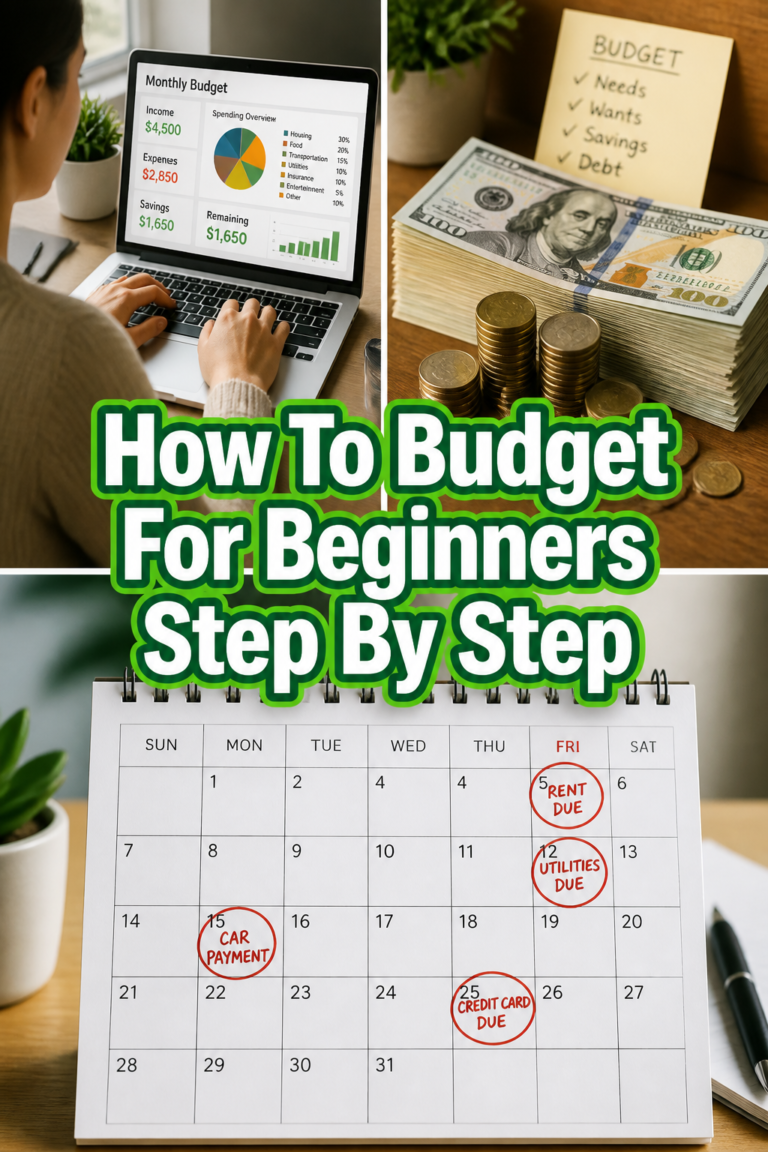
Before you can cut, save, or earn, you need to know exactly where your money is going. This isn’t just about knowing your income; it’s about dissecting every single expense. For the next few days (or even better, for the past month if you have records), meticulously track every dollar that leaves your pocket.
Start by listing all your sources of income. Then, create two main categories for your expenses: fixed and variable.
- Fixed Expenses: These are recurring bills that are usually the same amount each month. Think rent/mortgage, loan payments, insurance premiums, and essential subscriptions (like your phone bill or internet).
- Variable Expenses: These fluctuate month to month and are where you’ll find the most opportunities for saving. This includes groceries, dining out, entertainment, transportation (gas, public transport), shopping, and personal care.
Use a budgeting app (like Mint, YNAB, or Rocket Money), a simple spreadsheet, or even a dedicated notebook to record every transaction. Be honest with yourself; no judgment, just data. The goal is to see the complete picture of your financial flow. You might be surprised by how much those “small” expenses add up.
Pro tip: For the most accurate picture, try a “spending journal” for a few days before you even start the 30-day challenge. Write down every single purchase, no matter how small, and the feeling or reason behind it. This helps identify emotional spending triggers.
Step 2: Identify Your “Money Leaks” (Ruthlessly Cut Unnecessary Expenses)
Once you have a clear picture of your spending, it’s time to go on a “money leak” hunt. This is where you identify expenses that aren’t truly essential for the next 30 days. Remember, this is a short-term sprint, so you can make temporary sacrifices that you might not sustain long-term.
Go through your variable expenses with a fine-tooth comb. Ask yourself:
- Is this absolutely necessary for my survival and well-being this month?
- Can I get by without it for 30 days?
- Is there a significantly cheaper alternative?
Common targets for cutting include:
- Dining out and takeout: This is often the biggest culprit. Commit to eating all meals at home.
- Subscriptions: Review all streaming services, gym memberships (if you can exercise at home or outdoors), apps, and online courses. Pause or cancel anything you won’t actively use this month.
- Impulse buys: Avoid browsing online stores or physical shops. Unsubscribe from promotional emails.
- Daily coffees/snacks: Brewing coffee at home and packing snacks can save significant amounts over a month.
- Entertainment: Opt for free activities like parks, libraries, free events, or hosting friends at home instead of paid outings.
Calculate how much you can realistically save by eliminating or drastically reducing these categories. Aim for big cuts here, as they’ll have the most immediate impact on reaching your $1000 goal.
Pro tip: Challenge yourself to a “no-spend week” within the month. Apart from essential bills and groceries, try not to spend any money for seven consecutive days. This can be incredibly eye-opening and boost your savings significantly.
Step 3: Boost Your Income (Even Temporarily)
Saving isn’t just about cutting; it’s also about earning more. For a 30-day sprint, consider temporary ways to increase your cash flow. Every extra dollar you bring in means less you have to cut from your existing budget.
Think about what skills you have or what resources are at your disposal:
- Sell unused items: Declutter your home and sell clothes, electronics, furniture, books, or collectibles on platforms like Facebook Marketplace, eBay, Poshmark, or local consignment shops. You’ll not only earn cash but also free up space.
- Gig economy: Sign up for food delivery services (DoorDash, Uber Eats), ride-sharing (Uber, Lyft), or task-based apps (TaskRabbit) for a few hours in the evenings or weekends.
- Freelance services: If you have skills in writing, graphic design, web development, social media management, or virtual assistance, offer your services on platforms like Upwork or Fiverr for quick projects.
- Overtime at work: If your job offers overtime, volunteer for extra shifts. The extra income can quickly add up.
- Temporary odd jobs: Offer to pet-sit, babysit, mow lawns, or run errands for neighbors and friends.
Even an extra $100-$300 from these efforts can make a massive difference in reaching your $1000 target and alleviate some pressure from extreme cutting.
Pro tip: Focus on activities that generate cash quickly. Don’t start a complex side business that requires upfront investment or takes weeks to pay out. The goal is fast cash for this 30-day challenge.
Step 4: Smart Grocery Shopping & Meal Planning
Food is a significant variable expense for most households, and it’s an area ripe for savings. By taking control of your food budget, you can save hundreds in a month.
Here’s how to master your grocery game:
- Meal plan: Before you even step into the grocery store, plan every single meal for the week. Base your meals around ingredients you already have and items that are on sale.
- Make a list and stick to it: Impulse buys at the grocery store can quickly derail your budget. Only buy what’s on your list.
- Cook in bulk: Prepare large batches of meals like chili, soup, or casseroles that can be portioned out for lunches and dinners throughout the week. This saves time and prevents you from resorting to takeout on busy days.
- Eat at home: Commit to preparing and eating all your meals at home for the entire month. Pack your lunch and snacks for work.
- Embrace generics and sales: Don’t be a brand snob. Store brands are often just as good (sometimes better) and significantly cheaper. Check weekly flyers for sales.
- Reduce food waste: Use up leftovers, freeze ingredients before they spoil, and get creative with what’s in your pantry.
Aim to reduce your typical food budget by 30-50% for this month. It’s challenging but very achievable with discipline.
Pro tip: Try the “Eat the Pantry First” challenge. Before you go grocery shopping, commit to making meals solely from what you already have in your fridge, freezer, and pantry. This forces creativity, reduces waste, and delays your next grocery trip.
Step 5: Embrace Frugal Living & Free Entertainment
For this intense savings month, adopt a mindset of extreme frugality. Look for free alternatives to everything you normally pay for.
Consider these frugal hacks:
- DIY everything: Can you do that small home repair yourself instead of hiring someone? Can you give yourself a manicure instead of going to a salon?
- Free entertainment: Instead of movies, concerts, or paid events, explore your local library for books and movies, visit free museums, go for hikes, have game nights with friends at home, or explore local parks.
- Transportation: Walk, bike, or use public transport instead of driving. Carpool with colleagues or friends if possible. Limit unnecessary trips.
- Energy saving: Unplug electronics when not in use, turn off lights, adjust your thermostat, and take shorter showers. Small utility savings add up.
- Borrow instead of buy: Need a specific tool or item for a one-off project? Ask a friend or neighbor if you can borrow it instead of buying.
This isn’t about deprivation; it’s about smart choices and finding joy in simplicity for a defined period.
Pro tip: Challenge yourself to a “no new purchases” rule for the month. Beyond essentials like groceries, commit to not buying anything new – no clothes, gadgets, home decor, or impulse buys. This forces you to appreciate what you already own.
Step 6: Automate Your Savings & Create a Dedicated Fund
The most effective way to save money is to make it automatic and treat your savings as a non-negotiable bill. As soon as you get paid, transfer a portion of your income directly into a separate savings account.
Here’s how to set it up:
- Separate account: Open a savings account specifically for this $1000 goal. Ideally, it should be at a different bank than your primary checking account to add a layer of friction, making it harder to impulsively transfer money back.
- Automatic transfers: Set up an automatic transfer for a fixed amount to move from your checking to your savings account immediately after each paycheck. Even if it’s a smaller amount initially, it builds the habit.
- Treat it as a bill: Mentally categorize your savings transfer as a mandatory bill, just like rent or utilities. It’s not optional.
- Windfalls go straight to savings: Any unexpected income – a bonus, a rebate, cash back from a credit card, or money from selling items – should go directly into your savings account.
The goal is to “pay yourself first” before you have a chance to spend the money.
Pro tip: Consider using micro-saving apps like Acorns or Chime’s “round up” feature, which automatically rounds up your purchases to the nearest dollar and saves the difference. While these won’t hit $1000 alone, they can supplement your main savings efforts.
Step 7: Track Progress & Stay Motivated
Saving $1000 in a month is a significant goal, and staying motivated is key. Regularly tracking your progress keeps you engaged and shows you how far you’ve come.
Methods for tracking and motivation:
- Visual tracker: Print out a savings thermometer or a grid with 100 squares (each representing $10). Color in a square every time you add $10 to your savings. Seeing your progress visually is incredibly motivating.
- Daily check-ins: Take 5 minutes each day to review your spending and how much you’ve saved. Adjust your strategy if you’re falling behind.
- Celebrate small wins: Acknowledging milestones (e.g., hitting $250, then $500) can keep your spirits high. Just make sure your celebrations don’t involve spending money!
- Accountability partner: Share your goal with a trusted friend or family member. Regularly check in with each other to stay on track.
- Remind yourself of your “why”: Keep the reason you’re saving $1000 front and center. Is it for an emergency fund? A specific purchase? Financial freedom? Write it down and put it where you’ll see it daily.
Momentum is powerful. The more you see your savings grow, the more motivated you’ll be to continue.
Pro tip: Set up alerts from your bank for your savings account. Getting a notification every time money moves into your savings can provide a little mental boost and reinforce positive behavior.
Step 8: The “Envelope System” for Cash Spenders (Optional but Effective)
If you primarily use cash for variable expenses, or if you struggle with overspending in certain categories, the envelope system can be a game-changer.
How it works:
- Categorize expenses: Identify your main variable spending categories (e.g., groceries, personal care, entertainment, gas).
- Allocate cash: At the beginning of the month (or week, if you prefer smaller increments), withdraw the exact amount of cash you’ve budgeted for each category.
- Fill envelopes: Label an envelope for each category and put the allocated cash inside.
- Spend only from the envelope: When you need to buy something in a specific category, use only the cash from that envelope. Once the cash is gone, it’s gone for the month (or week).
This system provides a tangible, visual representation of your money, making it harder to overspend. You literally see your money diminishing, which can be a powerful deterrent to impulse purchases.
Pro tip: Only use the envelope system for categories where you struggle with overspending. For fixed bills, continue using electronic payments. This system is most effective for discretionary spending where physical cash limits your options.
Common Mistakes to Avoid
Saving $1000 in a month is ambitious, and it’s easy to stumble. Being aware of common pitfalls can help you navigate the challenge more effectively.
-
Not Tracking Every Penny: The biggest mistake is assuming you know where your money goes. Without meticulous tracking, you’ll miss small expenses that add up, making it impossible to identify true “money leaks.”
Correct Approach: Use an app, spreadsheet, or notebook. Commit to logging every single transaction, no matter how small, for the entire 30 days. This data is your most powerful tool.
-
Setting Unrealistic Cuts (Leading to Burnout): Trying to cut absolutely everything and living on ramen for 30 days is often unsustainable and leads to frustration, giving up, and a spending binge afterward.
Correct Approach: Be aggressive but realistic. Identify the biggest impact cuts you can make temporarily without completely sacrificing your well-being. Allow for a small, reasonable amount for “miscellaneous” or a very small treat if absolutely necessary, but keep it tight.
-
Ignoring Small Expenses (“It’s Just a Coffee”): These seemingly insignificant daily purchases are often referred to as “latte factors.” Individually, they seem harmless, but collectively, they can sabotage your savings goals.
Correct Approach: Recognize that every dollar counts. A $5 coffee daily is $150 in a month. Those “small” expenses are exactly what you need to target for this challenge.
-
Failing to Adjust and Adapt: Your initial budget might not be perfect. You might find some cuts are harder than expected, or you discover new opportunities to save or earn.
Correct Approach: Review your progress weekly. If you’re falling behind, identify new areas to cut or ways to earn more. If you’re ahead, great! Keep the momentum going. Be flexible and willing to pivot your strategy.
-
Not Having a Clear “Why”: Without a strong motivation, it’s easy to lose steam when the challenge gets tough. “Just saving money” isn’t always enough.
Correct Approach: Define your “why” clearly. Is it for an emergency fund, a debt payment, a specific goal, or simply to prove to yourself you can do it? Write it down and visualize achieving it. This purpose will be your fuel when motivation wanes.
Troubleshooting
Even with the best intentions, you might hit some roadblocks. Here are solutions to common issues:
“I can’t find anything else to cut!”
- Solution: Revisit your “needs vs. wants” list. Are there any “needs” that could temporarily be downgraded to a cheaper alternative? For example, instead of your usual expensive brand of shampoo, can you use a generic for a month? Look at your fixed expenses: can you call your internet provider to negotiate a temporary lower rate or pause a non-essential subscription you forgot about? If cutting is truly maxed out, pivot heavily to income-boosting strategies (Step 3).
“I keep dipping into my savings!”
- Solution: Increase the friction. Make your savings account harder to access. If it’s at the same bank, open one at a different institution. Don’t carry the debit card for that account. Consider a high-yield savings account that takes a few days to transfer money out. Also, reinforce your “why” (Step 7) and use a visual tracker to see the impact of dipping into your fund.
“My income is too low to make $1000 in a month.”
- Solution: While $1000 might be a stretch for some with very low incomes, the principles still apply. Focus disproportionately on Step 3 (boosting income) and Step 2 (ruthless cutting). Even if you don’t hit $1000, setting a goal like $300 or $500 and achieving it is an incredible accomplishment and builds the foundation for future savings. Every dollar saved is a win.
Key Takeaways
- Knowledge is Power: Meticulously tracking your income and expenses is the foundational step to financial control.
- Small Changes Add Up: Don’t underestimate the cumulative impact of daily small cuts and smart choices.
- Income Matters: Actively seeking ways to boost your income, even temporarily, significantly accelerates your savings.
- Mindset is Key: Embracing a frugal, resourceful mindset for a defined period makes the challenge enjoyable and sustainable.
- Automate & Track: Make saving automatic and visually track your progress to stay motivated and on course.
- Consistency over Perfection: You don’t have to be perfect. Small slips are okay; just get back on track immediately.
Frequently Asked Questions
Is saving $1000 in a month realistic for everyone?
It depends heavily on your current income, fixed expenses, and existing spending habits. For someone with a low income or high fixed costs, it might be extremely challenging. However, the strategies outlined here are universal. Even if $1000 isn’t feasible, setting a smaller, aggressive goal (e.g., $500) using these methods is a great way to start building financial muscle.
What if I don’t hit the $1000 goal? Is it a failure?
Absolutely not! Any amount you save is a success. This challenge is as much about building financial awareness and discipline as it is about the specific dollar amount. If you save $700, that’s $700 more than you had. Analyze what worked, what didn’t, and carry those lessons forward to your next savings goal.
Should I use a separate bank account for this challenge?
Yes, highly recommended. A separate savings account creates a psychological barrier to spending, making it less tempting to dip into your funds. Out of sight, out of mind, and out of reach of impulse buys.
What’s the best budgeting app to use for this?
There’s no single “best” app, as it depends on your preference. For beginners, Mint is popular for its ease of linking accounts and categorizing transactions. YNAB (You Need A Budget) is excellent for a more hands-on, zero-based budgeting approach. For simplicity, a Google Sheet or even a physical notebook can be just as effective if you’re consistent.
What’s Next?
Congratulations on completing (or starting!) your $1000 savings challenge! This month has been a powerful demonstration of what you can achieve with focus and discipline. But the journey doesn’t end here.
Now that you’ve flexed your financial muscles, consider these next steps:
- Maintain the Habits: You’ve built incredible habits this month. Don’t lose them! Continue tracking your spending, meal planning, and making conscious financial choices.
- Build Your Emergency Fund: That $1000 is a fantastic start. Aim to build a robust emergency fund covering 3-6 months of essential living expenses.
- Tackle Debt: If you have high-interest debt, consider using your newfound saving skills to pay it down aggressively.
- Set Bigger Financial Goals: Now that you know what you’re capable of, set your sights higher. Saving for a down payment, a significant investment, or early retirement suddenly feels much more achievable.
- Educate Yourself Further: Continue learning about personal finance, investing, and wealth building. The more you know, the more empowered you become.
Don’t wait. Take action today. Start tracking your expenses, identify your first cut, or brainstorm an income-boosting idea. Your financial future begins with the choices you make right now. You have the power to transform your money story!