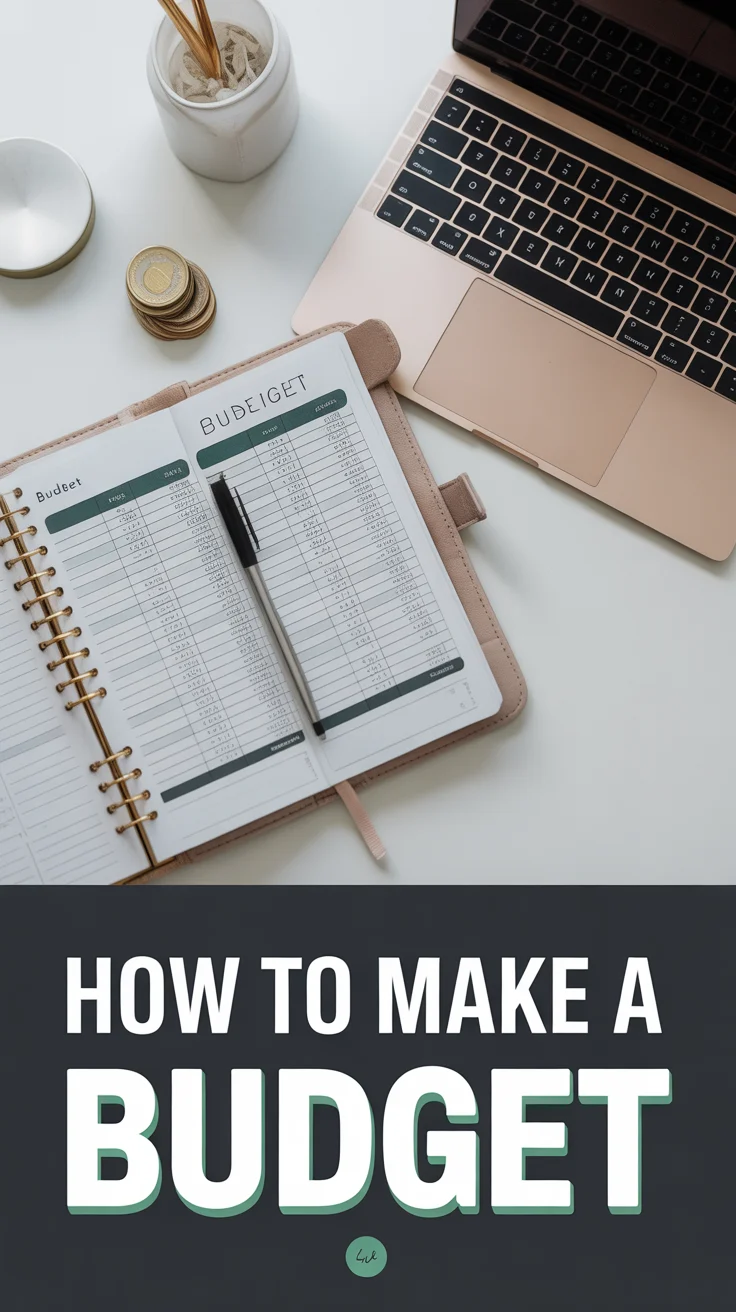
💰 How To Make A Budget
📚 The Financial Literacy Library
The best investment you can ever make is in your own financial education. These 5 cornerstone books are what millionaires, financial advisors, and wealth-builders universally recommend for completely rewiring how you think about earning, saving, and investing money.
🧠 The Psychology of Money
Doing well with money isn't necessarily about what you know—it's about how you behave. Morgan Housel masterfully breaks down the emotional and psychological biases that secretly dictate our financial decisions, offering a true paradigm shift in how to view wealth.
🏠 Rich Dad Poor Dad
The #1 personal finance book of all time for a reason. This foundational read shatters the myth that you need to earn a high income to be rich, teaching you the critical difference between working for money and making your money work for you via assets.
📈 Atomic Habits
While not strictly a finance book, building wealth is absolutely dependent on the daily habits you cultivate. James Clear provides the definitive framework for breaking bad spending habits and effortlessly automating the good ones that lead to long-term success.
📊 The Simple Path to Wealth
The ultimate antidote to complex, intimidating financial advice. JL Collins provides an incredibly accessible, low-stress roadmap to financial independence through index fund investing, perfectly explaining why simplicity beats Wall Street complexity every time.
💳 I Will Teach You to Be Rich
A tactical, no-BS, 6-week program that actually works. Ramit Sethi teaches you how to crush debt, automate your savings, and negotiate your salary—all while guilt-free spending on the things you truly love. A must-read for modern money management.
Are you tired of feeling like your money has a mind of its own, disappearing before you even know where it went? Imagine a world where you’re in the driver’s seat, confidently steering your finances towards your dreams, rather than constantly reacting to unexpected bumps in the road. Learning how to make a budget isn’t about deprivation; it’s about empowerment, giving you the clarity and control to build the financial future you truly desire.
Quick Overview
This guide will walk you through creating a personalized budget that works for you, transforming financial stress into financial peace and paving the way for achieving your biggest money goals, from saving for a down payment to early retirement. You’ll gain a clear understanding of your income and expenses, learn to identify areas for smart savings, and develop a wealth-building mindset that lasts a lifetime.
Time needed: 1-2 hours for initial setup, then 30 minutes weekly/monthly for maintenance.
Difficulty: Beginner
What you’ll need: Access to your bank statements, credit card statements, pay stubs, and a spreadsheet (like Google Sheets or Excel), a notebook, or a budgeting app.
Step-by-Step Instructions
Step 1: Gather Your Financial Intel
Before you can chart a course, you need to know your starting point. This initial step is all about collecting the raw data that will form the foundation of your budget. Think of yourself as a financial detective, meticulously gathering clues about your money’s comings and goings.
Start by collecting all relevant documents for the past 1-3 months:
- Bank Statements: For all checking and savings accounts.
- Credit Card Statements: For all cards you use.
- Pay Stubs: Or any other documentation of your income.
- Loan Statements: Mortgages, car loans, student loans, personal loans.
- Utility Bills: Electricity, gas, water, internet, phone.
This might seem tedious, but it’s crucial. Don’t skip this step! It provides an unfiltered look at your financial reality, often revealing spending patterns you weren’t even aware of. The more data you have, the more accurate and effective your budget will be.
Pro tip: If you use online banking, most of this information can be downloaded as a CSV file, making it easier to import into a spreadsheet later.
Step 2: Calculate Your Total Income
Now that you have your data, let’s figure out exactly how much money is flowing into your accounts. This is your “net income” or “take-home pay” – the amount you actually receive after taxes, benefits, and other deductions.
List all sources of income:
- Primary Job: Your regular salary or hourly wages.
- Side Hustles: Freelance work, gig economy earnings, etc.
- Rental Income: If you own property.
- Benefits: Social Security, disability, unemployment.
- Alimony/Child Support: If applicable.
- Other Regular Income: Any consistent money you receive.
Sum these up to get your total monthly income. If your income varies significantly month-to-month (e.g., you’re a freelancer or work on commission), it’s wise to calculate an average over the past 3-6 months. This gives you a more realistic baseline to work with. Remember, it’s better to underestimate your income slightly and be pleasantly surprised than to overestimate and fall short.
Step 3: Track and Categorize Your Spending
This is where many people get an eye-opening reality check. Using your gathered statements, meticulously list out every expense. This is not about judgment; it’s about awareness.
Divide your expenses into two main categories:
- Fixed Expenses: These are costs that generally stay the same each month and are difficult to change in the short term.
- Rent/Mortgage
- Loan Payments (car, student, personal)
- Insurance Premiums (health, car, home)
- Subscription Services (Netflix, gym membership, software)
- Minimum Credit Card Payments
- Variable Expenses: These costs fluctuate from month to month and offer the most flexibility for adjustment.
- Groceries
- Dining Out
- Utilities (electricity, gas – these can vary seasonally)
- Transportation (gas, public transit, ride-sharing)
- Entertainment
- Clothing
- Personal Care
- Miscellaneous/Shopping
Go through each transaction on your bank and credit card statements and assign it a category. Be as specific as you can. For example, don’t just put “shopping” if you can differentiate between “clothing” and “home goods.” Seeing where your money truly goes is the first step to taking control.
Pro tip: Many budgeting apps or even your bank’s online platform can help automate some of this categorization, but it’s still a good idea to review it manually, especially at first, to ensure accuracy and understanding.
Step 4: Analyze Your Cash Flow (Income – Expenses)
Now for the moment of truth: subtract your total monthly expenses from your total monthly income.
If Income – Expenses > 0: Congratulations! You have a surplus. This means you’re spending less than you earn, which is the ideal position. This surplus can be directed towards savings, debt repayment, or investments.
If Income – Expenses < 0: Don’t panic, but this indicates you’re spending more than you earn. This is a common situation, and identifying it is the first step to fixing it. Your budget will help you pinpoint where to make adjustments.
If Income – Expenses = 0: You’re breaking even. While not ideal for building wealth, it means you’re not going into debt.
Understanding your cash flow is critical. It tells you whether your current spending habits are sustainable and whether you have room to achieve your financial goals. This step shifts your perspective from just tracking to actively understanding your financial health.
Step 5: Create Your Budget Categories & Set Limits
This is where you become the architect of your financial future. Based on your historical spending and your cash flow analysis, it’s time to intentionally allocate your money. The goal is to make your budget a forward-looking plan, not just a backward-looking report.
Assign a specific dollar amount to each spending category. A popular framework to consider is the 50/30/20 rule:
- 50% for Needs: Housing, utilities, groceries, transportation, insurance, minimum loan payments.
- 30% for Wants: Dining out, entertainment, hobbies, shopping, vacations, subscriptions.
- 20% for Savings & Debt Repayment: Emergency fund, retirement, investments, extra debt payments.
This rule is a guideline, not a strict law. Adjust it to fit your unique circumstances. If you have significant debt, you might aim for 30% or more towards debt repayment. If your cost of living is high, your “needs” might take up more than 50%. The key is to be realistic and honest with yourself.
For variable expenses, set an initial limit that feels achievable based on your past spending. If you consistently spent $600 on groceries, try setting a limit of $550 or $500, rather than an unrealistic $200. Small, sustainable changes lead to long-term success.
Pro tip: Build a “buffer” or “miscellaneous” category into your budget for unexpected small expenses. This prevents you from derailing your budget when minor surprises pop up.
Step 6: Put Your Budget into Action
A budget is just a plan until you start living by it. This is the implementation phase where you actively manage your spending according to your new limits.
Choose your budgeting tool:
- Spreadsheet: Offers maximum customization (Google Sheets, Excel).
- Budgeting App: Many popular options like Mint, YNAB (You Need A Budget), Personal Capital, or Simplifi can link to your bank accounts for automated tracking.
- Notebook & Pen: Simple, effective, and great for visual learners.
The best tool is the one you’ll actually use consistently. Start tracking every dollar you spend against your budgeted categories. This means checking your budget before making purchases, not just after. This proactive approach is what gives you control.
Step 7: Monitor and Adjust Regularly
Your budget isn’t a set-it-and-forget-it document; it’s a living, breathing tool that needs regular attention. Life happens, and your budget needs to adapt.
Weekly Check-in: Spend 15-30 minutes each week reviewing your spending. Are you on track for your monthly limits? Did you overspend in one area? Where can you cut back to compensate?
Monthly Review: At the end of each month, take a deeper dive. How did you perform overall? What worked well? What didn’t? Adjust your category limits for the next month based on your actual spending and any changes in your income or financial goals.
Quarterly/Annually: Review your larger financial goals. Have they changed? Are you making progress? Consider how seasonal expenses (holidays, vacations, car maintenance) impact your budget.
Flexibility is crucial. If you constantly overspend in a category, either find ways to genuinely reduce that spending or adjust the budget limit to be more realistic. A budget that’s too restrictive will only lead to frustration and abandonment.
Step 8: Set Financial Goals & Automate Savings
Your budget is a tool to achieve your dreams. Give your money a purpose beyond just covering bills.
Identify clear, measurable financial goals:
- Emergency Fund: Aim for 3-6 months of living expenses. This is non-negotiable financial security.
- Debt Repayment: Prioritize high-interest debt (credit cards, personal loans).
- Down Payment: For a house, car, or other large purchase.
- Investments: Retirement (401k, IRA), brokerage accounts.
- Vacation/Large Purchase: Specific savings targets.
Once you have your goals, automate your savings. Set up automatic transfers from your checking account to your savings or investment accounts immediately after you get paid. This is often called “paying yourself first” and is one of the most powerful wealth-building strategies. When the money is moved before you have a chance to spend it, you learn to live on what’s left.
Pro tip: Consider opening separate savings accounts for different goals (e.g., “Emergency Fund,” “Vacation Fund,” “Down Payment Fund”). This makes tracking progress and avoiding temptation much easier.
Step 9: Celebrate Small Wins (and Learn from Setbacks)
Budgeting is a journey, not a destination. There will be months where you nail it, and months where you fall short. Both are opportunities for growth.
Celebrate Successes: Did you stick to your grocery budget? Did you hit a savings goal? Acknowledge these achievements! This positive reinforcement will keep you motivated. A small, non-budget-breaking reward can be a great motivator.
Learn from Setbacks: If you overspent, don’t beat yourself up. Instead, analyze why it happened. Was it an unexpected expense? Was a category limit too low? Did you simply lose track? Use these insights to adjust your budget and strategy for the next month. Every “mistake” is a valuable lesson.
Remember, the goal isn’t perfection, it’s progress. Consistency and a willingness to learn are far more important than a flawless budget every single month.
Common Mistakes to Avoid
Here are some common pitfalls beginners encounter when budgeting and how to navigate them:
- Being Too Restrictive: Trying to cut every “want” out of your budget overnight is a recipe for burnout. You’ll feel deprived and quickly abandon the process.
- Why it’s problematic: Unsustainable cuts lead to resentment and often result in binge spending, derailing your progress entirely.
- Correct approach: Start with small, sustainable cuts. Allow for some “fun money” or “wants” in your budget. It’s about balance, not deprivation. Gradually reduce these categories as you get more comfortable.
- Not Tracking Every Expense: It’s easy to forget about those small, seemingly insignificant purchases – the daily coffee, the vending machine snack, the impulse buy at the checkout. These “mystery expenses” add up quickly.
- Why it’s problematic: If you don’t know where every dollar goes, your budget will always have holes, making it inaccurate and ineffective.
- Correct approach: Be diligent. Track every single transaction, no matter how small. Use an app that links to your bank, carry a small notebook, or save all your receipts. Awareness is key.
- Giving Up After One Bad Month: You overspent in three categories, or an unexpected bill threw everything off. It’s easy to feel defeated and think budgeting isn’t for you.
- Why it’s problematic: Budgeting is a skill that takes practice. Expecting perfection from the start is unrealistic and will lead to premature abandonment.
- Correct approach: View budgeting as an iterative process. Learn from your “bad” months, adjust your strategy, and commit to trying again next month. Consistency over time yields the best results.
- Ignoring Irregular Expenses: Things like annual car registration, holiday gifts, or semi-annual insurance premiums can blindsight your monthly budget if you don’t plan for them.
- Why it’s problematic: These larger, less frequent expenses can blow a hole in your budget, forcing you to use savings or go into debt.
- Correct approach: Create a separate category for “irregular expenses” or “sinking funds.” Estimate these annual costs, divide by 12, and save that amount each month. For example, if car registration is $360/year, save $30/month.
Troubleshooting
Even with the best intentions, you might run into some common issues. Here’s how to tackle them:
- “I always overspend in one category!”
- Solution: First, be honest: is the limit too low, or are your habits problematic? If the limit is truly unrealistic for your lifestyle, adjust it slightly. Then, look for alternatives: can you meal prep instead of dining out? Find free entertainment options? If it’s a habit issue, try a “no-spend” challenge for a week in that category, or use the “envelope system” for cash-based categories to visually limit spending.
- “My budget feels too tight, I can’t save anything.”
- Solution: This indicates a larger imbalance. You either need to increase your income or significantly decrease your expenses. Review your “wants” category first for deeper cuts. Can you negotiate any bills (internet, insurance)? Explore options for a side hustle to boost income. If fixed expenses are the issue, consider larger changes like downsizing your living situation or selling a second car.
- “I forget to track my spending.”
- Solution: Make it a habit. Set a daily reminder on your phone. If using an app, check it before and after purchases. If you prefer manual tracking, keep a small notebook in your wallet. For card purchases, many apps can automatically import and categorize, requiring less manual input. The key is finding a system that fits your lifestyle and making it non-negotiable.
Key Takeaways
Budgeting is About Control, Not Restriction: It empowers you to direct your money purposefully.
Know Your Numbers: Accurately track all income and expenses to understand your financial reality.
Be Intentional with Your Spending: Allocate funds to categories based on your values and goals.
Consistency is Key: Regularly monitor and adjust your budget; it’s a living document.
Automate Your Savings: Pay yourself first to build wealth effortlessly.
Set Clear Financial Goals: Give your money a purpose beyond just existing.
* Learn and Adapt: Celebrate wins, learn from setbacks, and continuously refine your approach.
Frequently Asked Questions
- How often should I check my budget?
Ideally, a quick check-in 2-3 times a week to see where you stand in your categories is excellent. A more thorough review and adjustment should be done at least once a month, typically before the start of a new month, to plan effectively.
- What’s the best budgeting app?
The “best” app is subjective and depends on your needs. Popular choices include YNAB (You Need A Budget) for its “zero-based budgeting” philosophy, Mint for free tracking and categorization, and Personal Capital for investment tracking alongside budgeting. Many banks also offer integrated budgeting tools. Try a few free trials to see which interface and features resonate with you.
- Is a budget only for people with debt?
Absolutely not! While budgeting is critical for getting out of debt, it’s equally important for building wealth. It helps you save for goals, invest wisely, and ensure your money is working for you, regardless of your current financial standing.
- What if my income changes constantly?
If you have variable income (e.g., freelance, commission-based), it’s best to budget based on your lowest realistic monthly income. Any extra income can then be treated as a bonus, immediately directed towards savings, debt, or an “income buffer” category for leaner months. Another strategy is to average your income over the past 3-6 months to create a more stable baseline.
What’s Next?
You’ve taken the crucial first step towards financial mastery by learning how to make a budget. But the journey doesn’t end here! Once you’re consistently budgeting, consider exploring these related topics to further enhance your financial well-being:
- Debt Payoff Strategies: If you have debt, research methods like the “snowball” or “avalanche” method to accelerate your repayment.
- Investing for Beginners: Start learning about different investment vehicles like stocks, bonds, mutual funds, and ETFs. Even small, consistent investments can grow significantly over time.
- Building Multiple Income Streams: Explore side hustles or passive income opportunities to increase your financial resilience and accelerate your wealth accumulation.
- Financial Planning for the Future: Look into retirement planning, estate planning, and long-term financial goal setting.
Don’t let another day go by feeling uncertain about your money. Take control, start building your budget today, and unlock the financial freedom you deserve. Your future self will thank you.