
💰 52 Week Money Saving Challenge Printable
In a world brimming with financial goals – from building an emergency fund to saving for a dream vacation, a down payment, or even early retirement – the journey to financial security often feels daunting. The sheer scale of the numbers can be intimidating, leading many to postpone saving or give up altogether. But what if there was a simple, engaging, and highly effective way to build a robust savings habit, one small step at a time? Enter the 52 Week Money Saving Challenge Printable. This isn’t just another financial fad; it’s a proven, approachable system that breaks down a colossal goal into manageable weekly actions, making saving money not only achievable but also incredibly rewarding. It’s a testament to the power of consistency and visualization, transforming abstract financial aspirations into concrete, trackable progress. If you’re ready to transform your financial habits and watch your savings grow, this guide will walk you through everything you need to know to conquer the 52 Week Money Saving Challenge.

What is 52 Week Money Saving Challenge Printable?

At its core, the 52 Week Money Saving Challenge is a structured plan designed to help you save a significant amount of money over the course of one year. The “52 Week” part refers to the number of weeks in a year, and the “Money Saving Challenge” is the commitment to set aside a specific amount of money each week. The “Printable” aspect is crucial: it’s a visual tracker, usually a spreadsheet or a beautifully designed chart, that allows you to mark off each week’s contribution as you make it. This visual progress is a powerful motivator, turning an abstract financial goal into a tangible game.
The most common version of the challenge starts small and gradually increases the savings amount. For example, in Week 1, you save $1; in Week 2, you save $2; in Week 3, you save $3, and so on, until Week 52, where you save $52. By the end of the year, following this ascending pattern, you will have saved a grand total of $1,378. This method is incredibly appealing because it eases you into the habit, with the smallest contributions coming at the beginning when motivation might be highest but the habit isn’t fully formed.
However, the beauty of the 52 Week Money Saving Challenge lies in its flexibility. There are several popular variations:
- The Reverse Challenge: This version starts with the largest amount in Week 1 ($52) and decreases each week (e.g., $51 in Week 2, $50 in Week 3, down to $1 in Week 52). This can be ideal for those who feel more financially robust at the beginning of the year, perhaps after a holiday bonus or tax refund, and prefer to get the heavier lifting out of the way. It also makes the end of the year, often a period of increased spending due to holidays, much easier on your wallet.
- The Random Challenge: With this approach, you pick any un-saved amount from your printable each week. If you have an unexpected windfall in Week 10, you might decide to save $45, even if the “standard” challenge only calls for $10. This offers maximum flexibility and allows you to capitalize on weeks when you have extra cash.
- The Fixed Amount Challenge: If the varying amounts feel too complex, you can simply choose a fixed amount to save each week, say $20. Over 52 weeks, this would net you $1,040. While it might not have the same “gamified” feel, it’s straightforward and incredibly effective for consistent savers.
Regardless of the variation you choose, the core principle remains: consistent, incremental saving, visually tracked, leading to a substantial sum by the end of the year. It’s a powerful tool for anyone looking to kickstart their savings journey without feeling overwhelmed.
Key Features
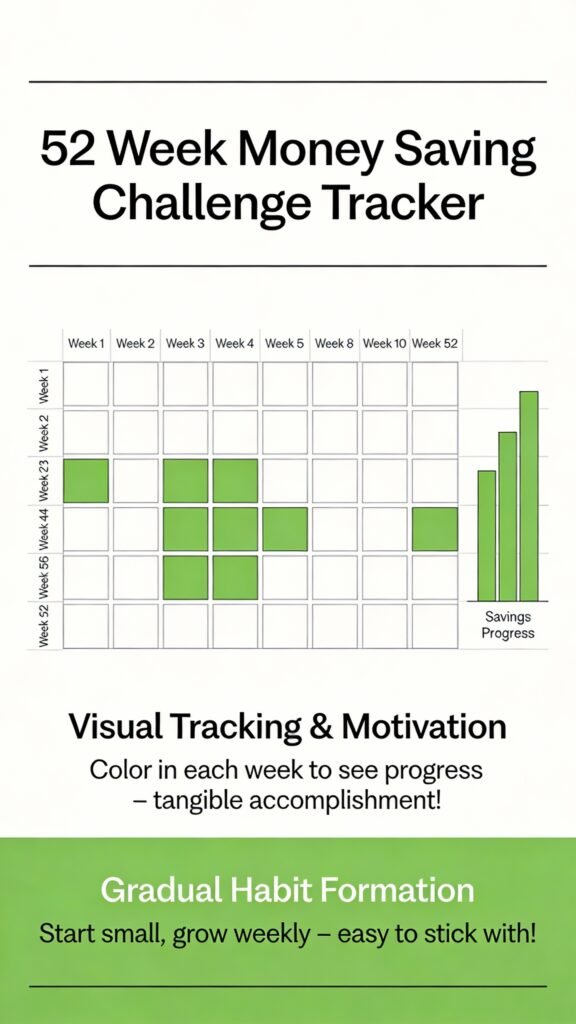
The enduring popularity of the 52 Week Money Saving Challenge Printable isn’t just about the final dollar amount; it’s about the powerful features and psychological benefits it offers. These elements combine to create a highly effective and sustainable saving strategy:
- Visual Tracking and Motivation: This is arguably the most powerful feature. A printable tracker allows you to physically check off or color in each week’s contribution. Seeing your progress visually – a growing number of colored squares, a rising bar chart – provides a tangible sense of accomplishment and fuels motivation. It transforms an abstract goal into a concrete, visible journey, making it easier to stay committed.
- Gradual Habit Formation: Especially with the ascending challenge, you start with very small, almost unnoticeable amounts. This gentle introduction helps you build the habit of transferring money each week without feeling a significant pinch. Over time, as the amounts increase, the habit is already ingrained, making it easier to adjust to larger contributions. This incremental approach is key to long-term behavioral change.
- Achievable and Tangible Goals: Instead of a daunting “save $1,378 this year,” the challenge breaks it down into “save $1 this week,” “save $2 next week,” and so on. Each weekly goal is small, clear, and perfectly achievable. This micro-goal approach reduces overwhelm and builds confidence with every successful week.
- Flexibility and Customization: As discussed, you’re not locked into one specific method. You can choose ascending, descending, random, or a fixed amount. You can even create your own custom challenge based on your income and financial goals. This adaptability ensures the challenge can fit almost any budget and lifestyle, increasing its likelihood of success.
- Mindset Shift and Financial Awareness: Actively participating in the challenge forces you to think about your money weekly. It encourages you to review your spending, look for small ways to cut back, and become more intentional about your finances. This consistent engagement fosters a healthier money mindset, moving you from passive spending to active saving and financial planning. It helps you understand the concept of “paying yourself first” and prioritizes your financial future.
- Emergency Fund Builder: For many, the accumulated sum becomes the foundation of an emergency fund, providing a crucial safety net against unexpected expenses. This peace of mind is invaluable and often the first step towards broader financial security.
These features work in synergy to not only help you save money but also to cultivate lasting financial discipline and a more proactive approach to your personal finances.
How to Get Started
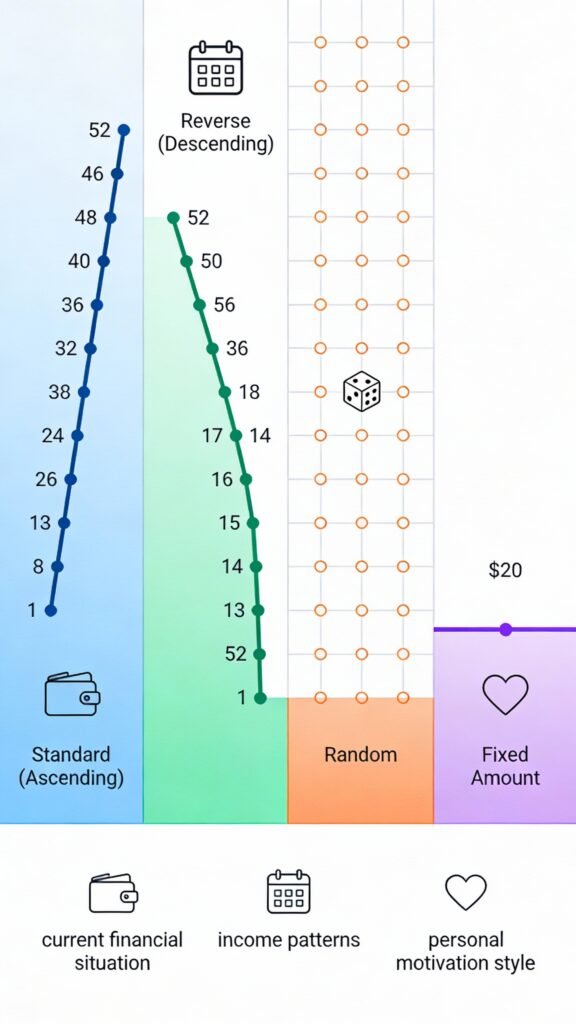
Embarking on your 52 Week Money Saving Challenge is straightforward, but a little preparation goes a long way in ensuring your success. Here’s a step-by-step guide to help you begin:
- Choose Your Challenge Variation:
- Standard (Ascending): Save $1, then $2, then $3… up to $52. Eases you in.
- Reverse (Descending): Save $52, then $51, then $50… down to $1. Good if you have more disposable income early in the year.
- Random: Pick any unsaved amount from your list each week. Offers maximum flexibility.
- Fixed Amount: Choose a consistent amount (e.g., $20) to save every week. Simplest approach.
Consider your current financial situation, your income patterns throughout the year, and your personal motivation style.
- Find or Create Your Printable Tracker:
- Online Resources: A quick search for “52 Week Money Saving Challenge Printable” will yield countless free templates on personal finance blogs, Pinterest, Etsy, and dedicated financial websites. Look for one that visually appeals to you and matches your chosen challenge variation.
- DIY: If you’re feeling creative, you can easily create your own simple tracker using a spreadsheet program or even just a notebook. List 52 weeks and the corresponding savings amount for each.
The key is to have a physical or digital document you can actively mark.
- Designate a Savings Account:This is crucial. Set up a separate savings account specifically for your challenge money. This account should ideally be:
- Separate from your checking account: Out of sight, out of mind (and out of reach for impulse spending).
- Difficult to access instantly: While you don’t want it locked away completely, avoid linking it directly to your debit card for easy withdrawals.
- No-fee and interest-bearing: Even a small interest rate can add up over time.
Giving your savings a dedicated home makes it feel more real and protects it from everyday expenses.
- Set a Start Date:While many people start in January, you can begin the 52 Week Money Saving Challenge any time of year! The important thing is to pick a specific date and commit to it. Consider starting on a payday to make the transfer seamless.
- Automate Your Savings (Optional, but Recommended):If your bank allows it, set up an automatic transfer for your weekly savings amount. For the standard or reverse challenge, you might need to manually adjust this each week. However, for a fixed amount challenge, automation is a game-changer. Automation removes the decision-making and effort, ensuring consistency even when life gets busy.
- Display Your Printable Prominently:Print out your tracker and put it somewhere you’ll see it regularly – on your fridge, above your desk, or inside your planner. This constant visual reminder will keep your goal top of mind and motivate you to stay on track.
With these steps completed, you’re ready to start your journey to a fatter savings account and a healthier financial future!
Tips for Success

While the 52 Week Money Saving Challenge is designed to be straightforward, incorporating a few strategic tips can significantly boost your success rate and make the journey even more rewarding:
- Automate Your Transfers (Whenever Possible): This is perhaps the most powerful tip. If your bank allows it, set up recurring transfers for your weekly savings. For the standard ascending/descending challenge, you might need to adjust the amount each week, but for a fixed amount challenge, automation is a “set it and forget it” superpower. It eliminates procrastination and ensures consistency.
- Find an Accountability Partner: Share your challenge with a trusted friend, family member, or partner. Regularly checking in with each other, sharing progress, and offering encouragement can provide a huge motivational boost. Knowing someone else is aware of your goal makes you more likely to stick to it.
- Make it Visible and Fun: As mentioned, display your printable prominently. Beyond that, make the tracking itself enjoyable. Use colorful pens, stickers, or even a small celebratory ritual each time you mark off a week. Gamifying the process can make it feel less like a chore and more like a personal achievement.
- Don’t Be Afraid to Adjust and Catch Up: Life happens. There will be weeks when an unexpected expense arises, or your budget feels tighter than usual. Don’t let one missed week derail your entire challenge. Instead:
- Catch Up: If you miss a week, try to make up the amount in a subsequent week when you have extra cash.
- Adjust: If you know a particular week will be tough, look ahead and save that amount early, or save a smaller amount and make up the difference later.
- Embrace Flexibility: This is where the “random” challenge can be very useful. If you have an unexpected bonus or find extra cash, save a larger amount from your list, even if it’s not the “assigned” week for it.
The goal is progress, not perfection.
- Connect Your Savings to a Specific Goal: While building an emergency fund is a fantastic default, having a more specific, exciting goal can provide extra motivation. Are you saving for a down payment, a dream trip, a new gadget, or a special experience? Visualize what that money will achieve. This “why” will keep you going when motivation wanes.
- Review Your Budget Regularly: To consistently find the money for your weekly contributions, occasionally review your spending. Look for small, painless cuts you can make – perhaps skipping one takeout meal a week, brewing coffee at home, or reviewing unused subscriptions. These small adjustments can easily free up the necessary funds.
By implementing these tips, you’ll not only complete the 52 Week Money Saving Challenge but also cultivate sustainable financial habits that will serve you well for years to come.
Common Mistakes to Avoid

Even with the best intentions, it’s easy to stumble on your savings journey. Being aware of common pitfalls can help you navigate them more effectively and stay on track with your 52 Week Money Saving Challenge:
- Starting Too Ambitiously (Without a Plan): While enthusiasm is great, jumping into the reverse challenge (starting with $52) without a clear understanding of your budget or income flow can lead to early burnout. Assess your financial reality honestly before choosing a strategy. It’s better to start small and succeed than to aim high and fail.
- Forgetting to Track Your Progress: The “printable” aspect isn’t just a suggestion; it’s a core component of the challenge’s effectiveness. Neglecting to mark off your contributions regularly diminishes the visual motivation and makes it easy to lose track of where you are. Make tracking a non-negotiable part of your weekly routine.
- Dipping into Your Savings Early: This is a major challenge killer. Once you’ve transferred money to your dedicated savings account, treat it as sacred. Resist the urge to withdraw funds for non-emergency reasons. If you constantly pull from your savings, you undermine the purpose of the challenge and erode your financial discipline.
- Not Adjusting for Lean Weeks: Life is unpredictable. There will be weeks with unexpected expenses or lower income. A common mistake is to simply give up when a week feels too tight. Instead of quitting, embrace flexibility. Can you save half the amount this week and make up the difference next? Can you swap a difficult week with an easier one from later in the challenge? Adaptability is key.
- Not Having a Dedicated Savings Account: Commingling your challenge savings with your everyday checking account is a recipe for disaster. The money becomes too easily accessible and indistinguishable from your spending funds. A separate account creates a clear boundary and reinforces the idea that this money is specifically for your savings goal.
- Giving Up After a Missed Week: One missed week does not equal failure. It’s a minor setback, not the end of the challenge. Many people make the mistake of throwing in the towel after missing a single contribution. Forgive yourself, learn from it, and get back on track the very next week. Consistency over time is more important than perfect adherence every single week.
- Ignoring Your Overall Budget: While the challenge focuses on savings, it shouldn’t exist in a vacuum. If you’re constantly struggling to find the weekly amount, it might indicate a broader budgeting issue. Use the challenge as a catalyst to review your entire financial picture and identify areas where you can optimize your spending.
By being mindful of these common mistakes, you can proactively avoid them and significantly increase your chances of successfully completing your 52 Week Money Saving Challenge.
FAQ

Navigating a new financial challenge often brings up questions. Here are some common inquiries about the 52 Week Money Saving Challenge Printable:
Q1: Can I start the 52 Week Money Saving Challenge at any time of the year?
Absolutely! While many people gravitate towards starting in January as a New Year’s resolution, there’s no rule that says you have to. You can begin Week 1 of your challenge on any day of any week you choose. The important thing is to pick a start date and stick to it for 52 consecutive weeks. This flexibility makes the challenge accessible year-round.

Q2: What if I miss a week or can’t afford the amount for a particular week?
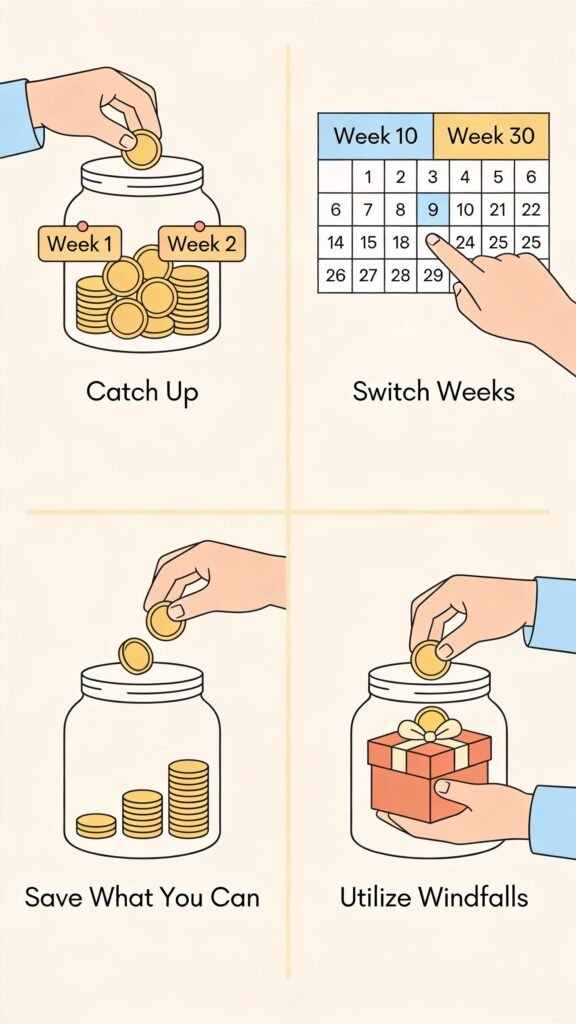
Don’t panic! Missing a week is not a reason to give up. Life happens, and budgets can be tight. Here are a few strategies:
- Catch Up: If you have extra funds in a subsequent week, try to contribute the missed amount in addition to the current week’s amount.
- Switch Weeks: If you’re doing the ascending or descending challenge, look ahead (or back) at your printable. If Week 30 ($30) is coming up but you know it will be tough, and Week 10 ($10) looks manageable, you can save $10 this week and “swap” it for Week 30’s amount later when your finances allow. Just make sure to clearly mark your printable so you don’t double-save or miss an amount.
- Save What You Can: Even if you can’t save the full amount, save a smaller portion. Any progress is better than no progress.
- Utilize Windfalls: If you receive an unexpected bonus, gift, or tax refund, use it to catch up on missed weeks or “pre-pay” for future, more challenging weeks.
The goal is consistency over perfection.
Q3: How much money will I save by completing the standard 52 Week Money Saving Challenge?

If you follow the standard ascending challenge (saving $1 in Week 1, $2 in Week 2, up to $52 in Week 52), you will save a grand total of $1,378 by the end of the 52 weeks. This amount can vary if you choose a different variation, such as a fixed amount each week, but the standard challenge yields a significant sum for many.
Q4: Where can I find a good printable tracker, or can I make my own?
You have plenty of options!
- Online Search: A quick search on Google or Pinterest for “52 Week Money Saving Challenge Printable” will bring up hundreds of free templates from personal finance blogs, graphic designers, and financial websites.
- Etsy: Many designers offer beautifully crafted, low-cost printable trackers for a few dollars.
- Create Your Own: If you’re comfortable with spreadsheets (like Excel or Google Sheets) or even just a pen and paper, you can easily create your own. Simply list 52 weeks and the corresponding amounts for your chosen challenge. The beauty of DIY is that you can customize it exactly to your liking.
The most important thing is that it’s clear, easy to use, and motivates you to track your progress.
Conclusion
The 52 Week Money Saving Challenge Printable is more than just a savings plan; it’s a powerful tool for cultivating financial discipline, building confidence, and achieving tangible financial goals. By breaking down a seemingly daunting task into small, manageable weekly actions, it makes saving money accessible to everyone, regardless of their current financial standing. It’s a testament to the idea that small, consistent steps can lead to significant results over time. Whether you’re aiming to build an emergency fund, save for a dream purchase, or simply kickstart a healthier relationship with your money, this challenge provides a clear, motivating pathway.
Remember, success isn’t about perfection; it’s about consistency, adaptability, and a commitment to your financial future. Embrace the visual tracking, celebrate your small victories, learn from any setbacks, and keep your “why” at the forefront of your mind. By the end of 52 weeks, you won’t just have a fatter savings account; you’ll have cultivated invaluable money-smart habits that will serve you for a lifetime. So, download that printable, set up your dedicated savings account, and take that first small step today. Your future self will thank you for it!