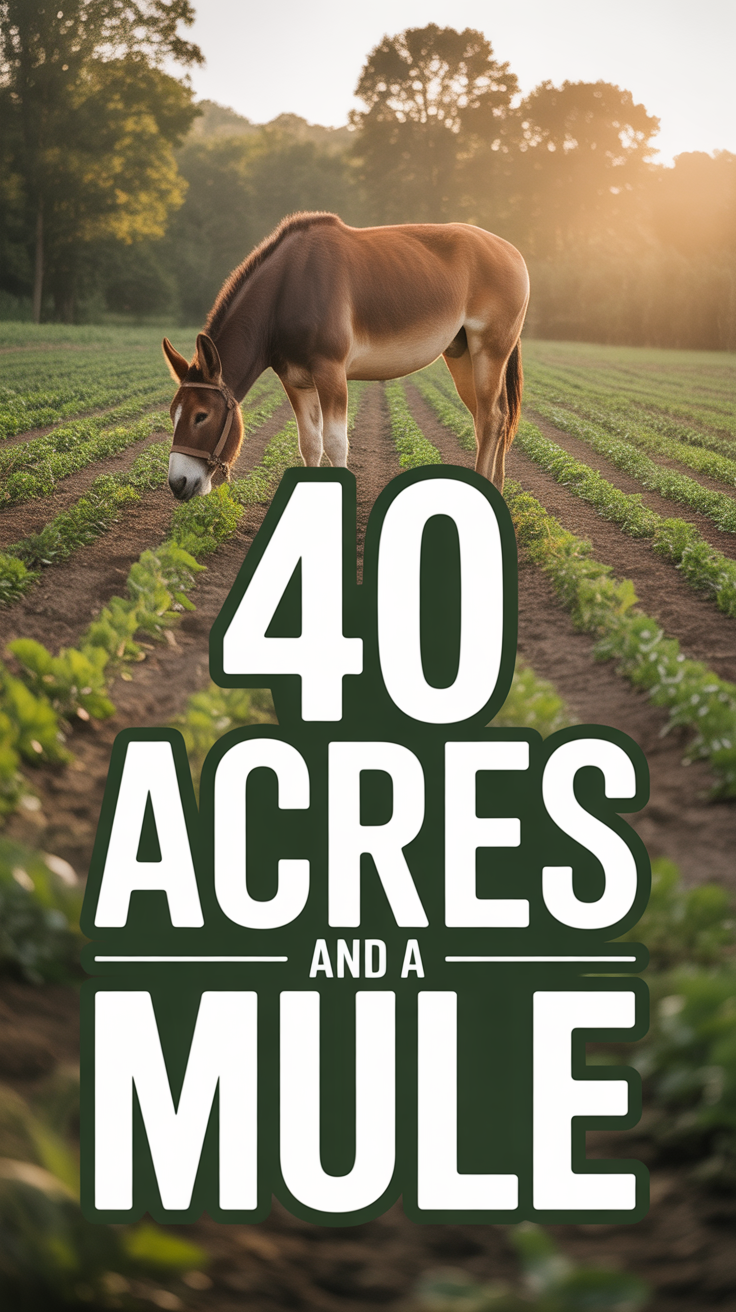
🌱 40 Acres And A Mule
Ever heard the phrase “40 Acres And A Mule” and wondered what it truly means, especially in today’s world? It’s a powerful saying, rooted deeply in American history, representing a promise of economic freedom and self-sufficiency that, for many, was tragically unfulfilled. Yet, its spirit lives on, evolving into a potent metaphor for financial independence, wealth building, and creating a secure future for yourself and your loved ones. In a world where financial security often feels like a distant dream, understanding the modern interpretation of “40 Acres And A Mule” can be your roadmap to building your own legacy of prosperity.
This guide isn’t about literal land or livestock; it’s about cultivating your financial garden, planting seeds of smart decisions, and watching your wealth grow. We’ll explore how to transform this historical concept into practical, actionable strategies for saving, budgeting, investing, and developing a resilient money mindset. Get ready to embark on a journey towards your own version of financial freedom, equipped with the knowledge and tools to make your money work harder for you, not the other way around. Let’s dig in!
What is 40 Acres And A Mule?
To truly grasp the modern significance of “40 Acres And A Mule,” it’s essential to understand its historical origins. The phrase stems from Special Field Orders No. 15, issued by Union General William T. Sherman in January 1865, towards the end of the American Civil War. This order designated a strip of land along the coast of South Carolina, Georgia, and Florida for the settlement of freed slave families. Each family was promised “not more than forty acres of tillable ground” and the army’s surplus mules, symbolizing the tools needed for farming and self-sufficiency. This was a monumental, albeit brief, promise of economic autonomy and a fresh start for those who had endured generations of enslavement.
However, this promise was largely reversed by President Andrew Johnson shortly after Abraham Lincoln’s assassination, leading to the return of much of the land to its former owners. For many freed slaves, the dream of owning land and building independent lives was crushed, leaving a lasting legacy of injustice and economic disparity that continues to echo today. The phrase thus became a powerful symbol of a broken promise, representing the systemic barriers to wealth and opportunity faced by African Americans.
In our contemporary context, “40 Acres And A Mule” has transcended its literal meaning to become a powerful metaphor for financial independence, security, and generational wealth. It’s no longer about a specific plot of land or an animal; it’s about owning your financial destiny. It represents:
- Financial Freedom: The ability to make choices about your life without being dictated by financial constraints.
- Asset Building: Accumulating tangible and intangible assets—like real estate, investments, a thriving business, or valuable skills—that provide security and growth.
- Self-Sufficiency: Having the knowledge, resources, and systems in place to support yourself and your family.
- Legacy Creation: Building wealth and opportunities that can be passed down to future generations, breaking cycles of poverty and fostering lasting prosperity.
Think of your “40 Acres” as your diversified portfolio of investments, your emergency savings, your debt-free status, and your income-generating skills. Your “mule” is the consistent income, smart financial habits, and strategic tools that help you cultivate and grow those acres. It’s about empowering yourself to build a future where you are the owner, not just a tenant, in your financial life.
Key Features
Achieving your modern “40 Acres And A Mule” isn’t a single event; it’s a journey comprised of several interconnected features that collectively build a strong financial foundation. These are the pillars of financial independence and wealth creation:
- Financial Independence & Security: This is the ultimate goal. It means having enough passive income or accumulated wealth that you no longer need to work to cover your living expenses. It’s about freedom of choice—the choice to pursue passions, spend more time with family, or retire early. Beyond independence, it’s about security, knowing you have a robust emergency fund and insurance to weather any storm.
- Asset Building & Ownership: Your “acres” are your assets. This includes tangible assets like real estate (your home, rental properties), and intangible assets like stocks, bonds, mutual funds, ETFs, and even your own business. The key is to own assets that appreciate in value or generate income, rather than just liabilities that cost you money.
- Debt Freedom: A heavy cart of high-interest debt can make even the strongest “mule” falter. Achieving debt freedom, especially from consumer debt like credit cards, frees up significant cash flow that can then be redirected towards savings and investments. It reduces financial stress and allows your money to work for you, not for your creditors.
- Generational Wealth Creation: This goes beyond just your lifetime. It’s about establishing a financial legacy that can benefit your children, grandchildren, and beyond. This involves not only accumulating assets but also imparting financial literacy and smart money habits to future generations, ensuring they have a stronger starting point than you did.
- Consistent Income & Smart Financial Tools: This is your “mule”—the engine that pulls your financial cart. It’s about having a stable income stream (or multiple streams) and employing smart financial tools like automated savings, investment platforms, budgeting apps, and tax-advantaged accounts (401k, IRA). These tools automate good habits and maximize your money’s potential.
- Financial Literacy & Mindset: Perhaps the most crucial feature, this involves continuously educating yourself about personal finance and cultivating a growth-oriented, disciplined money mindset. Understanding how money works, making informed decisions, and having the perseverance to stick to your plan are invaluable.
How to Get Started
The journey to your “40 Acres And A Mule” begins with a single step, and often, that step is simply getting organized. Here’s a practical roadmap to help you begin:
-
Assess Your Current Financial Landscape: You can’t chart a course without knowing your starting point. Gather all your financial documents: bank statements, credit card bills, loan statements, investment accounts, and pay stubs.
- Calculate Your Net Worth: List all your assets (what you own) and all your liabilities (what you owe). Subtract liabilities from assets. This number gives you a snapshot of your financial health.
- Track Your Spending: For a month or two, meticulously track every dollar you spend. This reveals where your money is actually going and highlights areas for potential savings.
-
Set Clear, Achievable Goals: What does your “40 Acres” look like? Be specific! Do you want to save for a down payment on a home, pay off all debt, retire by a certain age, or build a specific investment portfolio?
- Make Them SMART: Your goals should be Specific, Measurable, Achievable, Relevant, and Time-bound. For example, instead of “save more,” try “save $10,000 for a down payment in 18 months.”
-
Master Your Budget: This is the cornerstone of all wealth building. A budget isn’t about restriction; it’s about control and intention.
- Choose a Method: Explore options like the 50/30/20 rule (50% needs, 30% wants, 20% savings/debt), zero-based budgeting (every dollar has a job), or the envelope system (cash for categories). Pick one that resonates with you and stick to it.
- Prioritize Savings: Treat savings like a non-negotiable bill. Pay yourself first before anything else.
- Build Your Emergency Fund: This is your financial safety net, protecting your “acres” from unexpected storms. Aim to save 3-6 months’ worth of essential living expenses in an easily accessible, high-yield savings account. This fund prevents you from going into debt when life throws a curveball.
-
Tackle Debt Strategically: Not all debt is created equal. Prioritize high-interest debt first.
- Debt Avalanche: Pay off debts with the highest interest rates first, while making minimum payments on others. This saves you the most money in interest.
- Debt Snowball: Pay off the smallest debt first to gain momentum and motivation, then roll that payment into the next smallest.
-
Start Investing Early and Consistently: This is where your money truly starts to work for you, thanks to the magic of compounding. Even small amounts invested regularly can grow significantly over time.
- Utilize Retirement Accounts: Maximize contributions to tax-advantaged accounts like a 401(k) (especially if your employer offers a match – free money!) and an IRA.
- Diversify: Don’t put all your eggs in one basket. Consider low-cost index funds or ETFs that offer broad market exposure. You don’t need to be an expert stock picker; consistent investment in diversified funds is a proven strategy.
-
Increase Your Income: While cutting expenses is crucial, finding ways to earn more accelerates your progress.
- Negotiate Your Salary: Don’t be afraid to ask for what you’re worth.
- Develop New Skills: Invest in yourself through courses or certifications that can lead to higher-paying opportunities.
- Explore Side Hustles: Turn a hobby into an income stream or find part-time work that fits your schedule.
Tips for Success
Cultivating your “40 Acres And A Mule” requires more than just starting; it demands consistent effort and smart strategies. Here are some pro tips to keep you on the path to financial prosperity:
- Automate Your Savings & Investments: Make wealth building effortless. Set up automatic transfers from your checking account to your savings and investment accounts on payday. “Out of sight, out of mind” works wonders when it comes to saving. This ensures you consistently pay yourself first without having to think about it.
- Educate Yourself Continuously: The financial world is always evolving. Read books, listen to podcasts, follow reputable financial blogs, and attend webinars. The more you understand about personal finance, investing, and economic trends, the better equipped you’ll be to make informed decisions and adapt your strategies. Financial literacy is a lifelong journey.
- Live Below Your Means: This is arguably the simplest yet most powerful wealth-building hack. Regardless of how much your income grows, strive to keep your expenses lower than what you earn. Avoid lifestyle creep – the tendency to increase your spending as your income rises. Every dollar you don’t spend is a dollar you can save or invest, accelerating your journey to financial independence.
- Diversify Your Investments: Don’t put all your “seeds” in one “acre.” Spreading your investments across different asset classes (stocks, bonds, real estate, etc.) and industries helps mitigate risk. If one area performs poorly, others might perform well, balancing out your overall portfolio. This is a fundamental principle for long-term growth and stability.
- Protect Your Assets: Building wealth is fantastic, but protecting it is just as crucial. Ensure you have adequate insurance coverage—health, life, disability, home, and auto. These are not luxuries; they are essential safeguards against unforeseen events that could otherwise wipe out your hard-earned savings. Also, consider basic estate planning like a will to ensure your “acres” are distributed according to your wishes.
Common Mistakes to Avoid
While the path to financial freedom is clear, it’s also fraught with common pitfalls. Being aware of these mistakes can help you steer clear and keep your “mule” pulling strong:
- Ignoring Your Finances: Burying your head in the sand and avoiding looking at your bank statements or bills is a recipe for disaster. Ignorance is not bliss when it comes to money; it’s a fast track to financial stress and missed opportunities. Face your finances head-on, even if it’s uncomfortable at first.
- Lifestyle Creep: As mentioned earlier, this is a silent killer of wealth. When your income increases, it’s tempting to upgrade your lifestyle significantly—a bigger house, a fancier car, more expensive dining. While enjoying your success is important, if your expenses rise at the same rate (or faster) than your income, you’ll never get ahead. Remember to save and invest a significant portion of any pay raise.
- Accumulating High-Interest Debt: Credit card debt, payday loans, and other high-interest consumer debts are like weeds in your financial garden, choking out growth. The interest payments can be crippling, making it incredibly difficult to save or invest. Prioritize paying off these debts aggressively.
- Lack of an Emergency Fund: Without a financial safety net, any unexpected expense (job loss, medical emergency, car repair) can force you into debt, derailing all your progress. An emergency fund is non-negotiable for financial stability.
- Delaying Investment: The biggest advantage you have in investing is time. Thanks to the power of compound interest, money invested earlier has more time to grow exponentially. Waiting “until you have more money” often means missing out on years of potential growth. Start small, start now.
- Chasing Get-Rich-Quick Schemes: Be wary of anything promising guaranteed high returns with little to no risk. True wealth building is a marathon, not a sprint, built on consistent effort, smart decisions, and patience. Stick to proven, diversified investment strategies rather than speculative fads.
FAQ
Here are some common questions people ask when embarking on their journey to financial independence:
Q1: Is “40 Acres And A Mule” still relevant today?
A: Absolutely! While the literal promise wasn’t fulfilled for many, its metaphorical relevance is stronger than ever. Today, it represents the pursuit of financial independence, asset ownership, and the ability to control one’s economic destiny. It’s about building personal and generational wealth, ensuring security, and leaving a legacy, rather than relying on external promises.
Q2: How much money do I need to achieve my “40 Acres”?
A: There’s no fixed dollar amount, as “40 Acres” is a personal goal. It’s about achieving your definition of financial independence and security. For some, it might mean enough passive income to cover basic living expenses; for others, it’s a specific net worth target. The key is to define what financial freedom looks like for you, set SMART goals, and then work towards them consistently.
Q3: Can I really build wealth starting from scratch?
A: Yes, absolutely! Many successful wealth builders started with very little. The most crucial ingredients are discipline, consistency, financial education, and a willingness to make smart choices over time. It’s not about how much you start with, but how consistently and wisely you save and invest what you have, coupled with a strong desire to increase your income and reduce unnecessary expenses.
Q4: What’s the single most important thing I can do to start?
A: The single most important step is to start budgeting and saving consistently. Understand where your money is going, create a plan for it, and then commit to regularly setting aside a portion of your income for savings and investments. This foundational habit empowers you to take control of your finances and lays the groundwork for all other wealth-building strategies.
Conclusion
The spirit of “40 Acres And A Mule” endures, transforming from a historical promise into a powerful, modern metaphor for financial empowerment. It’s a reminder that true freedom often stems from economic self-sufficiency, the ability to cultivate your own resources, and the foresight to build a legacy that extends beyond yourself. While the past may have presented insurmountable barriers for many, today, the tools and knowledge to achieve your own version of financial independence are more accessible than ever.
Remember, your journey to “40 Acres And A Mule” is unique. It’s about defining your financial goals, embracing smart money habits, making conscious choices about your spending, and consistently investing in your future. It won’t always be easy, but with patience, persistence, and a money-smart mindset, you can transform complex financial concepts into actionable steps that yield real results.
Don’t let the magnitude of the goal paralyze you. Start small, start today. Assess your finances, set a budget, build that emergency fund, and begin investing, even if it’s just a little bit. Your financial destiny is in your hands. Take control, cultivate your acres, and let your “mule” of smart financial habits pull you towards a future of security, freedom, and lasting prosperity. The time to build your legacy is now!