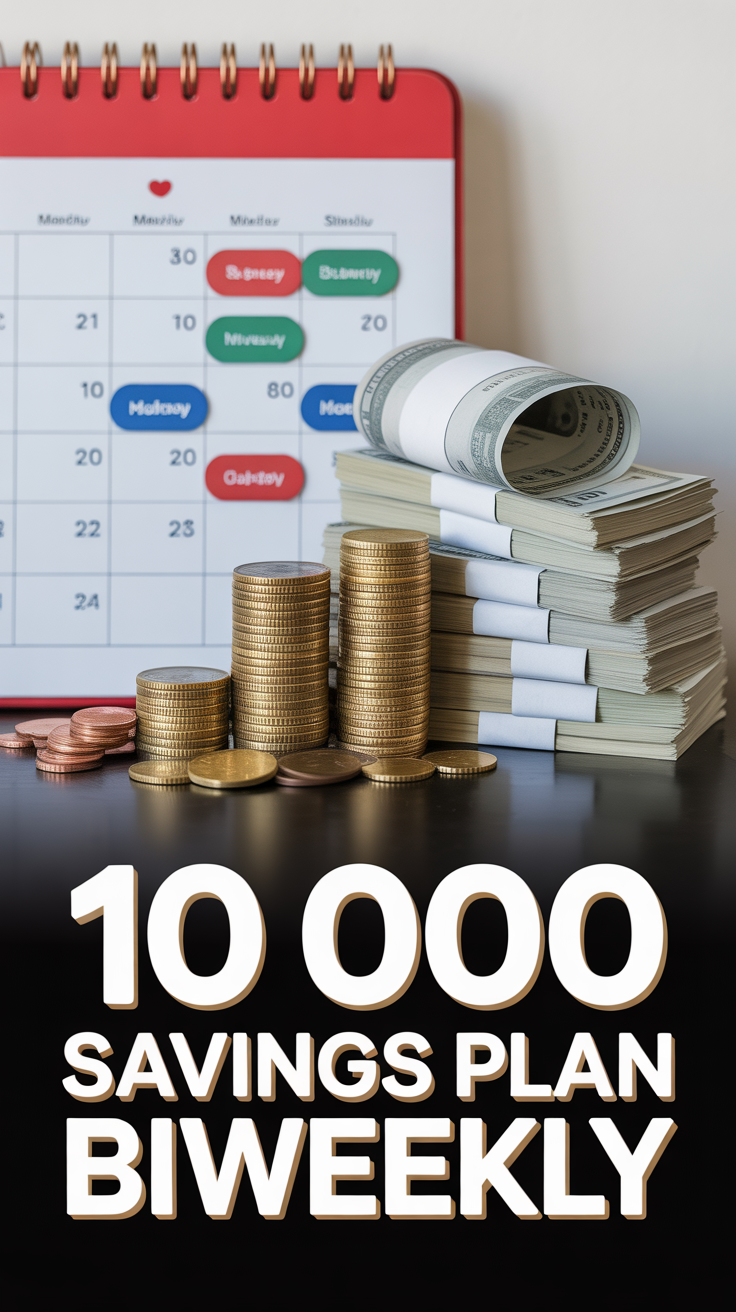
💰 10 000 Savings Plan Biweekly
Imagine the feeling of having a solid $10,000 tucked away, ready to fuel your dreams, protect you from unexpected expenses, or kickstart a major life goal. For many, saving such a sum can feel like climbing a financial Everest – daunting, perhaps even impossible. But what if we told you there’s a straightforward, highly effective strategy that breaks this mountain into manageable steps? Enter the “10 000 Savings Plan Biweekly.” This isn’t just about stashing cash; it’s about building financial muscle, instilling discipline, and transforming your relationship with money one paycheck at a time.
In today’s fast-paced world, financial stability isn’t a luxury; it’s a necessity. Whether you’re dreaming of a down payment on a home, a stress-free emergency fund, a well-deserved vacation, or simply want the peace of mind that comes with a healthy savings account, a clear plan is your most powerful tool. The beauty of the biweekly approach lies in its consistency and its natural alignment with most people’s pay cycles, making it easier to integrate into your financial routine without feeling like a massive sacrifice. This guide will walk you through the ins and outs of this powerful plan, offering practical tips, smart strategies, and the mindset shifts you need to not just reach your $10,000 goal, but to build lasting financial success.
What is 10 000 Savings Plan Biweekly?
At its heart, the 10 000 Savings Plan Biweekly is a structured approach to saving a specific sum – in this case, $10,000 – by making regular contributions every two weeks. It’s a method designed to leverage the power of consistency and automation, turning a seemingly large financial goal into a series of smaller, more achievable steps. Instead of trying to find a lump sum or making sporadic contributions, this plan encourages you to commit to a fixed amount of saving that aligns with your biweekly pay cycle.
The “biweekly” aspect is key here. For most employed individuals, paychecks arrive every two weeks. By synchronizing your savings contributions with your income, you can implement a “pay yourself first” strategy, ensuring that a portion of your earnings goes directly into savings before you have a chance to spend it. This systematic approach removes the guesswork and willpower often associated with saving, turning it into an automatic habit.
Let’s put some numbers to it. To save $10,000:
- In 1 year (26 biweekly periods): You’d need to save approximately $384.62 every two weeks.
- In 2 years (52 biweekly periods): This drops to about $192.31 every two weeks.
- In 3 years (78 biweekly periods): You’d be looking at roughly $128.21 biweekly.
As you can see, adjusting your timeline directly impacts the amount you need to set aside. This flexibility makes the $10,000 goal accessible to a wider range of incomes and financial situations. The plan isn’t rigid; it’s a framework that you adapt to your personal circumstances, making it a powerful and personalized tool for achieving your financial aspirations.
Key Features
The success and popularity of the 10 000 Savings Plan Biweekly stem from several core features that make it incredibly effective for building wealth and financial discipline:
- Consistency is King: The most powerful aspect of this plan is its emphasis on regular, unwavering contributions. By saving biweekly, you’re building a powerful habit that compounds over time. Even small, consistent amounts quickly add up, demonstrating the true magic of compound saving. This steady rhythm removes the stress of trying to find large sums sporadically and instead makes saving a predictable part of your financial life.
- Achievable Goal Setting: $10,000 is a significant but not overwhelming sum for many. It’s large enough to make a real impact – whether it’s cushioning an emergency, providing a down payment, or funding a personal goal – yet small enough to feel within reach with a focused effort. This balance makes it a highly motivating target.
- Biweekly Alignment with Paychecks: This is a game-changer. By scheduling your savings transfers to coincide with your paydays, you’re implementing a “pay yourself first” strategy. This means your savings are prioritized before other expenses, reducing the temptation to spend the money elsewhere. It turns saving into an automatic deduction rather than an afterthought.
- Builds Financial Discipline and Awareness: Committing to a biweekly savings plan requires and cultivates financial discipline. You become more aware of your spending habits, where your money is going, and how each financial decision impacts your goal. This heightened awareness is invaluable for long-term financial health, extending far beyond just saving $10,000.
- Versatile Application: The $10,000 you save isn’t tied to a single purpose. It can become a robust emergency fund, providing a critical safety net against unexpected job loss or medical bills. It could be the seed money for an investment portfolio, the start of a down payment for a car or home, or funds for an education. This versatility makes the goal relevant and motivating for diverse financial needs and aspirations.
How to Get Started
Ready to kickstart your journey to $10,000? Getting started with the 10 000 Savings Plan Biweekly is simpler than you might think. Follow these practical, step-by-step instructions to set yourself up for success:
- Define Your “Why”: Before you even think about numbers, ask yourself: “Why do I want to save $10,000?” Is it for an emergency fund, a dream vacation, a down payment, or to pay off high-interest debt? Having a clear, compelling reason will be your biggest motivator when the going gets tough. Write it down, visualize it, and keep it top of mind. Your “why” is your fuel.
- Set Your Timeline and Calculate Your Biweekly Contribution: This is where the math comes in. Decide how long you realistically want to take to save $10,000.
- Want it in 1 year? $10,000 / 26 biweekly periods = $384.62 per period.
- Aiming for 2 years? $10,000 / 52 biweekly periods = $192.31 per period.
- Prefer a more relaxed 3-year pace? $10,000 / 78 biweekly periods = $128.21 per period.
Choose a timeline that feels challenging but achievable given your current income and expenses.
- Assess Your Budget (The Reality Check): Now that you know your target biweekly savings, it’s time to see if your current finances can support it.
- Track Your Spending: For a few weeks, meticulously track every dollar you spend. Use an app, a spreadsheet, or even a notebook. This helps you identify where your money is actually going.
- Categorize Expenses: Differentiate between fixed expenses (rent, loan payments) and variable expenses (groceries, entertainment, dining out).
- Identify Areas for Trimming: Look for “money leaks” – those small, recurring expenses that add up. Could you cut back on dining out, cancel unused subscriptions, or brew coffee at home? Even small adjustments can free up significant funds.
Be honest with yourself. If your calculated biweekly contribution seems impossible, adjust your timeline or explore ways to increase your income.
- Automate Your Savings (The Golden Rule): This is arguably the most crucial step. Set up an automatic transfer from your checking account to your dedicated savings account to occur every two weeks, ideally on your payday.
- Why automation? It removes the need for willpower. You won’t “forget” to save, and you’ll learn to live on what’s left after your savings contribution.
- Contact your bank or use your online banking portal to set this up. It usually takes just a few minutes.
- Choose the Right Savings Account: Don’t just let your $10,000 sit in your regular checking account.
- High-Yield Savings Account (HYSA): Look for an online bank offering a high-yield savings account. These typically offer significantly higher interest rates than traditional brick-and-mortar banks, allowing your money to grow faster.
- Separate Account: Ensure it’s an account separate from your everyday spending. This creates a psychological barrier, making it less likely you’ll dip into your savings for non-essential purchases.
- Track Your Progress: Seeing your money grow is incredibly motivating.
- Regularly check your savings balance.
- Consider a visual tracker – a chart, a thermometer, or a spreadsheet.
- Celebrate small milestones along the way (e.g., hitting $1,000, $2,500, $5,000).
Tips for Success
Reaching your $10,000 goal isn’t just about setting up an automatic transfer; it’s about adopting smart habits and a resilient mindset. Here are some pro tips to help you succeed:
- “Pay Yourself First” – Non-Negotiable: We’ve touched on this, but it bears repeating. Treat your savings transfer like a non-negotiable bill. It’s the most important payment you make all month because it’s an investment in your future self. Once that money is out of your checking account, you’re less likely to miss it.
- Aggressively Cut Discretionary Spending: This is where many people find the extra cash for their biweekly contributions.
- The Latte Factor: That daily $5 coffee? That’s $70 biweekly, or $1,820 a year. Brewing at home can free up significant funds.
- Meal Prep Power: Eating out frequently is a huge budget killer. Packing lunches and cooking dinners at home can save hundreds each month.
- Subscription Audit: Review all your monthly subscriptions (streaming services, gym memberships, apps). Are you using them all? Cancel what you don’t need or use.
- Mindful Entertainment: Look for free or low-cost entertainment options. Libraries, parks, hiking, and free community events can replace expensive outings.
- Boost Your Income (Even a Little): Sometimes, cutting expenses isn’t enough, or you want to accelerate your savings.
- Side Hustles: Consider a part-time gig, freelancing, dog walking, babysitting, or online surveys. Even an extra $50-$100 biweekly can make a big difference.
- Sell Unused Items: Declutter your home and sell clothes, electronics, furniture, or collectibles on platforms like eBay, Facebook Marketplace, or local consignment shops.
- Ask for a Raise: If you’re due for one and have a strong performance record, advocate for yourself at work.
Direct any extra income straight into your savings account!
- Review and Adjust Regularly: Life is dynamic, and so should your budget be.
- Monthly Check-ins: Take 15-30 minutes each month to review your budget and savings progress. Are you on track? Do you need to adjust your spending or savings amount?
- Flexibility is Key: Don’t beat yourself up if you have an unexpected expense and need to pause or reduce a contribution for a period. The goal is progress, not perfection. Get back on track as soon as you can.
- Leverage Windfalls and Bonuses: Unexpected money, like a work bonus, tax refund, birthday cash, or inheritance, is a golden opportunity for your savings. Resist the urge to splurge and instead, funnel a significant portion (or all!) of it into your $10,000 goal. This can drastically shorten your timeline.
Common Mistakes to Avoid
While the 10 000 Savings Plan Biweekly is highly effective, certain pitfalls can derail your progress. Being aware of these common mistakes can help you steer clear of them and stay on track:
- Setting Unrealistic Biweekly Goals: Trying to save too much, too fast, is a recipe for burnout and failure. If your calculated biweekly contribution leaves you feeling deprived or unable to cover essential expenses, you’ll quickly become frustrated. It’s better to start with a smaller, sustainable amount and increase it later than to aim too high and give up. Be honest about what you can realistically afford.
- Not Automating Your Savings: Relying on willpower alone to transfer money into savings is a common trap. Life gets busy, and it’s easy to “forget” or decide you “need” that money for something else. Without automation, your savings efforts will likely be inconsistent and less effective. Make it automatic; make it a habit.
- Ignoring Your Budget: You can’t effectively manage your money if you don’t know where it’s going. Many people skip the crucial step of tracking their income and expenses. Without a budget, you won’t identify areas where you can cut back, nor will you understand if your current spending habits are compatible with your savings goal. A budget is your financial roadmap.
- Using the Wrong Savings Account: Keeping your $10,000 in a low-interest checking account or an easily accessible savings account linked to your debit card is a mistake. A low interest rate means your money isn’t working for you, and easy access increases the temptation to dip into your savings for non-emergencies. Opt for a high-yield savings account that requires a slightly more deliberate effort to withdraw funds.
- Getting Discouraged by Setbacks: Life happens. You might have an unexpected car repair, a medical bill, or a period of reduced income that forces you to pause or reduce your biweekly contribution. Don’t let a temporary setback derail your entire plan. Acknowledge it, adjust, and get back on track as soon as you can. Financial journeys have bumps; resilience is key.
- Not Celebrating Milestones: Saving money can feel like a long, arduous journey if you don’t acknowledge your progress. Failing to celebrate small victories (e.g., hitting your first $1,000, reaching the halfway mark) can lead to demotivation. Reward yourself with a small, non-financial treat or a fun, low-cost activity to keep your spirits high and reinforce positive saving behavior.
FAQ
Q1: Is $10,000 a good savings goal?
Absolutely! $10,000 is an excellent and versatile savings goal. It’s substantial enough to provide a significant safety net (often recommended as 3-6 months’ living expenses for an emergency fund), a solid foundation for a down payment, or a substantial boost towards a larger financial objective. For many, it’s a perfect first major savings milestone that builds confidence and financial momentum.
Q2: What if I can’t save the calculated biweekly amount?
Don’t despair! The plan is flexible. If the initial calculated amount (e.g., $384 biweekly for one year) feels too high, you have a few options:
- Extend Your Timeline: Stretch your goal over a longer period (e.g., 2 or 3 years) to significantly reduce the biweekly contribution.
- Start Smaller: Begin with an amount you can comfortably save, even if it’s less than your target. The key is to start building the habit.
- Increase Gradually: As you find ways to cut expenses or increase income, gradually raise your biweekly savings amount.
- Focus on Income Boosts: Look for opportunities to earn extra money through side hustles or selling unused items, and direct that extra income straight to your savings.
The most important thing is to start and maintain consistency, even if it’s at a lower rate initially.
Q3: Where should I keep my $10,000?
For a short to medium-term goal like $10,000, especially if it’s for an emergency fund or a down payment within 1-3 years, a High-Yield Savings Account (HYSA) is generally the best choice. HYSAs offer better interest rates than traditional savings accounts, are FDIC-insured, and keep your money liquid (easily accessible) without the volatility of the stock market. Avoid keeping this money in your primary checking account, where it’s too easy to spend.
Q4: How long will it take to save $10,000?
The time it takes depends entirely on how much you can save biweekly. Here’s a quick reference:
- Saving $384.62 biweekly: ~1 year
- Saving $192.31 biweekly: ~2 years
- Saving $128.21 biweekly: ~3 years
- Saving $96.15 biweekly: ~4 years
- Saving $76.92 biweekly: ~5 years
You can adjust these numbers based on your personal financial situation. The key is to pick a timeline and a biweekly contribution amount that is both motivating and sustainable for you.
Conclusion
Embarking on the 10 000 Savings Plan Biweekly is more than just setting a financial goal; it’s about embracing a journey of financial empowerment and self-discipline. By breaking down a significant sum into manageable, biweekly contributions, you’re not only making your goal achievable but also building invaluable habits that will serve you throughout your financial life. The power of consistency, combined with smart budgeting and automation, will transform your saving experience from a chore into a rewarding process.
Remember, every dollar you save biweekly is a step towards greater financial freedom and peace of mind. Whether you’re aiming for an emergency fund, a down payment, or simply the satisfaction of having a robust savings cushion, this plan provides a clear, actionable roadmap. Don’t let the number $10,000 intimidate you. Start today, define your “why,” automate your contributions, and watch as your savings grow, one biweekly deposit at a time. Your future self will thank you for taking this powerful step towards financial mastery!